The food we eat and drink every day holds countless economic stories. Starting from familiar ingredients, this column traces the forces shaping prices, companies and global markets — exploring the economic currents that run through our daily lives, through the lens of food.
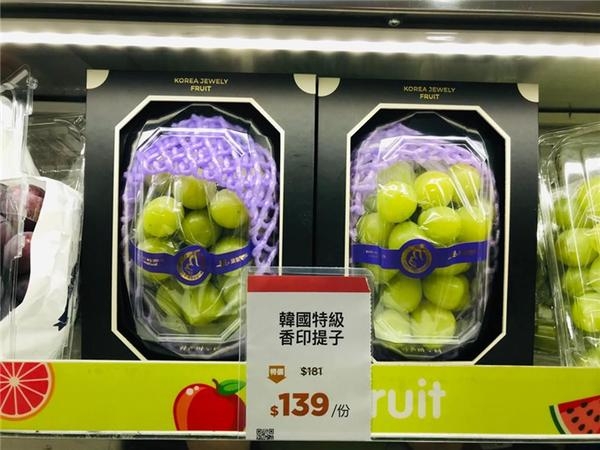
Korean grapes, once pushed aside by cheaper imports, have grown into an export commodity generating more than 130 billion won ($97.7 million) in overseas sales. A decade ago, South Korea imported $28 worth of grapes for every $1 it exported. This year, exports have overtaken imports — driven by growing demand from consumers in Taiwan and the United States and opening new sales channels for domestic farmers.
According to the Ministry of Agriculture, Food and Rural Affairs, domestic grape exports crossed the $100 million mark in the second week of November this year, surpassing last year's full-year total of $85.38 million and setting a record. It is the first time a single fresh agricultural product from South Korea has achieved $100 million in annual exports.
The turnaround is striking when measured against a decade ago. After the South Korea-Chile free trade agreement took effect in 2004, imported grapes — particularly from Chile — flooded the domestic market. By 2016, grape imports had reached $145.01 million while exports stood at just $5.12 million, meaning South Korea was spending 28 times more buying grapes from abroad than it earned selling them overseas.
This year the picture has reversed. From January through October, domestic grape exports reached $90.65 million, up 85.2 percent from the same period last year. Fresh grape imports over the same stretch totaled $64.13 million, leaving exports ahead of imports by $26.52 million. The country's grape trade, long heavily dependent on imports, has swung to a net export position.
October alone — the peak month for domestic grape shipments — saw $34.8 million worth of grapes exported, 2.7 times the volume recorded in the same month last year, underscoring how quickly Korean-grown grapes are reaching overseas consumers.
In Taiwan, Korean grapes command a premium as a luxury gift fruit, while in the United States they have secured shelf space at major retail chains including Costco. Exports to the US rose 177.6 percent year-on-year from January through October to $16.44 million, the highest growth rate among major markets. Taiwan remained the top destination, with $51.3 million in exports over the same period, accounting for more than half of total grape exports and up 114.5 percent from a year earlier.
Behind the shift is a sustained effort by domestic grape growers to improve varieties and raise quality. Farmers have focused on producing high-grade grapes suited to the tastes of overseas consumers and built stable distribution arrangements through large retail chains.
Delivering grapes in fresh condition is equally critical. Because quality can deteriorate during storage and transport after harvest, cold-chain logistics and quarantine systems are central to export competitiveness. The government has expanded quarantine facilities certified for US-bound shipments from 31 to 41 sites and extended quarantine support to weekends and public holidays during peak harvest periods.
The export expansion also matters for domestic farmers. When large volumes of domestically grown grapes hit the market at once, the resulting supply surge can push prices down. Redirecting a portion of that output to overseas buyers reduces the concentration of supply in the domestic market and helps stabilize farm-gate prices.
This year, farm-gate prices for horticultural produce including grapes were under pressure due to higher output and concentrated shipments. Against that backdrop, grape export volumes from January through October rose 135 percent from the same period last year, effectively diverting supply that would otherwise have weighed on the domestic market.
The Ministry of Agriculture, Food and Rural Affairs said the increase in export volumes helped ease the domestic oversupply burden and supported the prices farmers received. For growers, the development means less exposure to sharp domestic price swings and a more stable overseas sales channel.
The government is also reforming trade structures to ensure that rising exports translate into real income gains for farmers. A standard fair-trade contract introduced last month aims to clarify quality standards and payment terms between growers and exporters so that farmers receive their proceeds reliably.
The Ministry of Agriculture, Food and Rural Affairs and Korea Agro-Fisheries & Food Trade Corp. (aT) have set a grape export target of $112.5 million for this year. From December through next January — when South American grape supplies tighten — the two agencies plan to push aggressively into the US market while expanding premium gift-fruit sales in Taiwan.
rainbow@heraldcorp.com