First-ever US-China-Russia trilateral summit runs over 80 minutes but yields limited results
Nuclear disarmament, Ukraine and Iran talks fail to produce concrete agreements
Trump, Xi and Putin project political clout, but fears of great-power spheres of influence linger
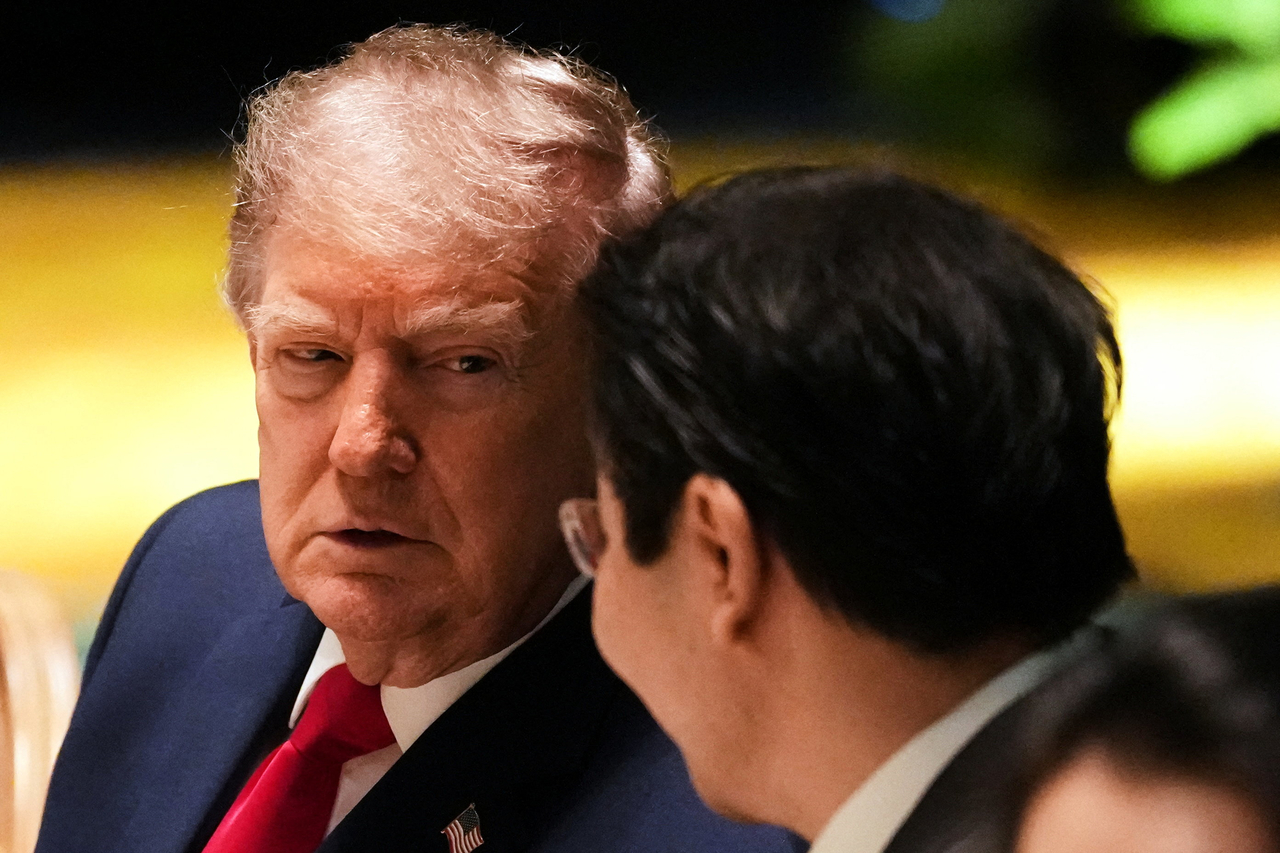
The leaders of the world's three major powers gathered in the same room but left with little of substance to show for it. The first-ever trilateral summit among US President Donald Trump, Chinese President Xi Jinping and Russian President Vladimir Putin drew comparisons to the Yalta Conference of more than 80 years ago, when the great powers shaped the postwar world order — yet the meeting produced no concrete agreements on nuclear disarmament, the war in Ukraine or other pressing issues.
According to Bloomberg and the Wall Street Journal, the three-way summit held Thursday (local time) at Qilin Shanzhuang on the outskirts of Shenzhen, China, ran for more than 80 minutes but failed to produce any breakthrough on the international challenges at hand.
Trump said the leaders were "making history," Xi called the talks positive and constructive, and Putin described them as "useful and substantive." But the four-point joint statement issued after the meeting amounted to little more than broad principles.
The three leaders reaffirmed that a nuclear war cannot be won and must never be fought, and agreed to continue dialogue on reducing nuclear risks and preventing proliferation. They also aligned on UN reform, the jurisdiction of the International Criminal Court and expanding oil product supply — but offered no specific plans for implementation. Bloomberg said international energy markets showed little reaction to the pledge to expand energy supply.
Britain's BBC said Trump "appeared to have left the summit with little to show, having met Putin and Xi with no real agenda or clear demands," adding that "the optics may be the only lasting impression of the summit." CNN said a diplomatic breakthrough "turned out not to be the main point" of the meeting, concluding that "the summit itself was the deliverable."
Even on nuclear disarmament — the issue that drew the most attention — the three countries' interests diverged. The United States and Russia are each estimated to hold more than 5,000 nuclear warheads, while China is believed to possess more than 600. Dennis Wilder, a former CIA analyst on China, told the Financial Times that Beijing would be unlikely to engage in disarmament talks until it had built a nuclear arsenal comparable to those of Washington and Moscow.
There was no visible progress on Ukraine or Iran either. Trump pressed for an end to the war in Ukraine, but analysts said the diverging interests of China and Russia made common ground elusive. CNN said meaningful peace talks were always going to be difficult when the direct parties — Ukraine and Iran — were not at the table.
The summit invited comparisons to the 1945 Yalta Conference, where the United States, Britain and the Soviet Union mapped out the postwar international order. Concerns emerged that the three powers were now seeking a new arrangement in which each recognized the others' spheres of influence.
Xi said the three countries bear a "special responsibility" in the world, while Putin emphasized the role of major powers in maintaining international peace and security. The Wall Street Journal noted that the United States appeared to be asserting exclusive influence in the Western Hemisphere, China in the Taiwan Strait and Russia in Ukraine.
Bloomberg cautioned, however, that the current relationship among the three powers is fundamentally different from the one that existed at Yalta more than 80 years ago. Then, the United States, Britain and the Soviet Union shared a common enemy in Nazi Germany; today, the three countries have no common adversary or unified strategic objective.
Even so, analysts said the summit delivered tangible political and diplomatic benefits to all three leaders. Trump, whose political standing has narrowed following a midterm election defeat, used the international stage to project his relevance. Xi burnished China's diplomatic clout by drawing the American and Russian presidents to Chinese soil. And Putin, largely isolated since the invasion of Ukraine, managed to stand shoulder to shoulder with the leaders of the world's two other major powers, staging a rehabilitation of his international standing.
The prospect of a great-power-driven reshaping of the international order prompted wariness among middle powers, including South Korea, Australia and Canada. President Lee Jae Myung warned of the risk of global economic fragmentation and called for coordinated action to secure stable supplies of critical minerals and energy.
The summit may not be a one-off event. Xi said trilateral meetings among the three leaders should be institutionalized. Wu Xinbo, director of the Center for American Studies at Fudan University in Shanghai, said "whoever is the US president or Russian president, interaction among the three countries serves their national interests," adding, "this will not be the last."
Bloomberg said the image the world will remember most vividly from the summit is the sight of the three leaders standing side by side. The meeting carries symbolic weight as a historic encounter, but concrete solutions to the challenges facing the world remain elusive.
sjy@heraldcorp.com