'Some opposed amid budget season concerns, uncertainty over Constitutional Court outcome'
'Leadership delegated decision; Kim Min-seok brought members into line'
'Yoon case assignment to Ji Gwi-yeon was not random — tip-off received'
'Partial remand in Han Duck-soo appeal known in advance'
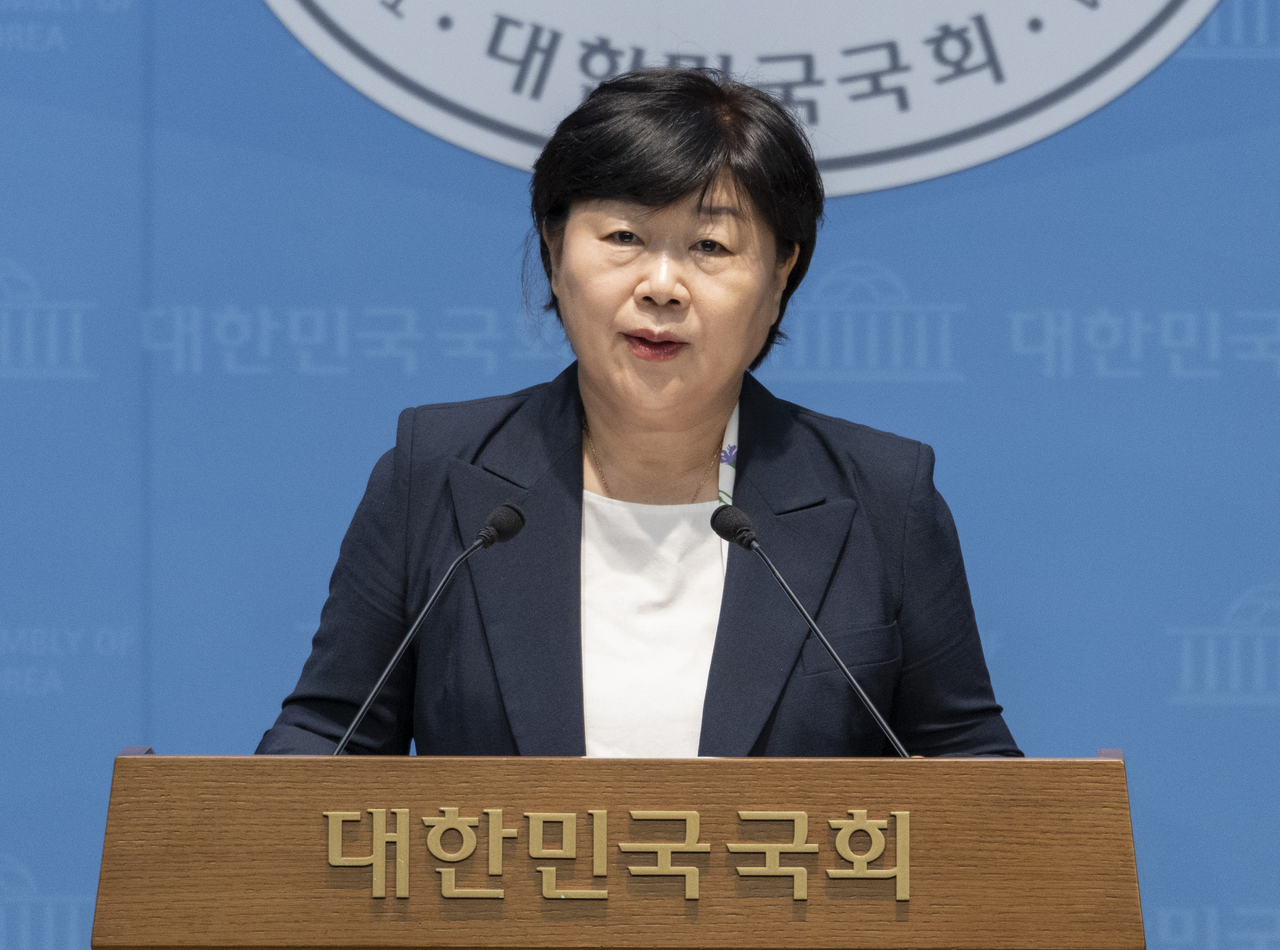
Rep. Seo Young-gyo of the Democratic Party of Korea said Friday that while opposition voices were raised at an emergency caucus Thursday over the push to impeach Supreme Court Chief Justice Jo Hee-dae, the party was set to formally adopt the measure as its official line that day. Some members had expressed concern about the impact on budget negotiations and about how the Constitutional Court might rule, but party leader Kim Min-seok ultimately brought the caucus to a consensus, Seo said.
Seo, who chairs the National Assembly's Legislation and Judiciary Committee, made the remarks on KBS Radio 1's morning program. "At yesterday's caucus there were various opinions, but everyone agreed that Chief Justice Jo Hee-dae and others had acted wrongly," Seo said. "There were some differing views, but those were largely delegated to the leadership, and I understand the leadership brought things together yesterday."
Seo said opposition to the impeachment push had been voiced at Thursday's caucus. "Some said we are in the middle of budget season, and others said we need to think ahead about what happens once this case goes to the Constitutional Court," Seo explained. Still, the majority took the view that the pattern of rulings seen so far would continue, and that Chief Justice Jo's conduct over time pointed clearly toward impeachment, Seo added.
"In the end, party leader Kim Min-seok brought the discussion to a firm conclusion," Seo said.
Seo also alleged irregularities in how the insurrection case against former President Yoon Suk Yeol was assigned to Judge Ji Gwi-yeon. "What I found after receiving a tip-off as chair of the Legislation and Judiciary Committee was that it was not a random assignment," Seo said. "If you pick a judge first and then route a case to that judge, that is illegal from that point on."
"Kim Yong-hyun's case was assigned to Ji Gwi-yeon, then Yoon Suk Yeol's was assigned to Ji Gwi-yeon, then No Sang-won's was assigned to Ji Gwi-yeon, and Korean National Police Agency Commissioner Cho Ji-ho's was also assigned to Ji Gwi-yeon," Seo said. "And then Ji Gwi-yeon released Yoon Suk Yeol — that is when the tip-off came in."
"Ji Gwi-yeon was chosen in advance, the case was routed to Ji Gwi-yeon, and Ji Gwi-yeon released Yoon Suk Yeol after speaking with many people," Seo said. "We followed up and confirmed it — it was not a random assignment."
Seo said the cases had been bundled together under the pretext of being related. "That itself was wrong, and I believe this will be a central element of the impeachment," Seo said.
Seo also said the lawmaker had advance knowledge that the Supreme Court might partially remand the case against former Prime Minister Han Duck-soo.
"Based on tips we received, we had some sense that there would be a partial remand," Seo said. "But we never imagined it would dramatically remand the portion concerning key participants in the insurrection."
"What we gathered from checking various sources was that there might be a partial remand but that it would not significantly change the overall outcome," Seo said. "Even so, our position was that even a partial remand was unacceptable."
Seo also took issue with the Supreme Court having deliberated on the Han case for about six months. "Someone was holding out to remand it as an acquittal — that was our assessment, and that is why we kept monitoring it," Seo said. "The response from National Court Administration head Noh Kyung-pil was what really prompted us to look more closely."
Asked about the risk of alienating moderate voters or provoking a judicial backlash over the impeachment of Chief Justice Jo, Seo pushed back. "We are not expressing distrust of the courts as a whole," Seo said. "When a few individuals have acted wrongly and the legal process takes too long to address it, the Constitution provides impeachment as a tool to act immediately — that is why it exists."
thanks@heraldcorp.com