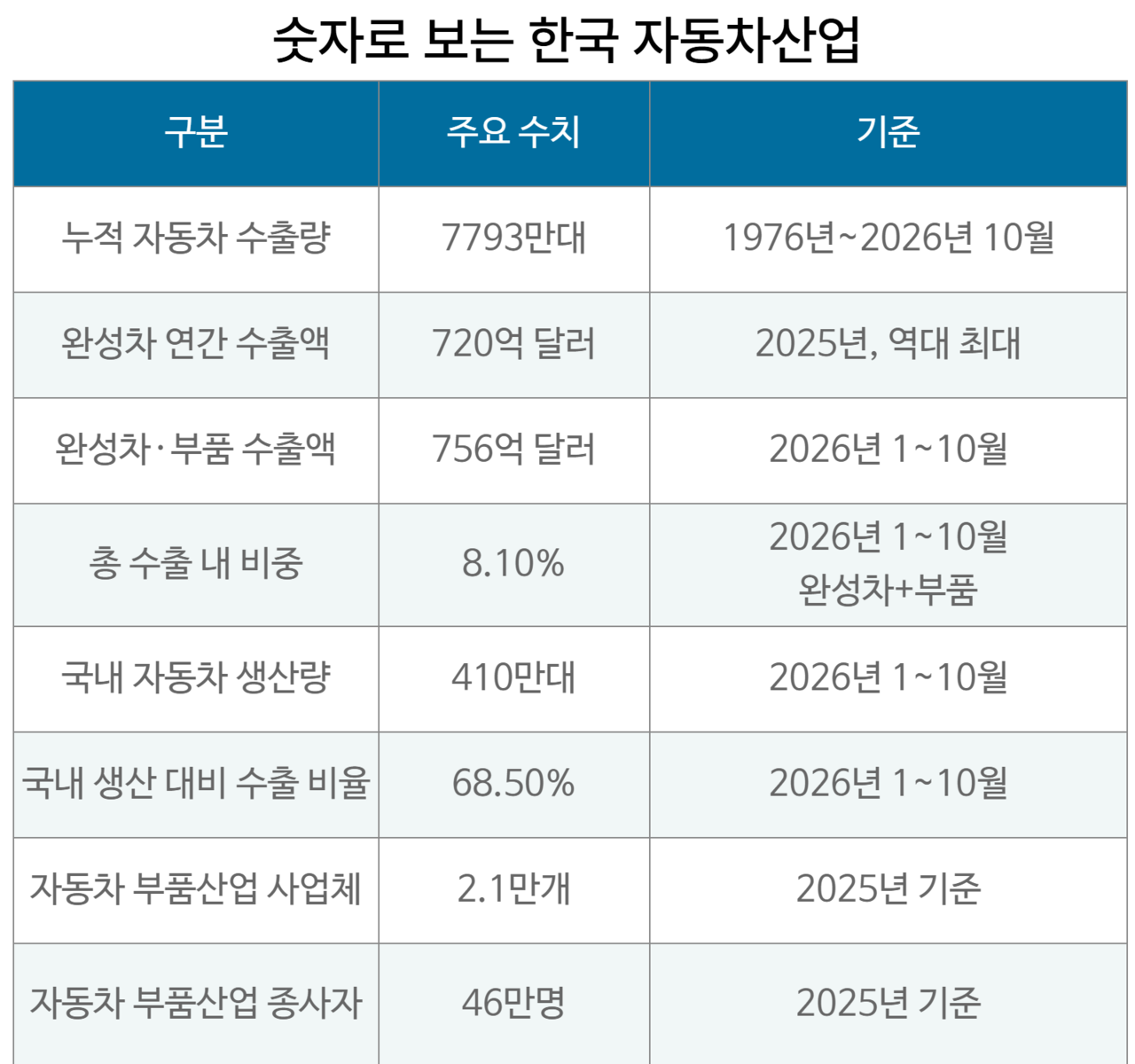
About 77.93 million units exported since the Pony's 1976 debut
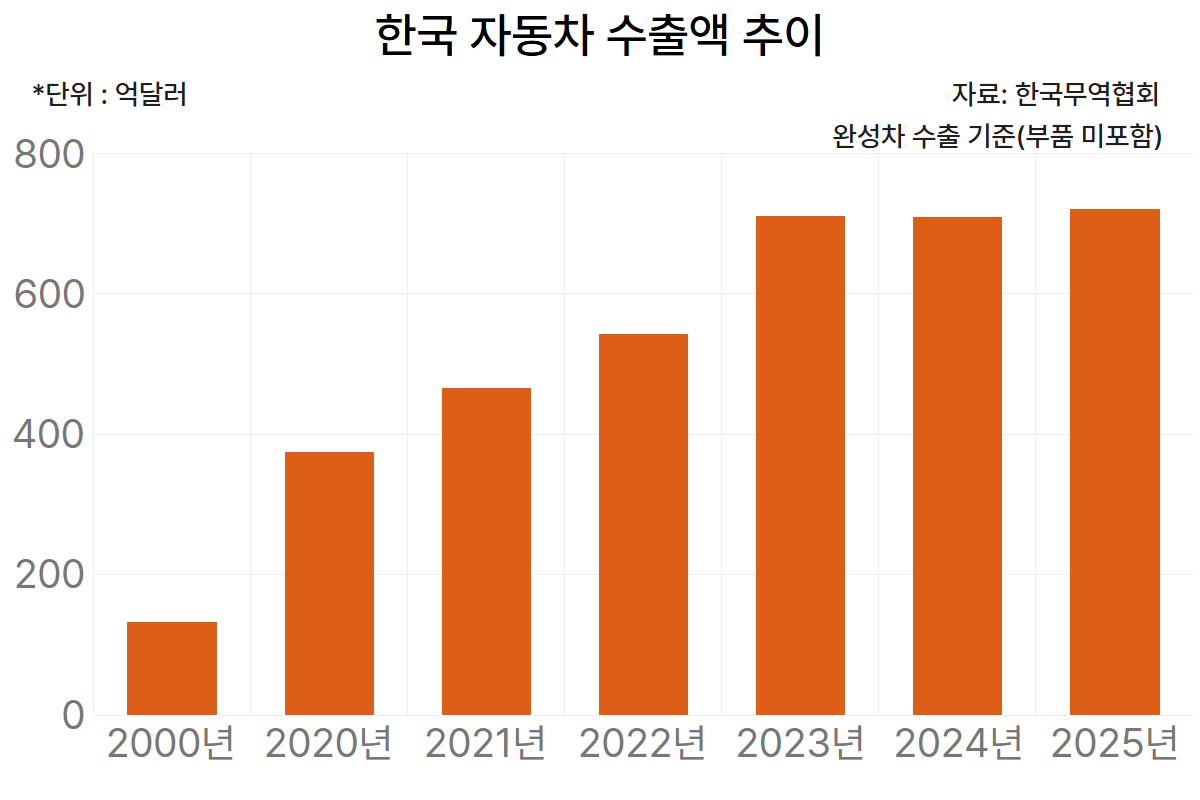
Auto export value rose from $13.22 billion in 2000 to $71.97 billion last year
Finished vehicles and parts exports reached $75.6 billion in January–October
20,000 parts firms, 450,000 workers — sustaining the production base is the challenge ahead
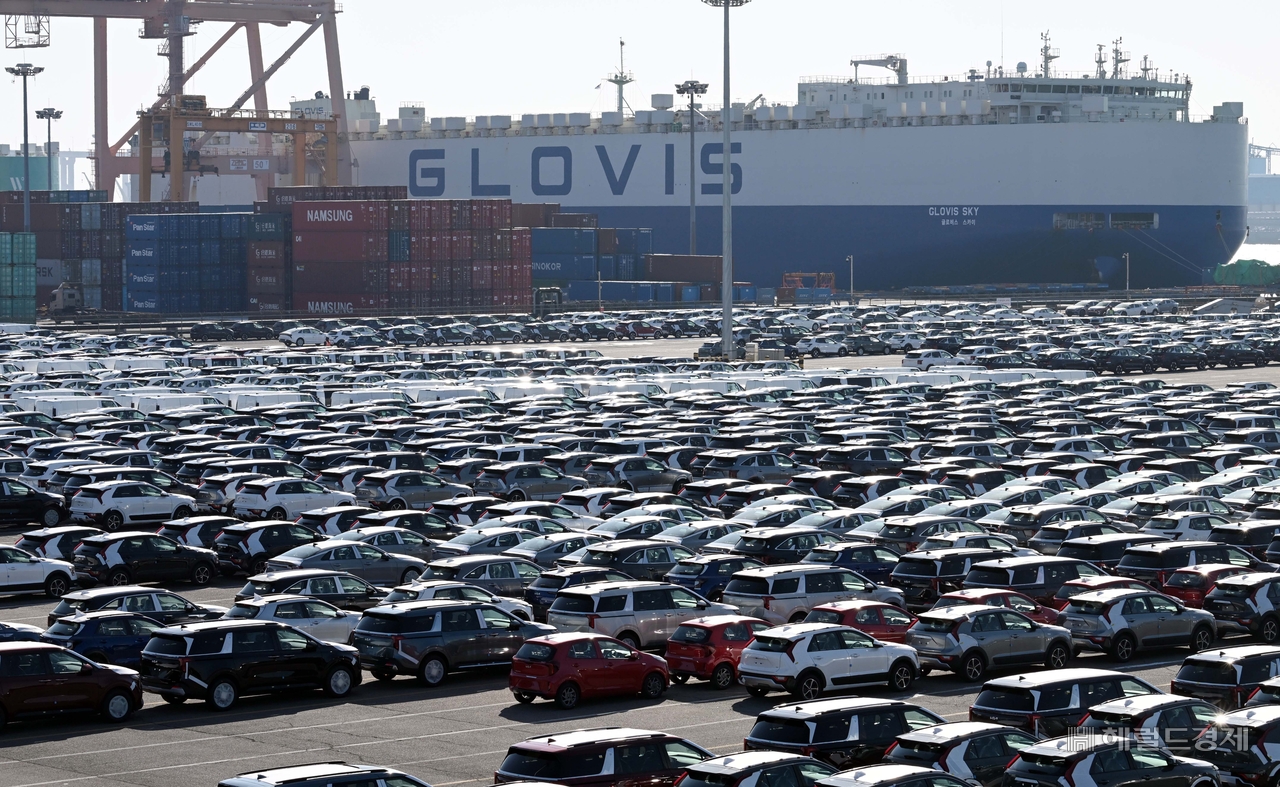
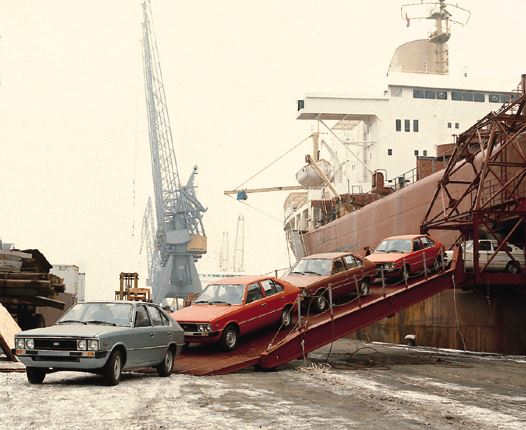
South Korea's auto industry, which took its first step into global markets in 1976 with the Hyundai Motor Pony, has surpassed 77 million cumulative export units over the past 50 years. The industry has grown into the backbone of the country's manufacturing sector — the second-largest export category and a pillar supporting thousands of parts companies and jobs. As South Korea enters an era of $1 trillion in total exports, maintaining the competitiveness of the auto industry and protecting its domestic production base has become a pressing priority.
Cumulative exports of domestically produced vehicles reached about 77.93 million units through October this year since the first shipment in 1976, according to the Ministry of Trade, Industry and Energy and the Korea Automobile Manufacturers Association. The industry crossed the 10 million cumulative unit mark in 1999, surpassed 50 million in 2015 and cleared 70 million in 2023. This year, cumulative domestic vehicle production also exceeded 130 million units.
Automobiles established themselves as a leading export alongside ships, steel and electronics in the 1980s, and the industry has steadily expanded its export volume since the 1990s.
The rise in export value has been equally striking. According to the Korea International Trade Association, the value of South Korea's auto exports grew from $13.22 billion in 2000 to $71.97 billion last year — an increase of roughly 5.4 times. The sector's share of total exports also rose from 7.7 percent to 10.1 percent over the same period. Automobiles ranked third among all export categories in 2000 but climbed to second place behind semiconductors last year, holding that position for three consecutive years. Last year's auto export value was the highest on record.
Export volumes remain substantial this year as well. Auto exports totaled $58.61 billion in the January–October period. Adding auto parts exports of $16.98 billion brings the combined total to $75.6 billion — equivalent to about 8.1 percent of South Korea's overall exports of $930 billion during the same period.
Warning signs have appeared in recent performance, however. Auto export value fell 1.7 percent year-on-year in the January–October period, while auto parts exports declined 4.0 percent. The number of vehicles exported rose 3.2 percent to 2,327,092 units compared with the same period last year, yet the export value declined.
Signs of recovery have emerged more recently. Auto exports last month reached $6.55 billion, up 18.1 percent from the same month a year earlier and the highest October figure on record. Growth was driven particularly by rising shipments of eco-friendly vehicles, led by electric vehicles and hybrids.
The importance of the auto industry extends well beyond export figures. Finished-vehicle production anchors a vast network of parts companies and jobs. According to the Korea Automotive Research Institute, the domestic auto parts industry comprises an estimated 21,049 businesses employing 456,519 workers. The sector generated 207.63 trillion won ($156 billion) in sales and 7.08 trillion won in investment.
The supply volumes flowing through direct supplier relationships are also substantial. According to the Korea Auto Industries Cooperative Association, 701 first-tier suppliers delivered parts to South Korea's six domestic automakers last year, with combined supply worth 77.03 trillion won — up 7.5 percent from the previous year. When second- and lower-tier suppliers providing materials and components to those first-tier firms are factored in, the auto industry's reach across domestic manufacturing broadens further.
The auto industry is particularly vital to employment and regional economies in major industrial cities across the country. A survey of the auto parts industry found that 32.9 percent of all parts-sector workers were based in South Gyeongsang Province, followed by the Greater Seoul area at 21.5 percent, the Chungcheong region at 19.4 percent, North Gyeongsang Province at 16.3 percent and the Jeolla region at 9.9 percent. Because vehicle production and supply chains span major industrial cities nationwide, shifts in finished-vehicle output can have a significant impact on regional economies and employment.
Domestic vehicle production totaled 3,396,459 units in the January–October period this year. Of those, 2,327,092 units — about 68.5 percent — were exported. In effect, two out of every three vehicles produced in South Korea are sold in overseas markets. Beyond Hyundai Motor and Kia, the domestic production facilities of GM Korea, Renault Korea and KG Mobility also serve as important foundations for regional manufacturing and the parts ecosystem.
Employment conditions in the auto industry, however, remain difficult. October employment insurance data show that overall manufacturing enrollment rose by about 14,000 workers year-on-year, while auto manufacturing enrollment fell by about 700. The number of employment insurance subscribers in auto manufacturing has declined for eight consecutive months.
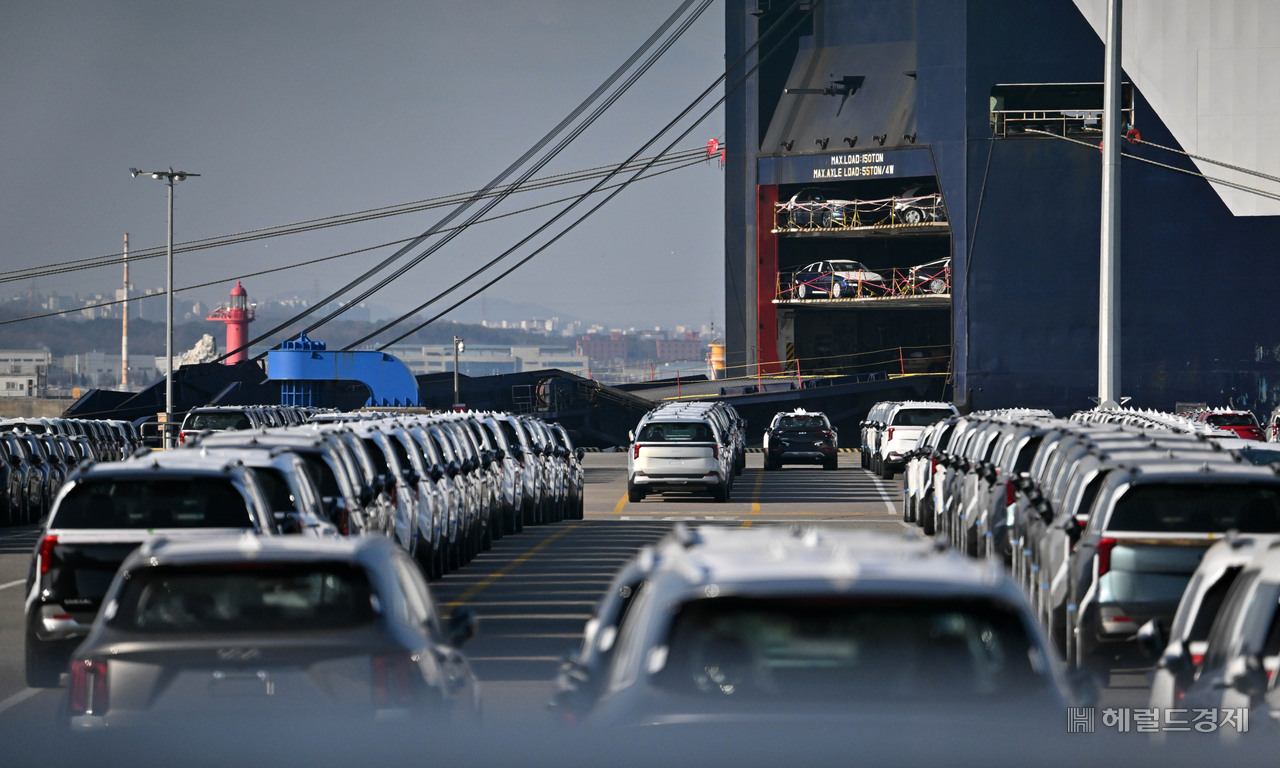
Rapid shifts in the global auto industry's production structure add another layer of uncertainty. As protectionism and local-production requirements intensify in major markets including the United States, domestic automakers are expanding their overseas manufacturing footprints.
The transition to next-generation vehicles is also a defining challenge for the competitiveness of South Korea's auto industry. As demand shifts toward electric and hybrid vehicles and the importance of software and automotive electronics grows, existing parts suppliers face pressure to restructure their businesses. Domestic parts firms are not yet adequately prepared for that shift, industry assessments suggest.
The gap is stark: 4,142 companies specialize in internal-combustion-engine components such as engines and transmissions, while only 578 focus on next-generation parts such as batteries and lidar. Just 6.1 percent of firms are pursuing or planning a business transition or diversification. If South Korea's auto industry falls behind in the next-generation vehicle race, it could erode not only finished-vehicle exports but also the competitiveness in parts, materials and production technology built up over decades.
Improving cost competitiveness and production efficiency at domestic plants is another pressing challenge. As overseas factory expansion coincides with aggressive low-price competition from Chinese manufacturers, labor-management cooperation and improvements to production methods are needed to keep domestic factories competitive.
Lee Ho-geun, a professor in the automotive engineering department at Daeduk University, said the industry's labor-intensive nature makes it difficult to stay competitive against Chinese manufacturers' low-price push at current productivity levels. "Along with government support such as tax credits, the labor market system needs to be reformed, and labor and management must work together to rationally adjust wage structures and working conditions — lowering production costs while finding a mutually beneficial path that preserves jobs," Lee said.
Lee added that efforts to raise efficiency through production automation — including introducing humanoid robots into some processes — must also proceed in parallel. "If overseas factories, such as those in the United States, establish automation ahead of domestic plants and achieve higher production efficiency, we could eventually reach a situation where vehicles produced abroad are actually being reverse-imported into South Korea," Lee warned.
kwater@heraldcorp.com