First visit marks global 40th and Korea's 25th anniversary of 'The Phantom of the Opera'
Korean-language production opens at Blue Square Dec. 22
'The Korean language sat beautifully on top of my music'
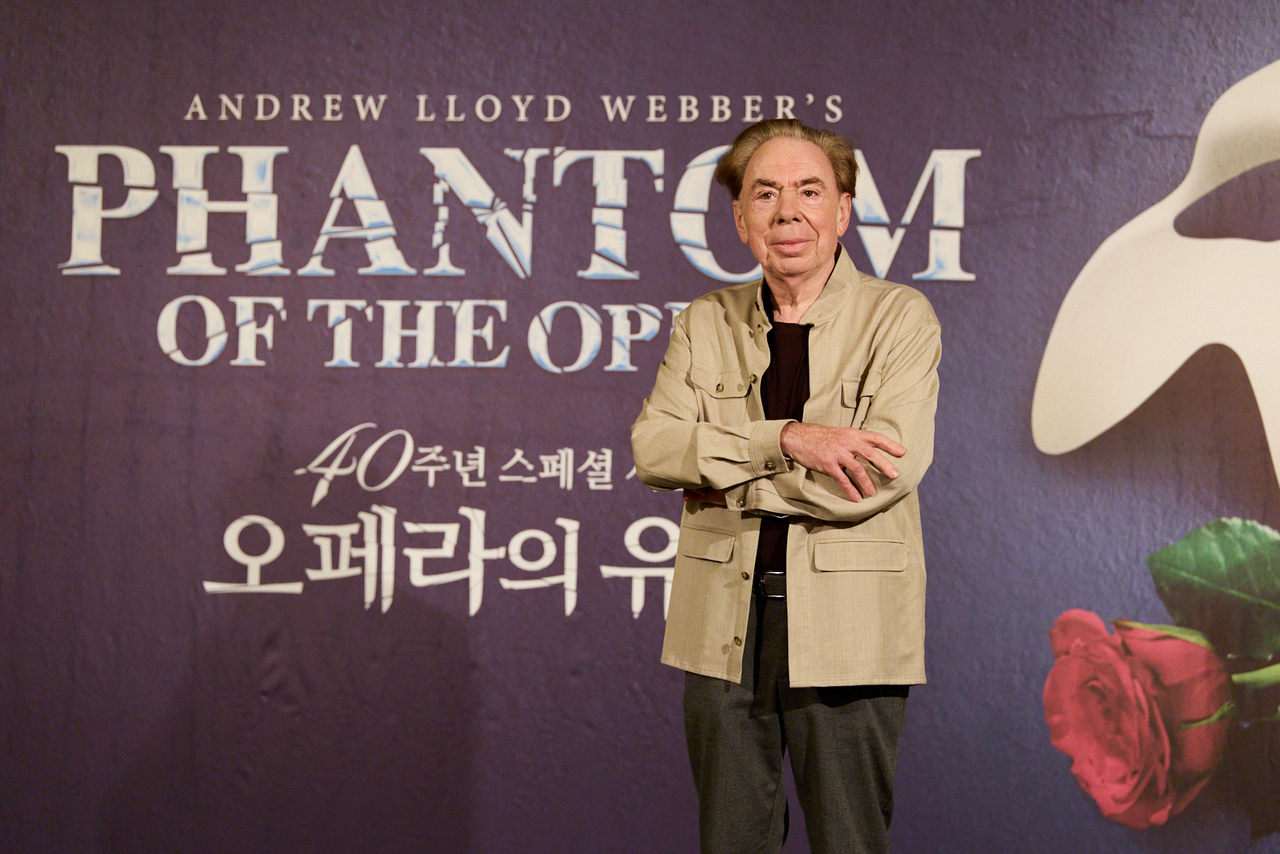
"I was actually a little embarrassed that I hadn't come to Korea sooner."
Forty years after "The Phantom of the Opera" first graced the stage, and 25 years after it made its Korean debut, legendary composer Andrew Lloyd Webber, 78, has paid his first official visit to the country.
Speaking Thursday at a press conference marking the musical's 40th anniversary at the Four Seasons Hotel in Gwanghwamun, Seoul, Lloyd Webber said Korea is "a place where my music and musicals have been so deeply loved," adding that while a composer must stay close to the piano and rarely gets to travel, "this time I absolutely had to come and see what was happening here."
'A musical culture that grew from within — that's thrilling'
During his visit, Lloyd Webber paid close attention to the roster of original Korean musicals that have emerged from the country. "It's truly thrilling that there's a musical culture that has grown from within a nation," he said, adding that after finishing his current project he plans to return next year to see works by young Korean creators. He also expressed delight at the global sweep of K-pop — his son works in the popular music industry, deepening his personal connection to Korea. "This Halloween, 'The Phantom of the Opera' was the No. 1 song on TikTok worldwide," he said with a laugh, "so I suppose I'm in the same club."
Twenty-five years ago, Korea could barely be called a musical market. When producer Seol Do-yoon was preparing the show's Korean premiere in 2001, the shadow of the Asian financial crisis had not yet lifted. "There was no one willing to invest," Seol recalled. The production opened at LG Arts Center that December and ran for 244 performances over seven months, drawing 240,000 audience members — a figure that surpassed the entire annual musical audience in Korea at the time, and marked the starting point of the country's musical industry.
Across six productions, "The Phantom of the Opera" has now drawn a cumulative audience of more than 1.5 million in Korea. The fourth Korean-language production — following runs in 2001, 2009 and 2023 — opens Dec. 22 and runs through Feb. 28 next year at Blue Square Woori Bank Hall in Seoul.
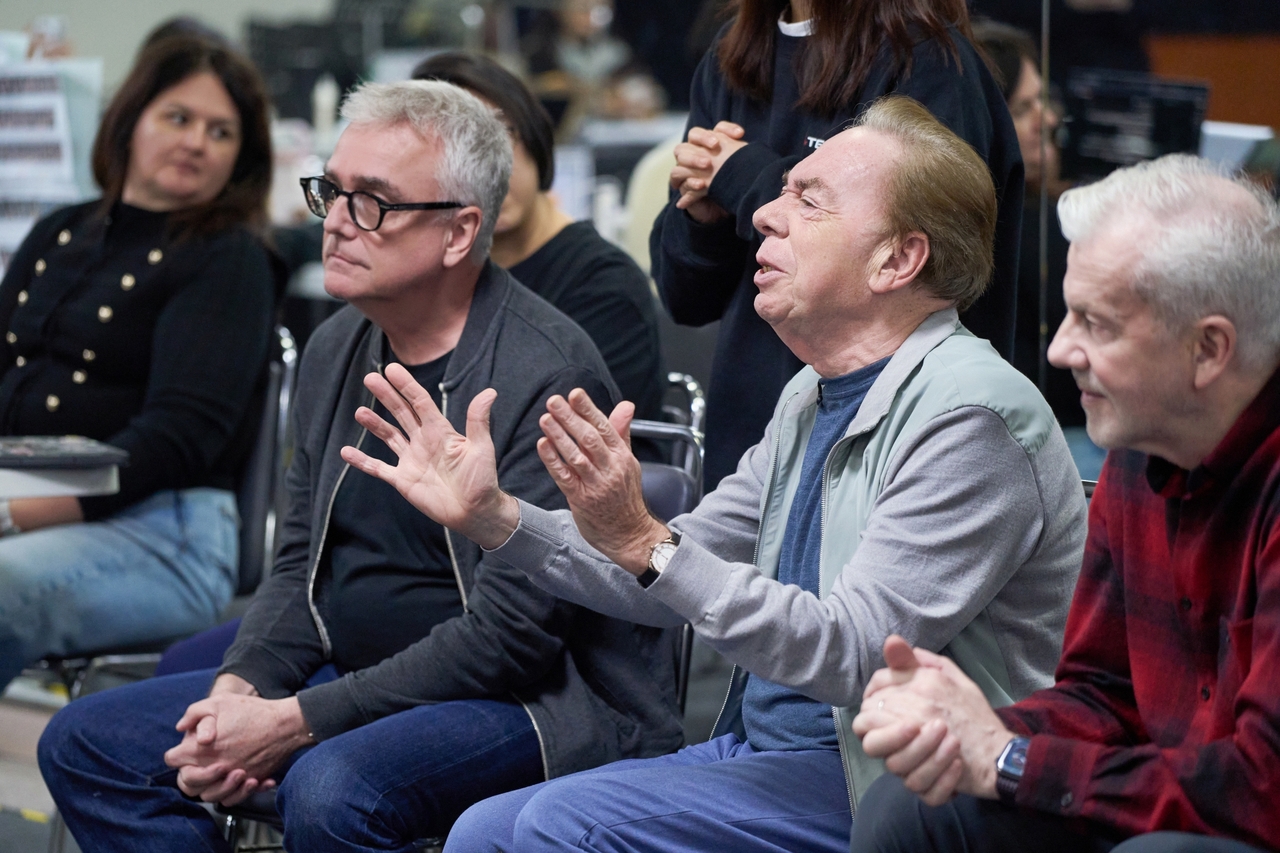
Lloyd Webber met the cast at a rehearsal studio Tuesday. Translated lyrics often overflow their syllable count and fall out of step with the melody, but the Korean production was different, he said. "The Korean language sat beautifully on top of the music — I kept thinking I'd love to hear it in Korean all the time," he marveled. His advice to the cast was simple: "Trust the music." He urged them not to bark out words at dramatic moments, but to let the music carry the emotion.
The secret to 'Phantom's' success? 'I don't know'
"People always ask me what the secret to 'The Phantom of the Opera's' success is. I tell them I don't know — because if I said I did, I'd be lying."
Since opening in London's West End in 1986, "The Phantom of the Opera" has been performed in 54 countries and 229 cities in 23 languages, reaching more than 160 million audience members. On Broadway, it held the stage for 35 years, setting the record for the longest-running show in Broadway history.
Notably, "The Phantom of the Opera" was Lloyd Webber's first love story. None of his earlier works — not "Joseph and the Amazing Technicolor Dreamcoat," not "Evita," not "Cats" — had contained a romance.
Feeling it was time to write "something passionate and romantic," Lloyd Webber reached out to the late Harold Prince, who had directed "Evita." The story they chose was that of a phantom haunting the cellars of the Paris Opera House. "I poured into it emotions I hadn't been able to put into any other story at the time," Lloyd Webber said. "Maybe that's the reason."
Over 40 years, the show's message and staging have not changed — and neither has the face of the audience. "The house is full of young girls and young women today, and it was exactly the same 40 years ago," Lloyd Webber said. "The show hasn't changed, but new generations keep discovering it for the first time." A 40th-anniversary album, which Lloyd Webber personally remixed from the original cast recording, reached No. 1 on the UK's Official Compilations Chart.
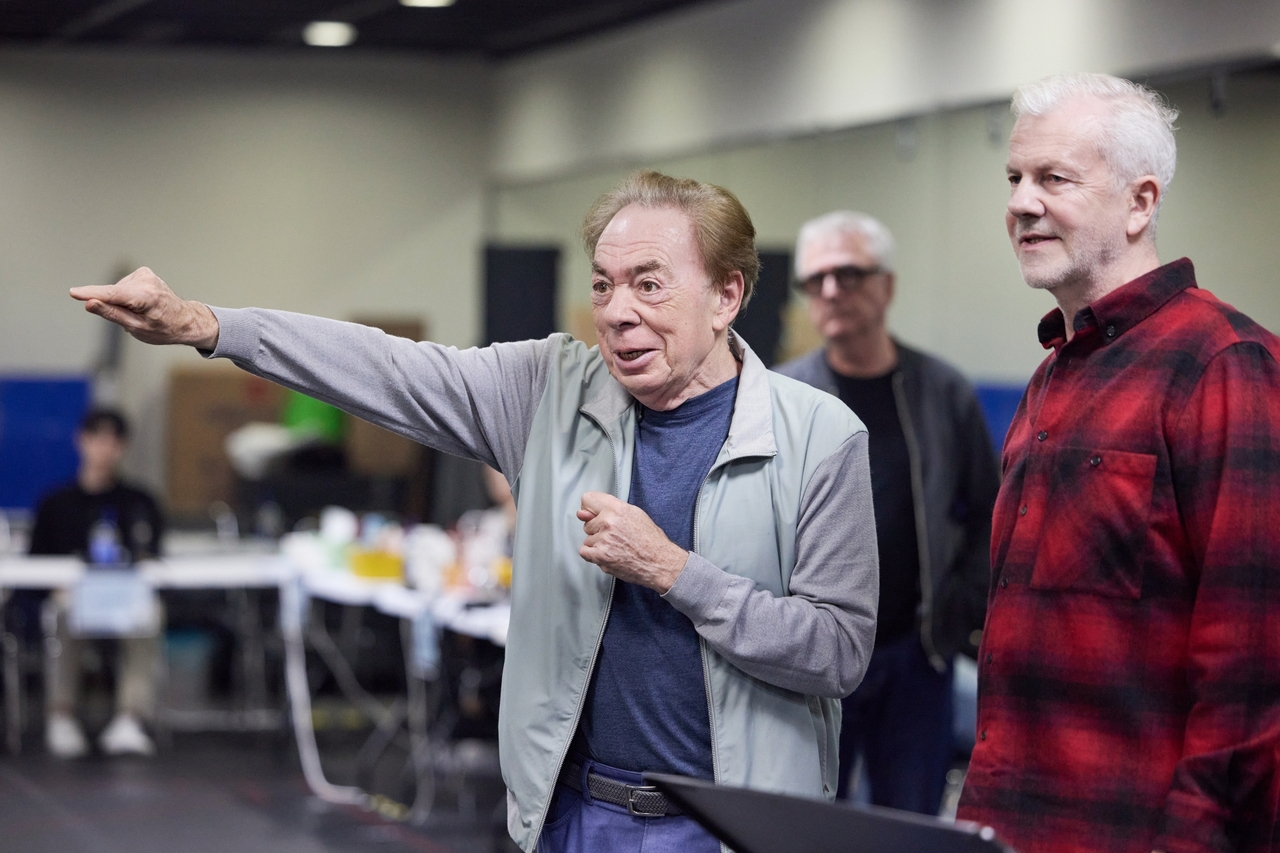
A good story determines a show's success
For Lloyd Webber, the single most important element in building a world on stage is the story. "The most important thing when writing a musical is finding a truly powerful story," he said. "The works of mine that were less successful were the ones where the story didn't hold together."
"A good story can carry music that isn't particularly great. But a bad story cannot carry good music. Ultimately, the reason people go to the theater is for the story."
Story is also the key to drawing younger audiences. "Audiences today won't accept old shows staged exactly the way they always were," Lloyd Webber said. "Young audiences will go anywhere they feel welcomed and where there's a good story." He pointed to "Six" — the musical that spread by word of mouth as the show taking over TikTok before it even opened in London — as an example of the power of social media.
He was sharply critical of Broadway's struggle to make room for new work. "Production costs on Broadway have risen to unmanageable levels, and theater owners have been making large profits while maintaining a structure that is unfavorable to creators," he said. "Meaningful new shows are barely coming out of Broadway anymore." He also shared the words the late Prince spoke at their last lunch together before his death in 2019: "If it were today, 'West Side Story' would never make it to Broadway."
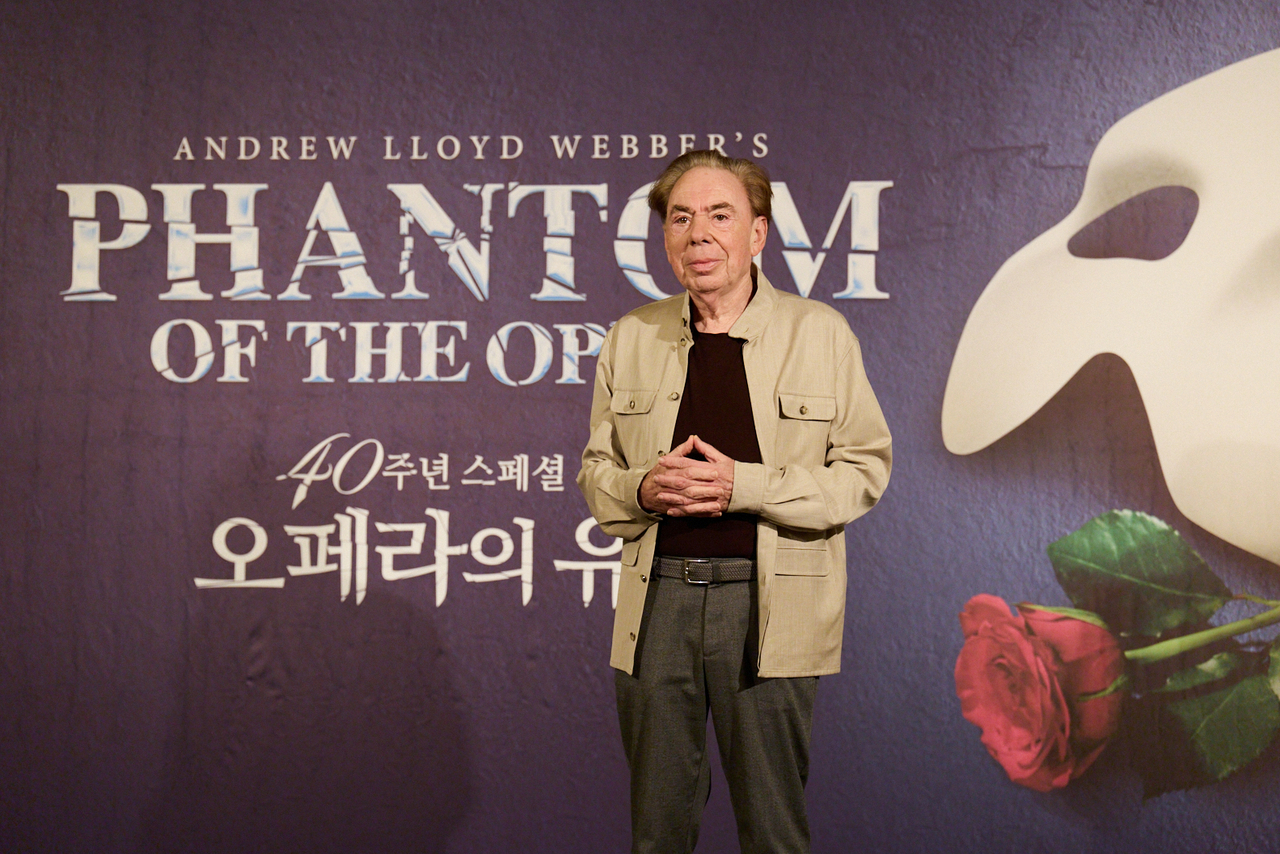
Next project is 'Mona Lisa' — 'Originality is something only humans bring'
The story Lloyd Webber is now working on centers on the theft of the Mona Lisa from the Louvre in Paris in 1911. The idea came after he read a newspaper article last year reporting that the Mona Lisa was not famous before it was stolen. "An Italian man who wanted to reclaim a painting taken by Napoleon found that his target wouldn't fit under his coat, so he walked out with the Mona Lisa instead," Lloyd Webber said. "If it hadn't been stolen, we wouldn't be talking about this painting today." In the new musical, which asks questions about fame and the value of art, "Mona" steps out of her frame as a character with much to say about life. Lloyd Webber is aiming for a London opening around September next year.
Lloyd Webber named originality as the one domain AI can never replace. "AI is a machine that processes data," he said. "AI will produce something by leaning on musicals of the past, but originality is something only humans bring." He added that a work like "Cats" is something AI could never have written.
"Imagine if I'd had AI when I was looking for my next musical subject 40 or 50 years ago. If I'd asked what to write after 'Evita' and 'Tell Me on a Sunday,' AI would never have suggested taking the cat poems of T.S. Eliot — who was regarded as a highbrow poet — putting people in cat costumes and writing a musical centered on the Jellicle Ball."
That said, a good story alone does not make a musical. Recalling the writing of "Sunset Boulevard," Lloyd Webber described a scene in which forgotten silent-film star Norma Desmond returns to a Hollywood studio and, for one brief moment in the spotlight, deludes herself into thinking she is a star again. "I had an instinct that music could do that," he said.
"Music has to add something that isn't in the story, and that has to be the reason the piece is a musical. Otherwise, there's no point."
shee@heraldcorp.com