Budget up 13.4 trillion won from this year's supplementary budget, accounting for 5.3% of total government spending
54% allocated to youth and education-talent accounts; budget office warns additional tax revenue will dry up from 2029
Spending items such as child basic allowance difficult to cut; burden on general account may grow
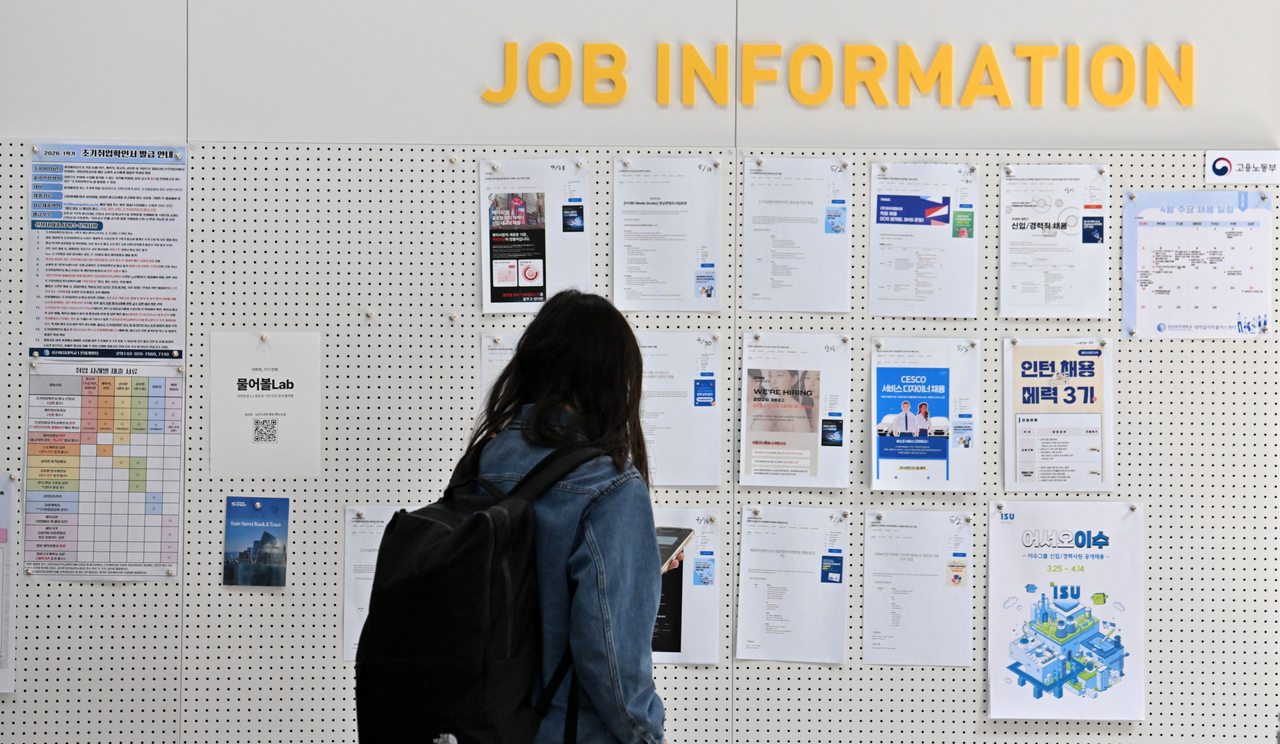
The government plans to raise next year's youth policy budget to 43.3 trillion won ($32.5 billion), channeling more than half into a newly created future response fund financed primarily by surplus tax revenue generated during the semiconductor boom. The figure represents a 13.4 trillion won increase from this year's supplementary budget. Whether the government can sustain the new and expanded support programs at the same level once the favorable tax environment fades is shaping up to be a central issue in the National Assembly's budget review.
According to the November issue of "Budget Chunchu," published Friday by the National Assembly Budget Office, the youth policy budget in the government's 2027 budget proposal is 44.8 percent higher than the 29.9 trillion won recorded under this year's supplementary budget, and equals 5.3 percent of total government expenditure next year.
Some 54 percent of the youth policy budget has been allocated to the youth account and the education and talent account within the proposed future response fund. The youth account covers programs including a child basic allowance, a youth savings scheme and youth housing support, while the education and talent account includes support for regional national universities and projects to cultivate science and technology talent.
The future response fund draws primarily on surplus tax revenue — defined as the amount exceeding the 10-year trend for domestic taxes. The government has projected next year's surplus tax revenue at 158.5 trillion won. The budget office's own forecast puts surplus revenue at 167.8 trillion won next year before falling by more than half to 71.7 trillion won in 2028, with no additional surplus revenue expected from 2029 onward.
By accumulating reserves, the fund can continue financing programs even in years when surplus revenue declines. However, programs that disburse fixed amounts to designated recipients each year — such as the child basic allowance — cannot easily be scaled back when tax revenue falls short. Continuing payments after surplus inflows stop would require drawing down reserves, and if the fund's capacity shrinks, the burden could shift to the general account. That is why the budget review must examine not only the scale of support for each program but also how programs would be financed in years when no surplus revenue materializes.
How the increased budget is distributed across income groups is also a point of contention. Full scholarships at regional national universities, when set against existing national scholarship support, would deliver relatively larger additional benefits to students in income brackets seven through 10 — those with household incomes above 130 percent of the median. Critics also note that extending the youth savings scheme to young people with higher incomes and assets could widen the wealth gap within the youth population. The gap between the top 10 percent of assets held by households headed by people under 40 and the overall average widened from 2.65 times in 2015 to 3.11 times in 2025.
Im Myeong-hyeon, director of the budget analysis division at the National Assembly Budget Office, said the concentration of more than half the youth policy budget in the two accounts raised questions about whether "it is appropriate to rely on temporary surplus and excess tax revenue."
fact0514@heraldcorp.com