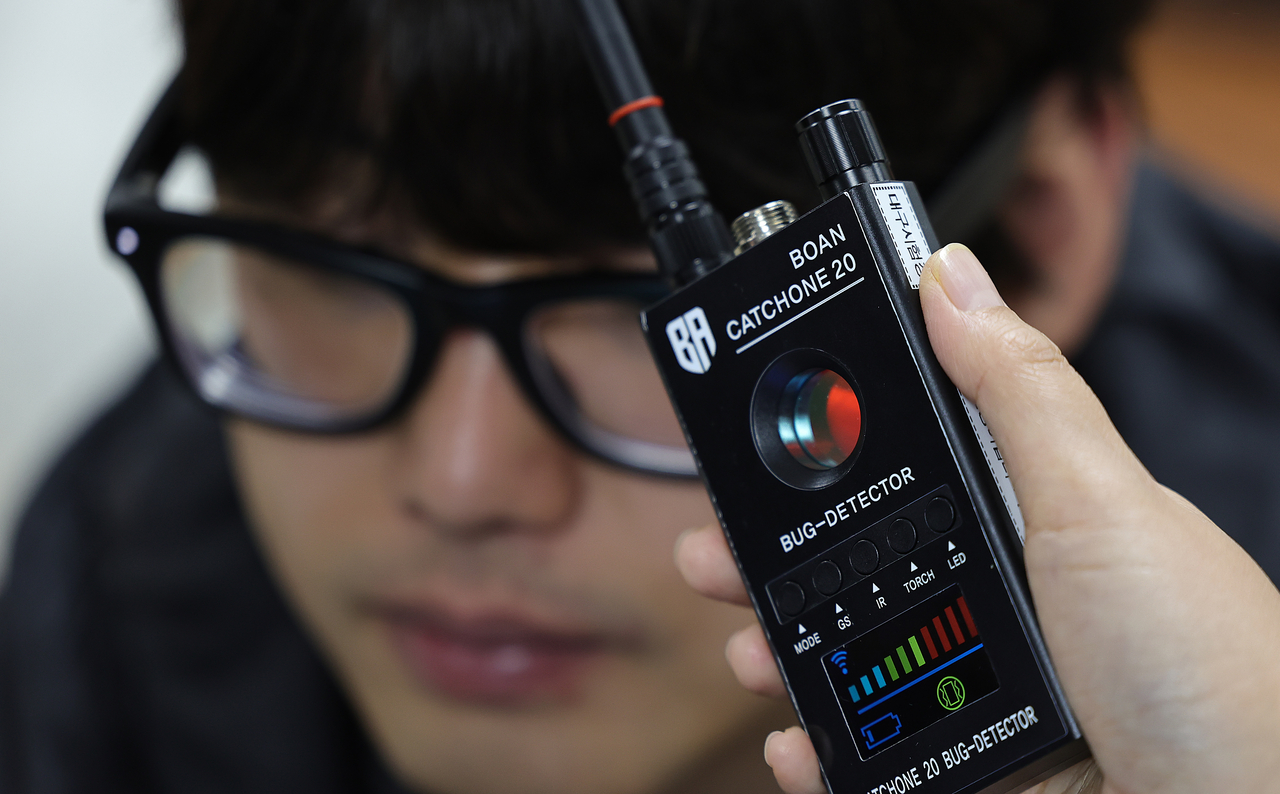
As AI-assisted cheating on exams becomes an increasingly serious problem, attention is turning to the technology needed to catch it. A government-affiliated agency has begun developing equipment to detect AI smart glasses, but the devices are not expected to be ready for deployment until early next year.
The concern is that a string of major national exams remains ahead even after the College Scholastic Ability Test. The secondary school teacher employment exam is scheduled for Nov. 28, and rolling admissions essay tests at major universities are set to run from late this month through early next month.
Cheating methods exploiting AI are growing more sophisticated, yet detection technology has yet to be put in place — fueling mounting concerns about exam integrity.
According to the IT industry, the Korea Communications Agency (KCA) issued a tender on Nov. 2 for a project to develop a radio-frequency detector for AI smart glasses, with completion expected as early as late January next year.
The project centers on developing portable equipment capable of detecting AI smart glasses inside exam venues. The devices would analyze wireless communication signals emitted by smart glasses to determine whether such a device is present. They would collect Bluetooth Low Energy signals to identify devices suspected of being smart glasses, and analyze Wi-Fi data transmission patterns to flag signs of AI use.

Under the tender terms, development alone will take 70 days from the contract signing date. The total project budget is 50 million won ($37,600). Given that proposal evaluations are scheduled for Friday, the actual completion date is likely to fall after late January next year.
KCA President Lee Sang-hoon said Wednesday that "the first phase of proof-of-concept testing has already been completed," adding that the agency aims to apply the technology starting with the computer-based testing component of its ICT qualification exams in February next year.
The problem is that a gap is inevitable before the detection technology can be deployed at actual exam venues. A series of national qualification exams and university essay tests are scheduled to follow the college entrance exam.
The first written round of the 2027 secondary school teacher employment exam will be held at education offices across the country on Nov. 28.
Rolling admissions essay tests for the 2027 academic year begin Saturday at Korea University, Sungkyunkwan University, Konkuk University, Kyung Hee University, Sogang University, Dongguk University and other major institutions. Chung-Ang University, Ewha Womans University, Hankuk University of Foreign Studies, Hanyang University, Kookmin University, Ajou University and Inha University are among those that will continue holding essay exams through early next month.
AI smart glasses are particularly difficult to catch through visual inspection alone. They closely resemble ordinary eyeglasses in appearance, and can capture exam questions through a built-in miniature camera while delivering AI-generated answers via a small speaker.
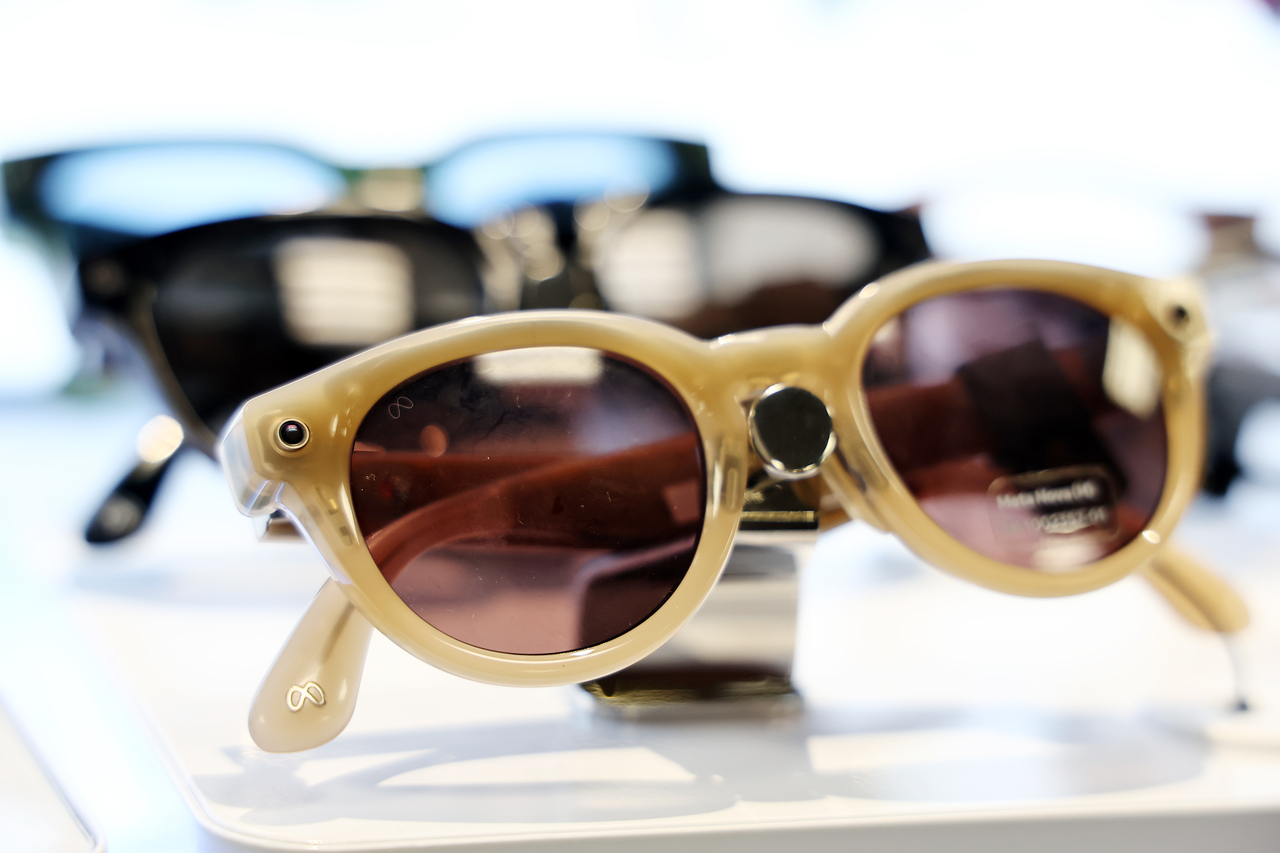
Private-sector developers are also working on technology to detect AI-assisted cheating.
One notable example is ExamGuard, an open-source web application that a domestic developer published on the developer platform GitHub. It combines a function that scans for nearby Bluetooth devices with a camera-based visual inspection of eyeglass frames.
Using a smartphone or PC, the application searches for nearby devices and checks for telltale components embedded in eyeglass frames — camera lenses, charging contacts and speakers. It also offers a feature that compares the characteristics of different smart glasses models to identify suspicious devices.
Domestic company K&Earth is also developing a handheld detector for AI smart glasses. The device analyzes Bluetooth and Wi-Fi signals to determine whether smart glasses are being worn, and the company plans to unveil a prototype early next year.
Industry insiders say, however, that radio-frequency detection alone has its limits in catching all forms of AI cheating. When a device performs AI processing on-chip without transmitting any wireless signal, standard radio-frequency detection methods cannot identify it.
There are also voices cautioning that detecting a particular wireless signal cannot by itself be treated as proof of cheating. Distinguishing between signals from ordinary electronic devices and those from devices used for cheating is a separate and necessary step, they note.
"If an AI smart glasses device processes information on its own without communicating with an external device, radio-frequency detection alone may not be enough to catch it," one industry official said. "Even when a wireless signal is detected, there are limits to determining whether it was actually used for cheating — which is why strengthening on-site supervision is essential."
chami@heraldcorp.com