For-sale senior welfare housing not classified as residential under building law
Eligibility for purchase and move-in by those under 60 varies by facility
'Some buyers win the auction without realizing they can't actually live there'
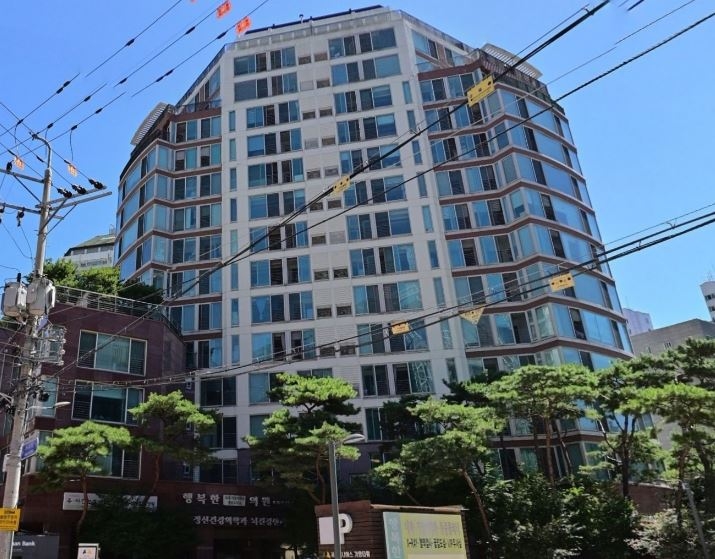
A Seoul property in a prime transit-oriented area has fallen to around 200 million won ($150,000) — roughly half its appraised value — yet keeps failing to attract buyers at auction. The reason buyers are hesitant, despite a price well below comparable apartments, lies in the property's unusual classification: for-sale senior welfare housing. While people under 60 can technically own such units, they may be barred from moving in, and the units count as housing under tax law — meaning a single-homeowner who buys one could be reclassified as a multi-homeowner and face additional restrictions.
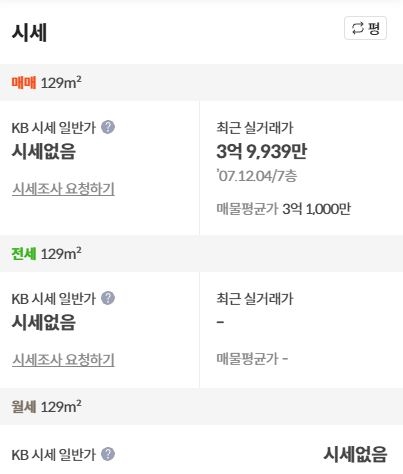
According to GG Auction, a 60-square-meter unit at Seoul Seniors Gayang Tower in Gangseo-gu went up for auction on Friday but found no buyer, even though bidding opened at around 200 million won — about half the appraised value of 447 million won. Despite being steps from a subway station and carrying no legal encumbrances, the unit failed to sell for the fourth consecutive time. A fifth auction is scheduled for next month, with the starting price expected to drop to the late 100 million won range.
Industry insiders say rental demand for such properties is rising in line with an aging population, but buying demand remains comparatively limited. A 50-square-meter unit in the same building also went to auction and failed repeatedly before finally selling in September — at 116 million won, roughly 70 percent below its appraised value, on the sixth attempt.
Analysts attribute the pattern to the distinctive nature of for-sale senior welfare housing. These properties may look like ordinary apartments from the outside, but under building law they are classified as facilities for the elderly and vulnerable — meaning the right to buy, transfer or lease them is in principle restricted to those aged 60 and older. Unlike regular apartments, they have no standardized market price, and transaction records must be checked through the Ministry of Land, Infrastructure and Transport's commercial and business property database or the individual facility's management office. Under tax law, however, they are treated as residential housing, so a single-homeowner who acquires one becomes subject to multi-homeowner regulations.
The for-sale senior welfare housing regime was abolished in 2015 following controversies over mismanagement and speculation by some operators, leaving only previously supplied units available for trade. According to the Ministry of Health and Welfare, 4,726 units of such housing had been supplied under the old system as of March 2024, including those at Seoul Seniors Gayang Tower.
When the regime was scrapped, the government carved out an exception to protect the property rights of existing owners: facilities that received building permits or project plan approvals under housing law before Aug. 4, 2008, may be bought and occupied by people under 60. However, eligibility conditions vary by facility, meaning someone under 60 may be able to purchase a unit but still be unable to move in.
At Seoul Seniors Gayang Tower, buyers under 60 are permitted to purchase units, but the facility's operator restricts residency to those aged 60 and older. Some buyers in their 30s and 40s have run into serious difficulties after winning auction bids without knowing this. "At Gayang Tower, asking prices for 84-square-meter units run between 400 million and 500 million won, which is cheaper than a regular apartment," one industry official said. "Since auction prices are even lower, younger buyers sometimes win bids hoping to profit from price appreciation — but I've seen cases where the winning bidder ends up unable to move in and suddenly finds themselves classified as a homeowner, which puts them in a very difficult position."
Yoon Su-min, a senior real estate specialist at NH NongHyup Bank, said these properties are a difficult buy even when priced below comparable apartments. "If you already own a home, purchasing one of these makes you a multi-homeowner, which is not an easy decision," Yoon said. "Buyers need to carefully check the location, condition, move-in eligibility and any exceptions to transfer restrictions — and they should be aware that buying demand for senior welfare housing can be limited."
hope@heraldcorp.com