Korean visitors to Japan hit record high in first 9 months of 2026
Won-yen rate falls 4.2% over the past year
Japan's Mounjaro costs a quarter of Korean price
Gap between Korean visitors to Japan and Japanese visitors to Korea widens past 1 million
Last year's $5.71 billion deficit could top $6 billion this year
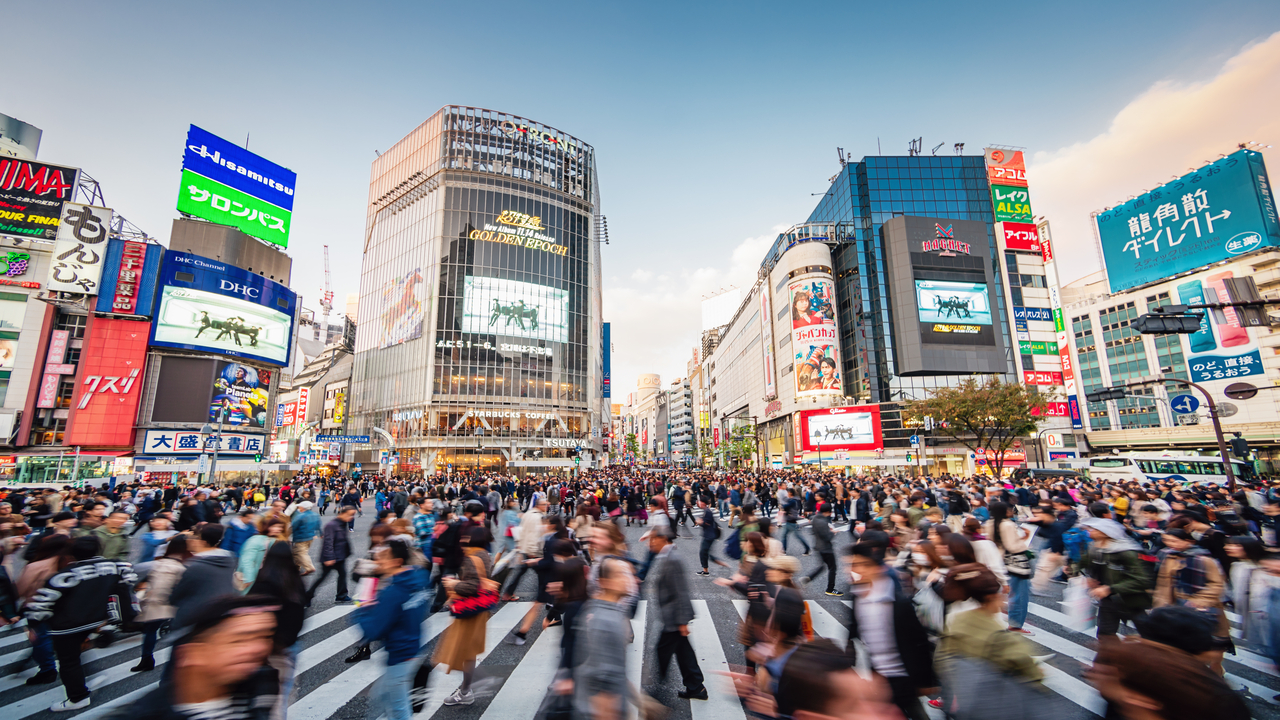
A persistently weak yen continues to draw Koreans to Japan, and demand is set to climb further as a new trend emerges: Koreans traveling to Japan specifically to buy obesity drugs such as Mounjaro at a fraction of the domestic price — a phenomenon dubbed "sushijaro," a portmanteau of sushi and Mounjaro.
Spending by Korean tourists in Japan has risen this year, with demand for high-end goods also growing, fueling expectations that South Korea's travel account deficit with Japan will break its all-time record for the second consecutive year. If Japanese visitors' spending in Korea stays flat compared with last year, a mere 3.5 percent increase in Korean spending in Japan would push the deficit past $6 billion.
Won-yen rate down 4.2%, 'sushijaro' trips add to pressure
According to the Bank of Korea, South Korea's travel account deficit with Japan reached $5.71 billion last year, the largest since the statistics were first compiled in 1998. The deficit has widened every year since 2022, marking four consecutive years in the red. Koreans spent $8.44 billion in Japan — more than three times the $2.74 billion Japanese visitors spent in Korea.
The travel account balance measures what foreigners spend in Korea minus what Koreans spend abroad. A deficit with Japan means Koreans are spending more in Japan than Japanese tourists are spending in Korea.
This year, a further drop in the yen's value has pushed even more Korean tourists toward Japan. The average won-yen rate from the start of the year through Tuesday stood at 911.1 won per 100 yen, down 4.2 percent from last year's 950.8 won. In practical terms, a product priced at 100 yen that cost roughly 950 won last year now costs around 910 won.
On top of that, the so-called sushijaro phenomenon — Koreans traveling to Japan to bring back self-administered medications such as Wegovy and Mounjaro — is expected to boost Japan travel demand further.
The Ministry of Food and Drug Safety has allowed travelers to bring in up to a three-month supply of legitimately prescribed self-administered medications purchased abroad, effective Thursday. Japan's government cut the price of Mounjaro in August, widening the price gap with Korea significantly.
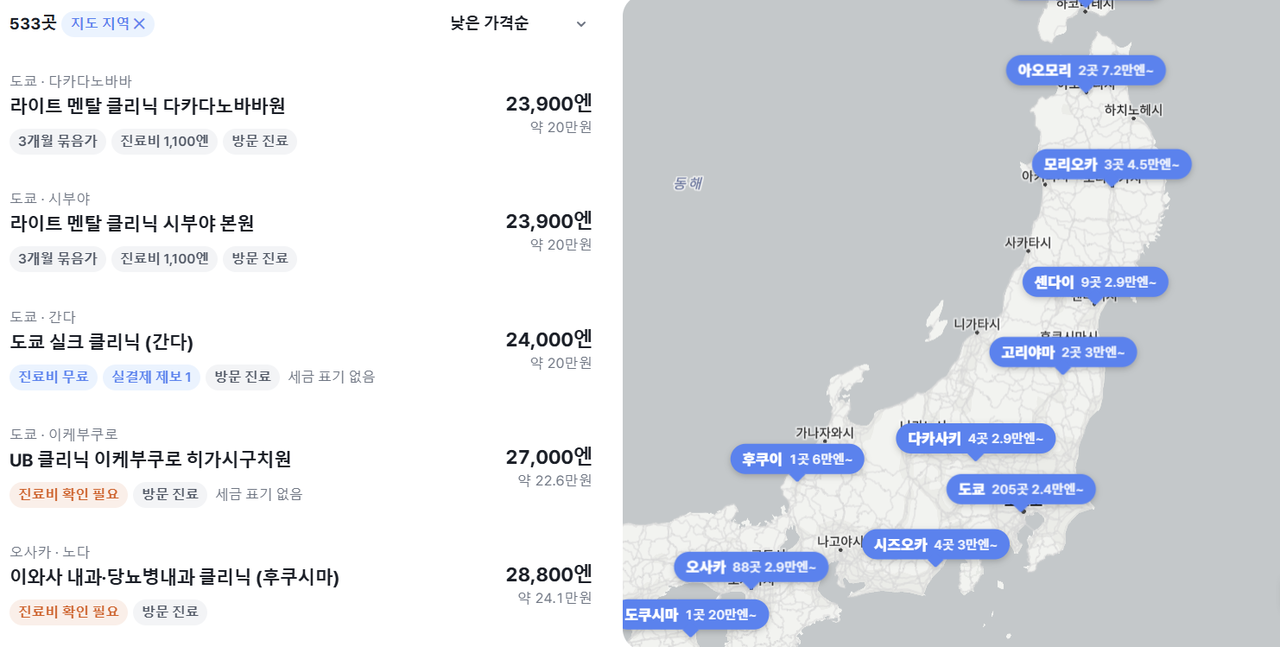
A search on Wednesday on the domestic medical platform Doctornow showed the lowest price for a three-month supply (12 pens) of Mounjaro 2.5 mg at 850,400 won ($635) at a clinic and 834,000 won at a pharmacy. By comparison, the Japanese price-comparison site Sushijaro Map listed the same product at a minimum of 23,900 yen ($150) — roughly a quarter of the Korean price. Factoring in the exchange rate shift alone, that represents a saving of about 10,000 won compared with last year.
Should sushijaro-driven travel demand grow, outbound travel spending would increase further, potentially widening the travel account deficit with Japan even more.
Korean visitors to Japan hit record high in first 9 months; per-visitor spending is the wild card
The prolonged weak-yen environment has kept Japan a popular destination for Korean travelers this year. According to the Japan National Tourism Organization, about 8.26 million Koreans visited Japan in the first nine months of 2026, up 21.6 percent from about 6.79 million in the same period last year — a record for that period. Korean tourists are also spending more: total travel spending by Korean visitors in Japan reached roughly 870 billion yen over the same period, with the third quarter alone surging 45.8 percent year-on-year to 293.8 billion yen.
Purchases of high-end goods are also on the rise. According to Visa, spending by Korean premium cardholders visiting Japan during Japan's Golden Week holiday from April 30 to May 6 jumped about 75 percent year-on-year — three times the growth rate for regular card spending. While budget shopping once dominated Korean spending in Japan, department store clothing, accessories and other luxury items are now accounting for a growing share.
Japanese travel to Korea has also increased, but not enough to close the gap. According to the Korea Tourism Organization, about 3.12 million Japanese visited Korea in the first nine months of 2026, up 16.9 percent from about 2.67 million in the same period last year. The growth rate trails that of Korean visitors to Japan by roughly 5 percentage points, and in absolute terms the gap has widened: Koreans visiting Japan now outnumber Japanese visiting Korea by a factor of 2.6, with the difference exceeding 1 million people.
"The weak yen has made long-haul travel to Europe more expensive for Japanese, so many are choosing Korea instead," a Bank of Korea official said. "Because we need to consider not just visitor numbers but also per-visitor spending, it is difficult to say with certainty which direction the travel balance will move this year." Japan's decision to raise its departure tax from 1,000 yen to 3,000 yen in July and its shift this month to a departure-refund system for duty-free shopping are seen as factors that could dampen Japan travel demand to some degree.
Exchange rate movements are having a broadly neutral effect on the travel balance. Because the travel account is tallied in US dollars, the won-dollar and yen-dollar rates must be considered alongside the won-yen rate.
Since travelers typically budget in their home currency, the dollar-denominated spending of Koreans in Japan depends on the won-dollar rate. The average won-dollar rate, based on weekly closing prices, edged up from 1,422 won last year to 1,443.7 won so far this year through Tuesday, meaning that even if Koreans spend the same amount in won terms in Japan, the dollar equivalent actually shrinks.
The same dynamic applies to Japanese visitors to Korea: the yen-dollar rate rose from 149.5 yen to 158.6 yen over the same period, also reducing their dollar-denominated spending. Because the dollar-equivalent outlays of both Korean visitors to Japan and Japanese visitors to Korea are being compressed, the two effects largely cancel each other out in travel account terms. Ultimately, actual growth in travel demand — rather than exchange rate price effects — is likely to be the decisive factor in this year's travel balance.
However, the recent strengthening of the won combined with a continued weak yen could mean that exchange rate effects begin to widen the travel deficit further. The average won-dollar rate fell for four consecutive months from 1,528 won in June to 1,336.4 won in October, and while it edged back up to 1,340.4 won in November through Tuesday, it remains well below last year's level. Recent stock market turbulence has nudged the rate slightly higher, but downward pressure on the won-dollar rate — driven largely by semiconductor export dollars — is expected to persist for some time.
kimstar@heraldcorp.com