Detailed rules for Franchise Business Act still under deliberation
Convenience store operators expected to lead association registrations
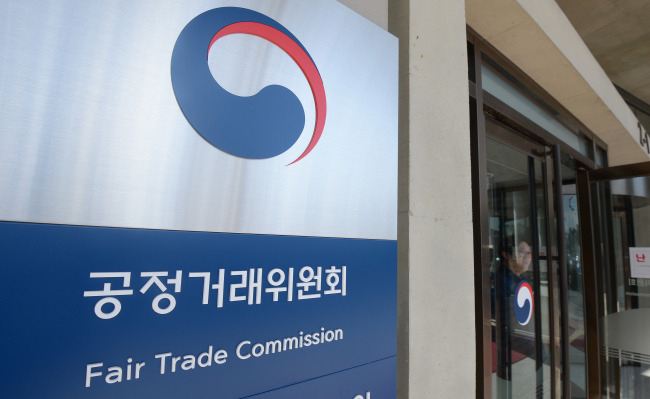
Confusion is mounting in the franchise industry as an amendment to the Franchise Business Act — aimed at strengthening franchisees' bargaining power — nears implementation, with detailed enforcement rules still not in place and concerns growing that preparation time is running out. At least in the convenience store sector, where dialogue with franchisors has been relatively active, moves to register franchisee associations are beginning to take shape.
According to industry sources Wednesday, government review of the enforcement decree for the Franchise Business Act — which the Fair Trade Commission put out for public comment between August and September — is still ongoing. The revised decree, drafted by the commission after gathering industry feedback during the public comment period, must be reviewed by the Presidential Committee on Regulatory Reform.
The proposed decree sets out the rules needed to implement two key mechanisms under the revised Franchise Business Act, which takes effect Dec. 31: a registration system for franchisee associations and a mandatory consultation requirement. Under the framework, franchisee associations would be registered with the Fair Trade Commission to give them official representative status, and franchisors would be required to hold consultations with registered associations.
Specifically, an association must enroll at least 10 percent of franchisees — with a minimum of 30 members — or at least 1,000 members under the same brand to qualify for registration. The decree also establishes procedures for consultations and opinion-gathering between registered associations and franchisors. Associations may request consultations on matters including franchise agreement terms and advertising and promotional activities. Once a request is received, the franchisor must begin consultations within 14 days. The same topic, however, cannot be raised again for 180 days.
The franchise industry has argued that allowing multiple associations to form under the same brand could undermine representational legitimacy. Franchisees, for their part, have worried that tightened registration requirements — such as the 30-member minimum — could leave them without a meaningful guarantee of consultation opportunities. The two sides also remain at odds over who may participate as a representative in consultations, with franchisors favoring legal counsel and franchisees preferring licensed franchise transaction agents.
"The specifics of how this will work are still completely unclear," one industry official said. "We're waiting for the final version to come out before we can start preparing." Another official echoed the concern: "We still don't know what will change from the draft decree that was published. Companies need the details to get ready, and the timeline is just too tight."
Franchisees are also waiting for the finalized decree before they can begin preparing to register with the Fair Trade Commission. The convenience store sector, which has maintained regular cooperative consultations with franchisors, is the most active. Existing franchisee groups are gradually moving toward formal registration with the commission, and the possibility of multiple associations registering under the same brand is considered high.
Choi Jong-yeol, chairman of the CU Franchisee Council, said the commission needs to release specific guidelines before preparations can begin. "I believe we will meet the registration threshold of 1,000 members, but the detailed criteria are complicated and operators on the ground are still confused about how to meet them," he said.
Meanwhile, three associations — the GS Management Council, the CU Franchisee Alliance and the Seven-Eleven Franchisee Alliance — recently submitted a joint request to the Fair Trade Commission calling for improvements to the decree. Their demands included codifying franchisors' obligation to provide channels for gathering franchisee input, building an efficient consultation structure centered on the largest registered association, establishing advance impact assessments and cost-sharing principles for key consultation items such as costs and supply chain matters, and creating new procedures for handling disputes, emergencies and compensation claims.

spa@heraldcorp.com