District builds medium- to long-term repair plan based on full survey of 194 km of sidewalks, with priority set by five-point assessment
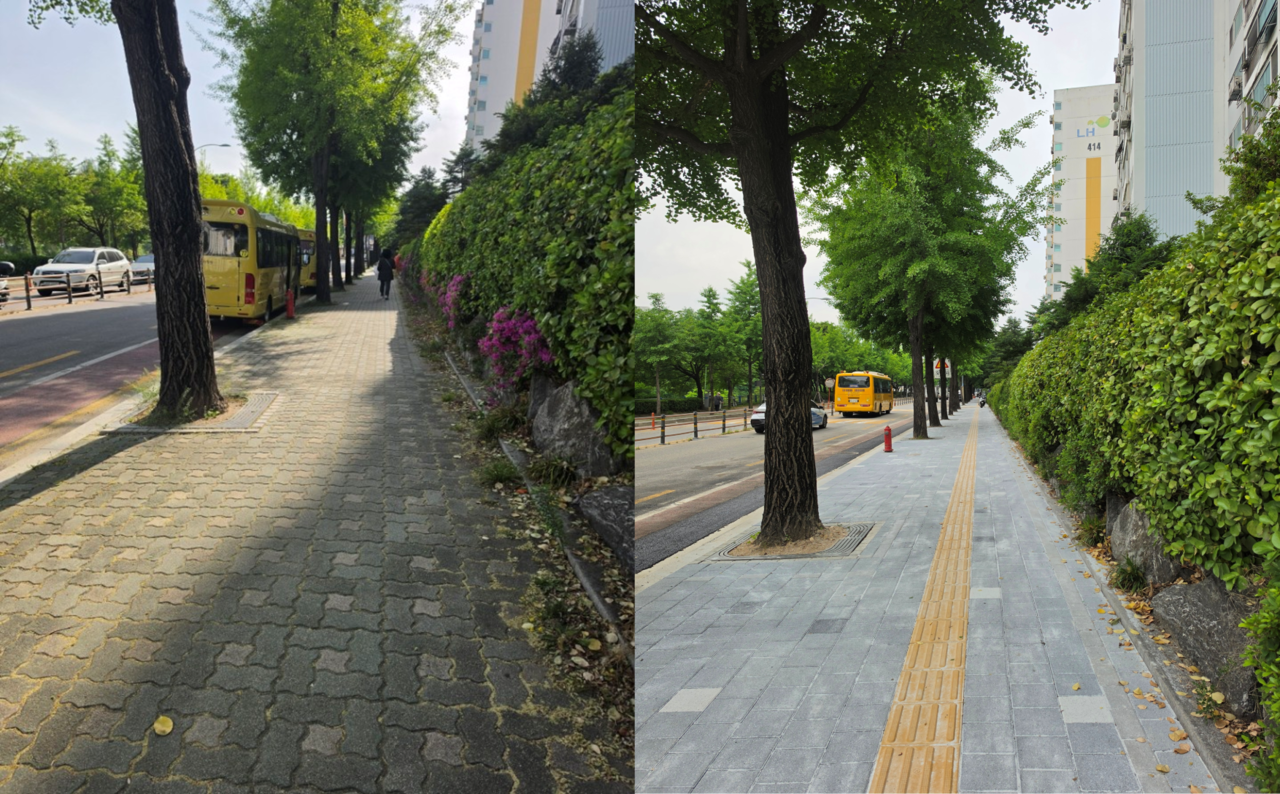
Seoul's Nowon-gu is moving to end the recurring controversy over what critics call "budget-burning sidewalk replacements" at year's end, adopting an objective assessment system and a medium- to long-term maintenance plan to govern how it manages its pavements.
Rather than replacing old sidewalks wholesale, the district now evaluates actual deterioration, damage and pedestrian safety before directing funds to the sections most urgently in need of repair.
According to the district office, Nowon-gu conducted a full pavement survey covering roughly 194 kilometers of sidewalks across the district and used the findings to draw up an aged-sidewalk management plan. Sections rated C or below — totaling 82.16 km — were designated for medium- to long-term repair and are being addressed in sequence under an annual schedule.
Repair priority is determined by a composite assessment of five criteria: pavement deterioration, surface damage, tactile-block condition, curb condition and sidewalk width. On-site inspections and demand surveys conducted through neighborhood community centers are also factored in, with sections posing the greatest inconvenience or safety risk to residents moved to the front of the queue.
The scope of work is tailored to the condition of each section to reduce budget waste. Sidewalks rated C or below are subject to full replacement as a rule, while those rated A or B — still in relatively good condition — are touched only where complaints have been filed or partial repairs are needed.
The district is also actively pursuing material reuse. Curbs in good condition are salvaged and reused, while those lacking adequate slip resistance are surface-treated to improve safety. When sidewalks are damaged by other construction work, the responsible party is required to carry out the restoration directly, easing the burden on the district budget.
Improvements to the walking environment for people with mobility challenges are being pursued in parallel. The district is lowering curb cuts at crosswalk entry and exit points to span the full width of the sidewalk and correcting tactile blocks misaligned with the direction of pedestrian travel, with a focus on improving mobility for people with disabilities and elderly residents.
The district is carrying out sidewalk repairs, tactile-block installations and crosswalk curb-cut work on an annual basis under its "2025–2029 Five-Year Plan for Pedestrian Safety and Convenience," established last year.
Transparency in the repair planning process has also been strengthened. The district publishes its repair targets and priority rankings on its website each year. In April, it posted the "2026 Nowon-gu Aged Sidewalk Repair Plan," informing residents of the length, area and repair ranking of each C-rated sidewalk segment on city and district roads.
Progress on the ground is becoming visible. In October, the district completed repairs on sidewalks along Uicheon-ro in Wolgye 2-dong and on the stretch running from Exit 2 of Junggye Station to the Daejin Girls' High School intersection. The total area repaired this year stands at 1,440 square meters.
As of the end of October, 49.22 km of the total 82.16 km targeted for repair had been completed, a completion rate of 59.9 percent.
"Sidewalk repairs should not be construction work done to spend leftover budget — they should be a project that directs funds precisely where they are needed for residents' safety," Nowon-gu District Mayor Seo Jun-o said. "We will focus on delivering real improvements to the walking environment based on objective criteria and a systematic plan."
seouldream01@heraldcorp.com