Unscheduled meeting on sidelines of APEC summit in Shenzhen
Canadian PM's office says talks aimed at job creation, lower prices
Carney describes negotiations as 'two steps forward, one step back'
Trump said deal was close earlier this month; formal talks yet to resume
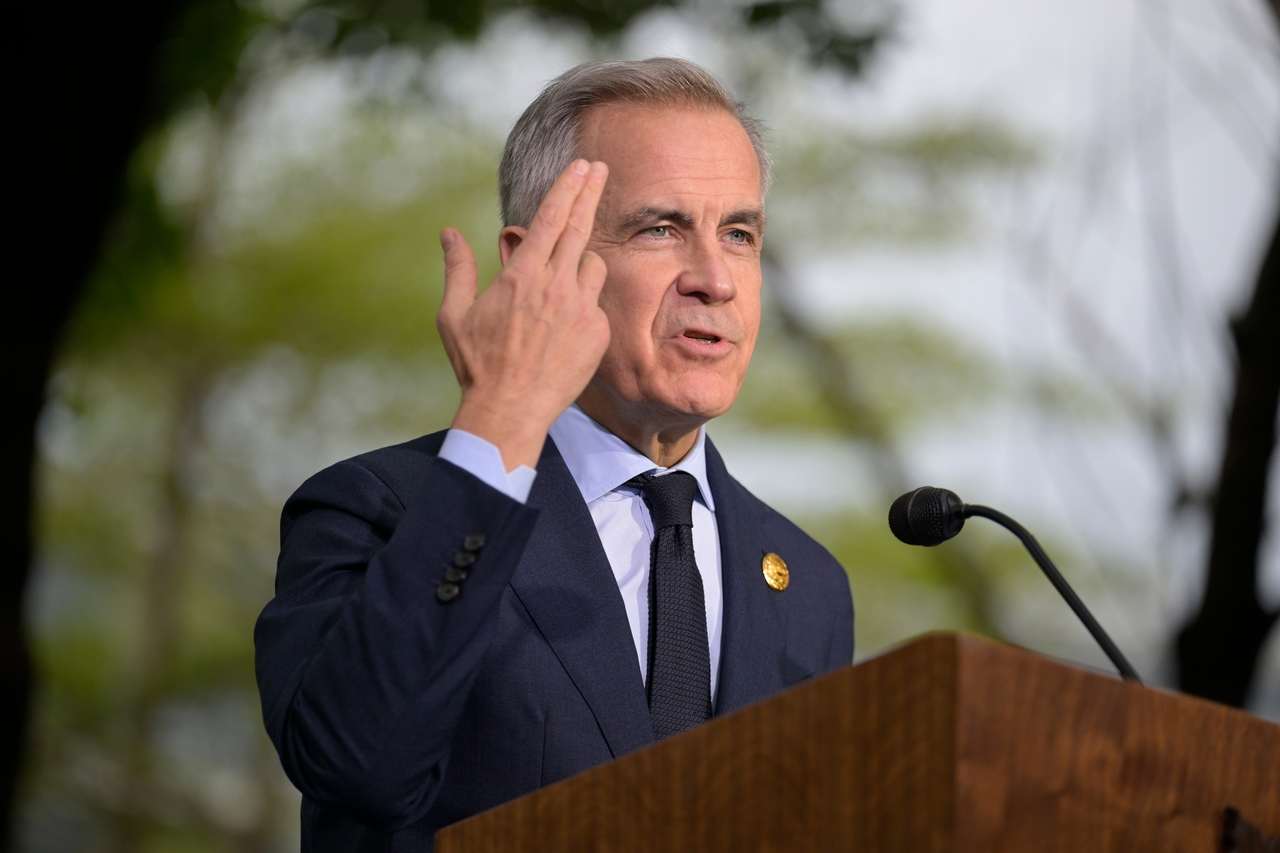
Donald Trump and Canadian Prime Minister Mark Carney held an unscheduled summit in China to discuss a possible trade agreement, raising hopes that negotiations between the two countries could resume after talks collapsed in August.
According to the Canadian Prime Minister's Office, Trump and Carney met Wednesday (local time) on the sidelines of the Asia-Pacific Economic Cooperation summit in Shenzhen, Guangdong province, to discuss bilateral trade issues. "The two leaders held discussions aimed at reaching a mutually beneficial trade agreement," the Prime Minister's Office said in a statement.
The Prime Minister's Office said any agreement must create good jobs, ease the burden of rising prices and fully respect Canada's language, culture and sovereignty — reaffirming Ottawa's position that a deal must go beyond simple tariff reductions to protect Canada's economic interests and sovereignty.
The meeting drew attention precisely because it was unannounced. According to The New York Times, the Prime Minister's Office had said as recently as Wednesday that no meeting with Trump was planned in China, only for the two leaders to sit down together within a day. The timing was also notable: Carney had just secured trade wins with China and the Philippines during his Asia tour before sitting down with the US president.
On the American side, Secretary of State Marco Rubio, Commerce Secretary Howard Lutnick, US Trade Representative Jamieson Greer and newly appointed White House Chief of Staff Stephen Miller were present. The attendance of key figures overseeing diplomacy and trade policy suggested the two sides discussed major sticking points in any potential trade agreement.
The negotiations are not going smoothly, however. Speaking to reporters before the meeting, Carney said progress was being made in trade talks with the Trump administration, but described the process as "two steps forward, one step back" — an acknowledgment that the negotiations have been lurching between advances and setbacks.
"We have long said, and believed, and continue to believe, that a mutually beneficial agreement between Canada and the United States is possible," Carney said. "We will do everything necessary to reach that agreement — but only if it serves the interests of Canadians."
The two countries had previously negotiated toward lower tariffs but failed to reach a deal in August. After Trump imposed new tariffs on Canadian products and Canada responded with retaliatory measures, trade tensions between the two escalated sharply. The possibility of resuming talks has been raised since then, but no real breakthrough has materialized.
Trump said earlier this month that a trade deal with Canada was very close, offering an optimistic outlook. The two countries have not yet returned to formal negotiations, however, and no specific agreement or timeline for resuming talks was made public following the summit.
The surprise meeting during their respective Asia trips has raised expectations for a resumption of negotiations, but it remains uncertain whether the two sides can bridge their differences over tariffs. The key question now is whether the United States and Canada will return to formal talks and agree on concrete measures to reduce tariffs.
sjy@heraldcorp.com