Part of Seoul Metropolitan Government's private gugak event support project, the festival blended tradition and modernity
Mask dance, pungmul and fusion gugak brought traditional culture into everyday public life
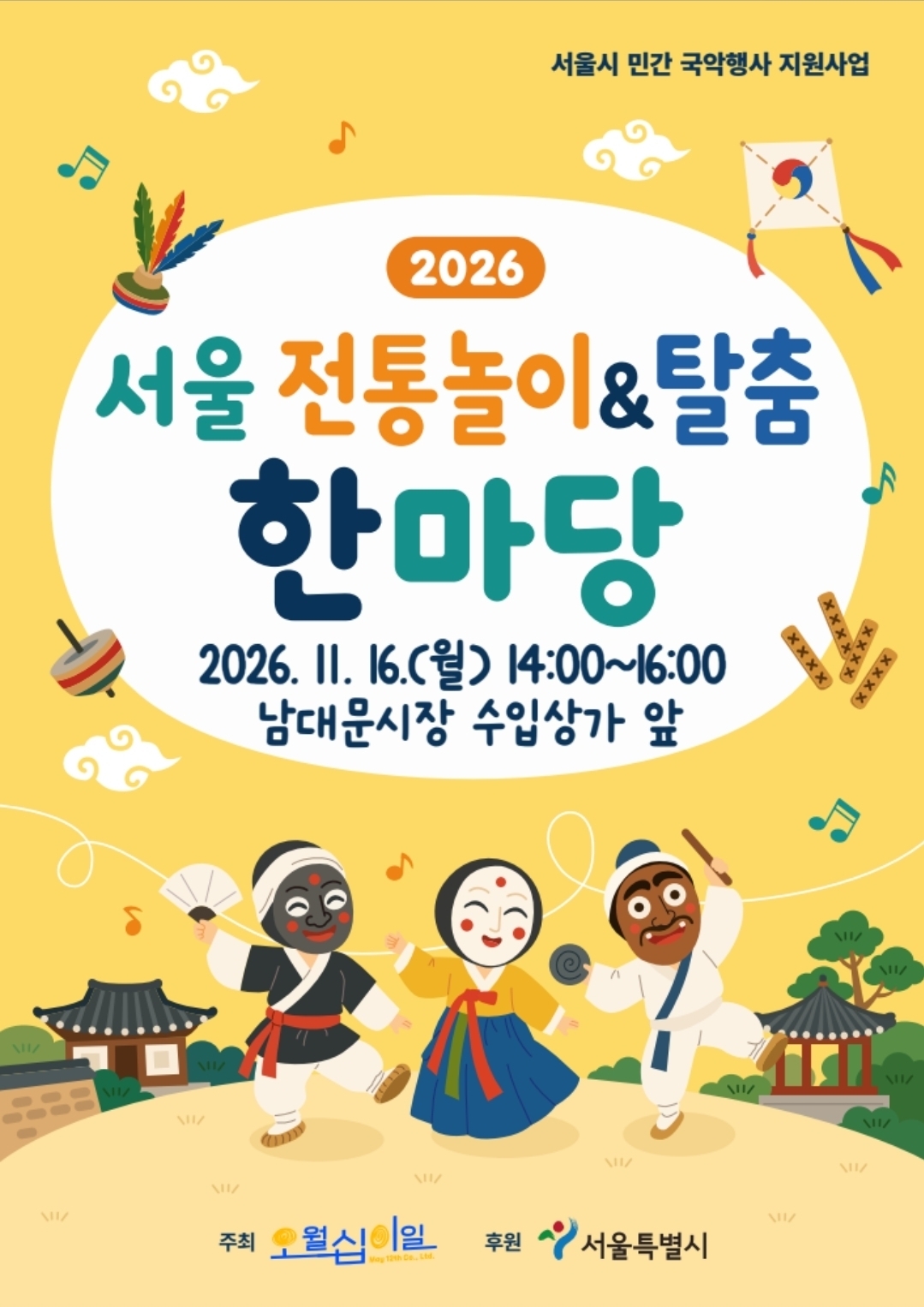
Namdaemun Market, one of Seoul's most iconic traditional markets, transformed into a stage for Korean performing arts on Monday, blending centuries-old rhythms and dance with a contemporary sensibility.
The "2026 Seoul Traditional Play & Mask Dance Festival" was held in front of the imports shopping arcade at Namdaemun Market on Monday. Organized as part of the Seoul Metropolitan Government's private gugak event support project, the festival was designed to showcase the artistic value and appeal of Korean traditional culture through a diverse lineup — including traditional mask dance, percussion performances, fusion gugak and gugak b-boying.
Particularly notable was the choice of venue. By moving beyond the confines of a conventional performance hall and staging the event at a traditional market frequented by residents and tourists alike, organizers aimed to bring gugak and traditional performing arts into people's everyday lives.
The event ran from 2 p.m. to 4 p.m. and featured three performing groups. The program opened with mask dance and percussion rooted in the wit and exuberance of traditional Korean performing arts, followed by a fusion gugak ensemble blending Eastern and Western instruments, and closed with a performance fusing traditional rhythms with the dynamic moves of breaking.
The first act was performed by Unrak, a mask dance and percussion group. Unrak combined elements of pungmul (traditional percussion and dance), berna (a juggling act), comic storytelling and lion mask dance into a single performance, conveying the humor and communal spirit distinctive to Korean folk tradition through lively drumming, playful choreography and witty theatrical flair.
Mask dance is one of Korea's most celebrated traditional art forms, long reflecting the lives and emotions of ordinary people. Recognized for its cultural value in using satire and humor to deliver social commentary and foster community cohesion, it was inscribed on UNESCO's Representative List of the Intangible Cultural Heritage of Humanity in 2022. The performance offered audiences an accessible introduction to this enduring tradition.
Next, fusion gugak ensemble Mulgyeol took the stage with a program that layered modern musical sensibilities onto traditional Korean melodies. The group's sound is built on a harmony of Eastern and Western instruments, combining the delicate expressiveness of gugak with the refined aesthetic of contemporary music.
Mulgyeol's set demonstrated that traditional music need not remain a relic of the past. By pushing the boundaries of gugak through varied musical experimentation while preserving its core identity, the group showed how the genre can generate new possibilities when it meets a modern sensibility.
The closing act belonged to S-FLAVA, a gugak b-boy crew that pairs traditional Korean rhythms with breaking, the contemporary street dance form.
Their performance — a fusion of classical gugak beats and acrobatic b-boy moves — illustrated how art forms from different eras and genres can merge into a single cohesive show. By channeling traditional music through a street dance idiom familiar to younger audiences, S-FLAVA pointed to the potential for gugak to reach a broader public and bridge cultural gaps between generations.
Namdaemun Market, where commercial activity has continued since the Joseon Dynasty, is a space where deep history and the everyday lifestyle of ordinary Seoulites coexist. Staging traditional performances at a venue that draws merchants, residents and domestic and international tourists alike also served to highlight the market's historical significance and cultural value.
Traditional markets are more than commercial spaces — they are repositories of local history and everyday culture. By turning such a space into a stage for the performing arts, the event offered residents a new way to engage with culture and demonstrated how traditional markets can be revitalized through the arts.
Above all, the festival brought together a program spanning the full arc from traditional performing arts — mask dance and pungmul — to fusion gugak and gugak b-boying, embodying two complementary values: the preservation of traditional culture and its reinterpretation for a modern audience.
The event preserved the distinctive artistry of Korean traditional culture while connecting it with contemporary modes of expression, expanding it into cultural content that can resonate across generations.
The festival gave residents a chance to experience traditional arts up close in their daily lives and to rediscover the value of Korea's cultural heritage. It also showed how performances that link traditional markets with the arts can serve as a model for enhancing a neighborhood's cultural appeal and broadening public access to culture.
The "2026 Seoul Traditional Play & Mask Dance Festival" was hosted by Owolsibiil Co. with support from the Seoul Metropolitan Government, as part of the city's private gugak event support project.
7toy7@heraldcorp.com