Bill to raise full deduction limit from 100,000 to 200,000 won
Tax credit rate for depopulated areas to rise from 15% to 30%
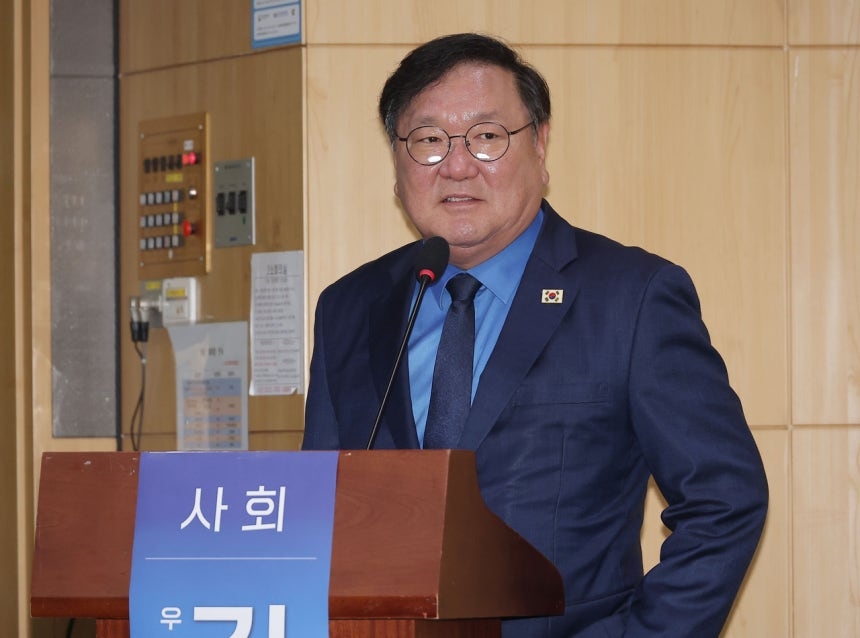
Kim Tae-nyeon, a Democratic Party of Korea lawmaker representing Seongnam Sujeong in Gyeonggi Province, announced Wednesday that he had introduced a bill to amend the Restriction of Special Taxation Act. The bill would double the full tax-credit ceiling for the hometown love donation scheme from the current 100,000 won ($75) to 200,000 won, and raise the tax credit rate on donations above 200,000 won to depopulated areas to 30 percent.
Under current law, donations of up to 100,000 won under the scheme receive a full tax credit, amounts between 100,000 and 200,000 won are credited at 44 percent, and amounts above 200,000 won at 15 percent — figures that incorporate the local income tax credit rate. Donations to specially designated disaster zones already receive a 30 percent credit on amounts exceeding 200,000 won.
Critics inside and outside the political arena have long noted that the vast majority of donations cluster at or below the 100,000-won full-credit ceiling. In 2025, the scheme drew a total of 151.5 billion won across roughly 1.39 million donations, but 94.8 percent of all donations were for 100,000 won or less.
Although the tax credit rate for the 100,000-to-200,000-won bracket was raised this year from 40 percent to 44 percent, the average donation per person remained at around 110,000 won. The figures suggest that a modest increase in the credit rate alone is not enough to encourage donors to give more.
Under Kim's bill, the full tax-credit bracket would be extended to 200,000 won. For donations to depopulated areas, the credit rate on amounts between 200,000 won and 20 million won would rise from the current 15 percent to 30 percent. The aim is to grow overall donation volumes and channel additional giving toward depopulated regions.
Kim had also proposed raising the full tax-credit ceiling for the hometown donation scheme during this year's national audit.
Counties such as Gokseong-gun and Yeongam-gun in South Jeolla Province and Buyeo-gun in South Chungcheong Province have used hometown donation funds to secure pediatric specialists and medical facilities, filling critical gaps in local healthcare. The funds have also served as a fiscal resource to support reconstruction efforts that fall outside the scope of statutory disaster relief.
Kim also cited the economic feedback effect generated through local gift returns. Of the 151.5 billion won raised under the scheme in 2025, about 31.6 billion won was spent on purchasing local gift items for donors.
"The hometown love donation scheme supplements policies that are genuinely necessary but receive low priority because they benefit too few people, and it is a system through which fiscal resources flow from the greater Seoul metropolitan area to the regions through the voluntary choices of citizens," Kim said. "The structure of channeling funds into local finances — which the government pursues through various policies — is already operating through citizens' voluntary choices under this scheme."
Kim added that expanding the tax credit "should not be viewed solely as a tax expenditure, but assessed comprehensively to include the effects of strengthening local finances, revitalizing regional economies, and the resulting feedback in tax revenue."
bigroot@heraldcorp.com