Seminar co-hosted with ICGN ahead of revised code taking effect next January
Listed companies and institutional investors map out response strategies
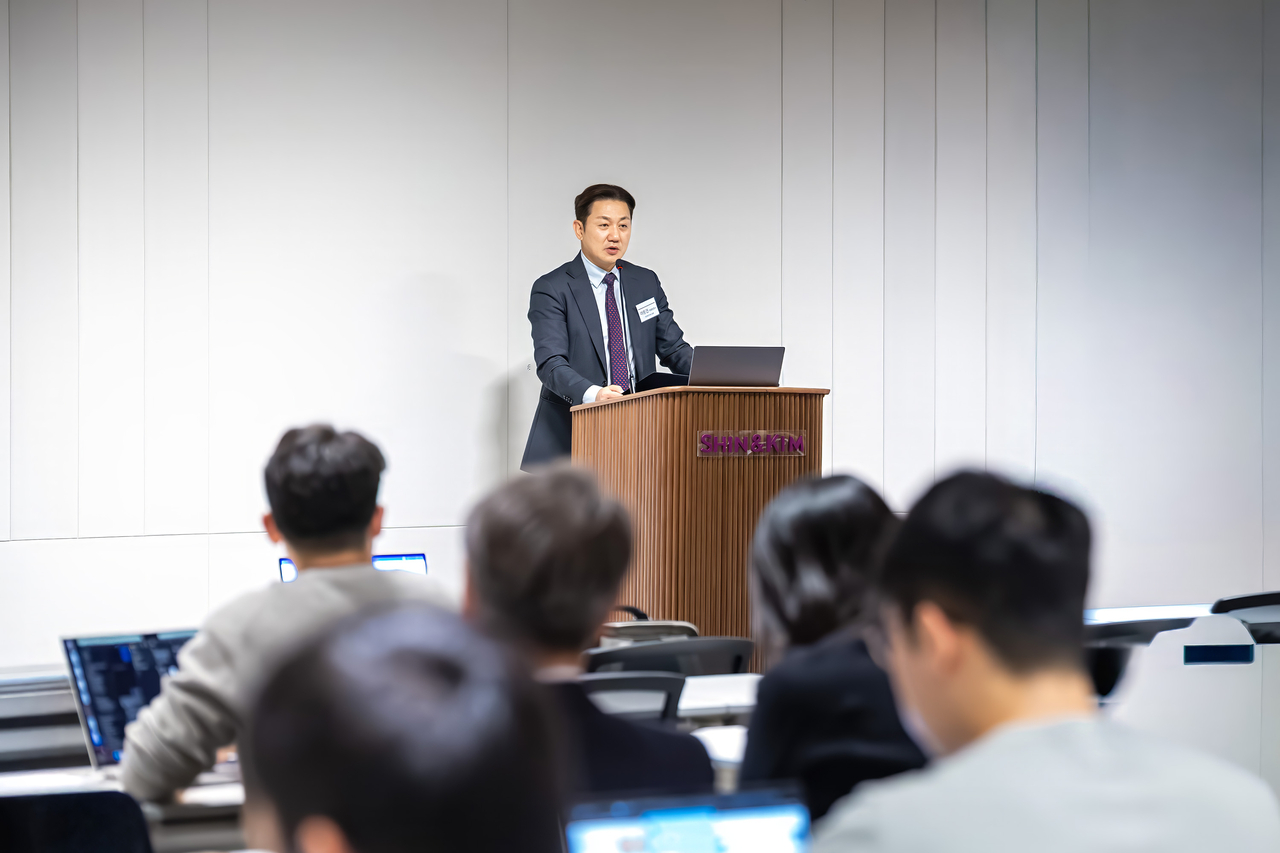
Law firm Sejong has organized a forum to help institutional investors and listed companies prepare for the revised stewardship code set to take effect next January.
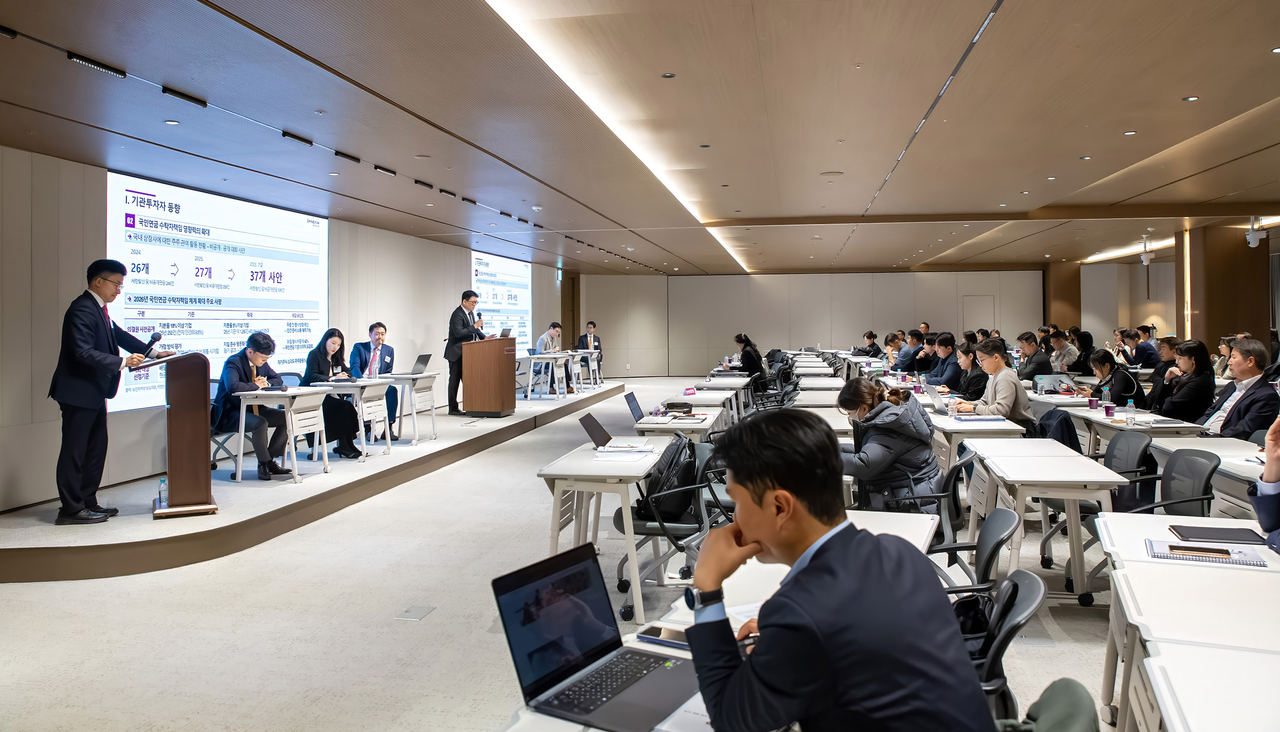
Sejong's Corporate Governance Strategy Center held a seminar Tuesday at Gran Seoul in Jongno-gu, Seoul, co-hosted with the International Corporate Governance Network (ICGN), on response strategies for institutional investors and companies ahead of the revised code's implementation.
The event opened with remarks from ICGN CEO Jen Sisson and Lee Dong-geon, managing partner and head of Sejong's Corporate Governance Strategy Center, followed by keynote presentations, thematic sessions and a panel discussion.
ICGN's global policy team delivered the keynote under the theme of domestic and international stewardship code revision trends, sharing updates on revisions in major markets including the United Kingdom and Japan, as well as shifts in how global institutional investors are fulfilling their fiduciary duties and engaging with companies.
The first session featured Hwang Hyeon-yeong, a senior research fellow at the Korea Capital Market Institute, who outlined the impact the revised stewardship code would have on institutional investors and companies. "The comprehensive revision of the stewardship code — the first in a decade — is significant because it introduces a compliance-monitoring mechanism that actually verifies whether institutional investors are fulfilling their fiduciary responsibilities," Hwang said. "With enhanced disclosure requirements covering shareholder meeting voting results, executive compensation and treasury shares, alongside amendments to the Commercial Act and the Capital Markets Act, companies must provide a solid basis for their decisions at disclosure and at general meetings."
The second session featured Yoon Tae-jun, a specialist at Sejong, who spoke on response strategies for domestic listed companies and institutional investors. "As institutional investor demands have evolved beyond shareholder return policies to encompass board independence and the protection of shareholder rights, a single department can no longer handle engagement on its own," Yoon said. "Companies need to build their own internal response capabilities and make active use of external expert advisory groups."
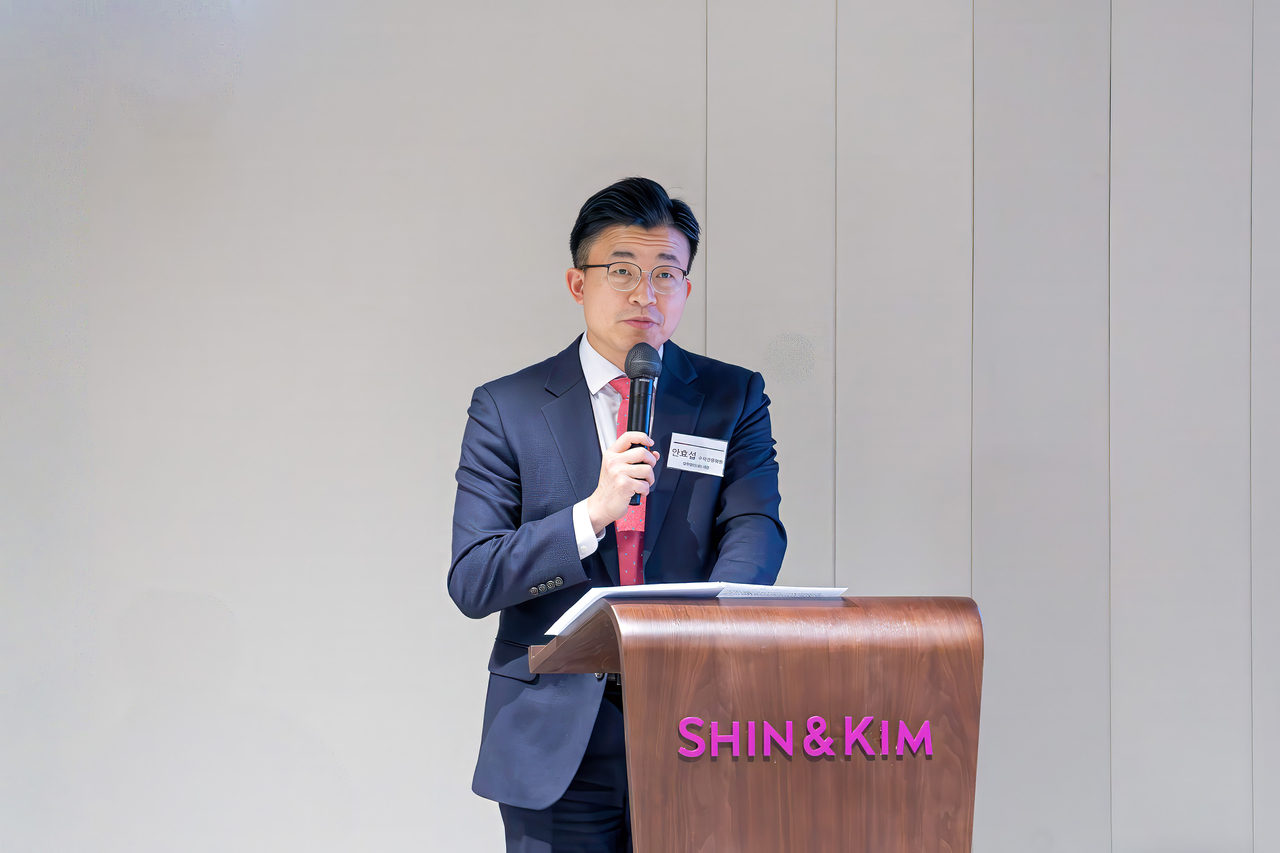
The panel discussion, moderated by Ahn Hyo-seop, chief specialist at Sejong, brought together Hong Hyeon-pyo, a Sejong attorney and former official at the national pension fund's stewardship division; Oh Seung-jae, CEO of Sustinvest; and Lee Wang-gyeom, head of the responsible investment strategy center at Mirae Asset Global Investments and a member of the stewardship code development committee.
Hong said institutional investor influence is growing rapidly, pointing to the rising share of domestic equities held by the national pension fund and an increasing rate of votes cast against management resolutions. "Starting with next year's annual general meetings, the expanded mandatory separation of audit committee member elections and the 3 percent combined voting cap on controlling shareholders and related parties will give institutional votes decisive power over board appointments," Hong said. Hong added that companies should prepare in advance and maintain consistent explanations in line with guidelines — including advance verification of independent director candidate qualifications, review of compensation policies and documentation of engagement with individual institutions.
Moderator Ahn said the revision signals the end of the era of "formal checklists," and predicted that next year's annual general meetings would be a watershed moment — the first time that expanded mandatory separation of audit committee elections and mandatory cumulative voting are simultaneously applied to large listed companies with assets of 2 trillion won ($1.49 billion) or more. "With shareholder engagement now a year-round activity, companies must move beyond a defensive posture and take responsibility for explaining their board decision-making processes transparently," Ahn said.
Lee said the implementation of the revised code "carries important significance in fostering companies' sustainable growth and long-term value enhancement through constructive dialogue," and pledged to provide practical legal services to help clients respond effectively to the evolving stewardship landscape.
Sejong's Corporate Governance Strategy Center, led by Managing Partner Lee Dong-geon and attorney Lee Suk-mi, offers comprehensive legal advisory services across all areas of corporate governance — including verification of director candidate qualifications, institutional investor engagement consulting, shareholder return and investor relations strategy, and corporate value enhancement planning.
Sejong's corporate advisory and mergers and acquisitions group draws on a team of about 100 professionals — senior practitioners with more than 30 years of experience, next-generation veterans and foreign attorneys specializing in cross-border transactions — to deliver integrated solutions. Chambers and Partners, the London-based legal ranking organization, has named the firm a Band 1 M&A firm for seven consecutive years from 2020 to 2026. The group has closed a string of major transactions, including the merger of HD Hyundai Heavy Industries and HD Hyundai Mipo, and this year has continued to demonstrate its M&A capabilities by leading sale advisory mandates for Hyundai IFC, Kakao Games and SK Eternix.
an@heraldcorp.com