Korea Financial Investment Association revises underwriting rules, effective Jan. 1
Workaround orders through different-maturity bonds also restricted
Move may dampen book-building demand but is expected to ease price distortion
Starting next year, securities firms will be prohibited from artificially suppressing corporate bond issuance rates by mobilizing affiliated financial companies or in-house asset management units — a practice known as "captive" marketing. The ban aims to prevent issuance rate distortions by blocking securities firms and issuers from pre-arranging interest rates and order volumes before the book-building process.
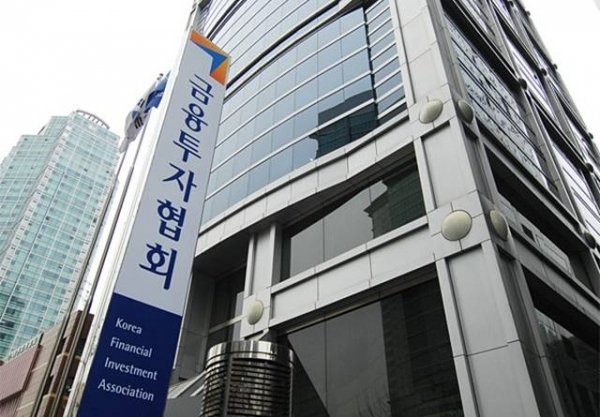
According to the financial investment industry, the Korea Financial Investment Association revised its regulations on securities underwriting Thursday and put them into effect Friday. Provisions specifically targeting captive corporate bond practices will apply to issuances for which a securities registration statement is first filed on or after Jan. 1.
Captive marketing refers to the practice of securities firms directing their in-house asset management units or affiliated financial companies to submit artificially low-rate orders during book-building, either to win underwriting mandates or to reduce borrowing costs for the issuing company. Book-building is the process by which institutional investors submit their desired interest rates and order volumes ahead of a corporate bond issuance. When pre-arranged low-rate orders enter this process, the resulting issuance rate ends up lower than what genuine investment demand would warrant.
Under the revised rules, lead managers and underwriters of publicly offered unsecured bonds may not participate in book-building at rates and volumes pre-agreed with the issuer through side agreements or other arrangements. Inducing specific investors to participate under pre-arranged terms is also prohibited. Lead managers and underwriters are additionally barred from participating in book-building for bonds they themselves are underwriting.
The prohibition covers all bonds issued on the same day under a single securities registration statement. This means a securities firm acting as lead manager for a three-year bond would also be barred from placing low-rate orders — through a separate in-house unit — for a two-year bond issued simultaneously under the same filing.
Accountability for issuers is also being tightened. Lead underwriting agreements must now explicitly state that the issuing company may not request participation in book-building at specific rates or volumes, and that the issuer will be held responsible for any violation.
Internal controls at securities firms will be strengthened as well. When participating in book-building, lead managers and underwriters must obtain confirmation from their compliance officers regarding conflict-of-interest management, information barrier compliance, and the procedures used to determine participation rates and volumes. Leaking order information — including individual investors' submitted rates and quantities — is also explicitly prohibited.
The revision follows a management-caution action the Financial Supervisory Service issued in April against six major corporate bond underwriters. At the time, the FSS flagged the practice of securities firms using in-house asset management units or affiliated financial companies in book-building as a means of securing underwriting mandates.
Some in the securities industry have raised concerns that restricting captive marketing could lower oversubscription rates in corporate bond book-building. However, the prevailing view is that having issuance rates reflect actual investment demand will reduce price distortion in the market.
"In the short term, oversubscription rates in book-building may decline, but over the medium to long term, we expect a healthier primary market to emerge as price distortions ease," said Kim Sang-in, a researcher at Shinhan Securities.

hajun825@heraldcorp.com