Xi holds back-to-back summits with Mexico, Peru and Chile ahead of APEC opening
Xi pledges $22.5 million to Peru for El Niño relief, proposes investment expansion with Mexico
China deepens AI and tech ties with Chile, world's top copper reserve holder
Beijing moves to counter US influence in Western Hemisphere amid supply chain rivalry
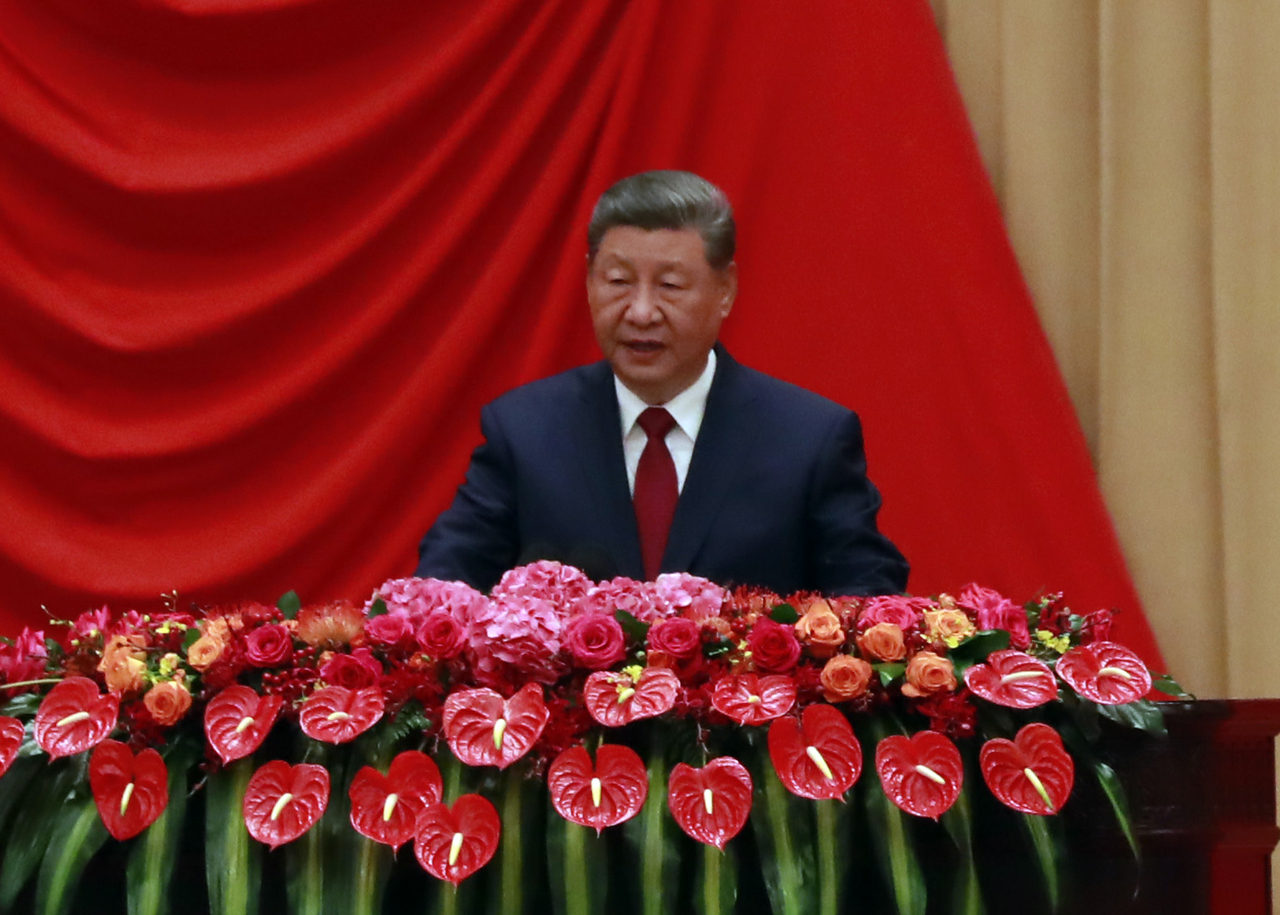
Chinese President Xi Jinping held a series of meetings with Latin American leaders on the eve of Donald Trump's visit to China, moving to deepen economic ties across a region where Washington has long held sway. Xi pledged $22.5 million in aid to Peru for El Niño disaster recovery, discussed infrastructure and clean energy investment with Mexico, and proposed AI technology cooperation with Chile. The flurry of diplomacy signals Beijing's intent to expand its influence in Latin America through financing and advanced technology — and is expected to sharpen the rivalry between China and the United States over resources and supply chains in the region.
According to Bloomberg and local Latin American media, Xi met Tuesday (local time) with the leaders of Mexico, Peru and Chile in the southern Chinese city of Shenzhen, a day before the Asia-Pacific Economic Cooperation summit was set to open.
The timing drew attention: the meetings came just before Trump was due to arrive in China on Wednesday to attend the APEC summit. Analysts see the back-to-back summits as Beijing's response to Washington's push to strengthen its own influence in the Western Hemisphere, with China moving to lock in economic partnerships with key Latin American nations.
Trade and investment topped Xi's agenda.
In his meeting with Mexican President Claudia Sheinbaum, Xi expressed his intention to elevate bilateral economic cooperation, proposing deeper collaboration in infrastructure, technology and clean energy, and calling for the relationship to advance to "a higher level."
Mexico's geographic proximity and deep economic integration with the United States make it a strategically significant target. China's push to expand investment and technology cooperation with Mexico is widely interpreted as an effort to gain ground within Washington's traditional economic sphere of influence.
For Peru, Xi offered substantial assistance.
In his meeting with Peruvian President Keiko Fujimori, Xi agreed to provide $22.5 million in goods and funds to help Peru recover from damage caused by the El Niño weather phenomenon.
The two countries also agreed to strengthen cooperation in energy and natural resources under a revised free trade agreement, while expanding exchanges in culture and public health.
The move reflects Beijing's strategy of using climate disaster relief to deepen bilateral ties while reinforcing existing cooperation on resources and energy.
Advanced technology and AI took center stage at the summit with Chile.
Xi met with Chilean President José Antonio Kast and expressed his intention to jointly address the climate crisis while expanding cooperation in AI and advanced technology.
Chile holds the world's largest copper reserves. Copper is an essential resource for clean energy industries, including power grids and electric vehicles, and its importance in global supply chain competition has grown considerably.
China's push to strengthen AI and advanced technology cooperation with Chile is seen as closely linked to the broader contest over critical mineral resources.
In the AI sector particularly, the technological competition between China and the United States continues to intensify. China has been aggressively promoting open-source AI models, while the United States has centered its competition around closed, proprietary AI models.
Beijing's offer of AI technology cooperation to Latin American nations is interpreted as an attempt to extend its influence into the advanced technology domain as well.
Latin America's emergence as a key arena for US-China competition is driven largely by the region's abundant natural resources.
The region holds vast reserves of not only oil and natural gas but also lithium, rare earth elements and other critical minerals essential for electric vehicle batteries and clean energy industries. Both the United States and China are focused on securing stable supply chains and are investing heavily in strengthening ties with Latin American nations.
China in particular has been deepening solidarity with the Global South — emerging and developing nations — as a counterweight to the US-led economic order. The latest round of summits is seen as a diplomatic effort to draw Latin American countries into China's network of partners through economic support and technology cooperation.
The fact that Xi moved to meet with Latin American leaders before Trump's arrival in China is also seen as consistent with that broader strategy, analysts said.
Trump is scheduled to travel to Shenzhen on Wednesday after completing the Quad summit — a security cooperation forum involving the United States, Japan, Australia and India.
The APEC summit, running Wednesday through Thursday, will bring together leaders from major economies including the United States, China and Russia.
sjy@heraldcorp.com