Hosted by the Provisional Capital Memorial Museum under the Busan Modern and Contemporary History Museum
Special exhibition runs Nov. 24 through May 30 next year at the Busan Citizens Park History Museum
Features Camp Hialeah, Busan Port, Busan Station and more from the wartime refugee capital
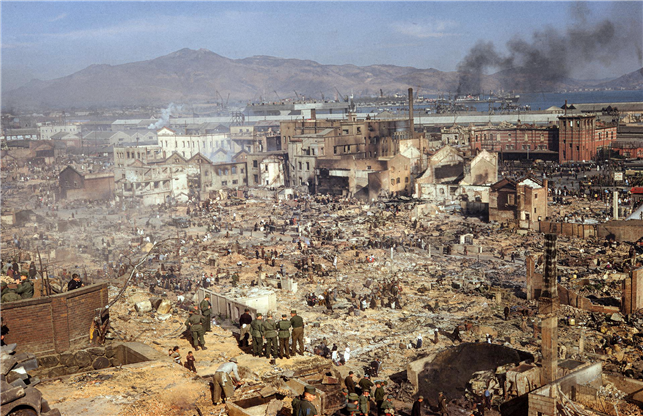
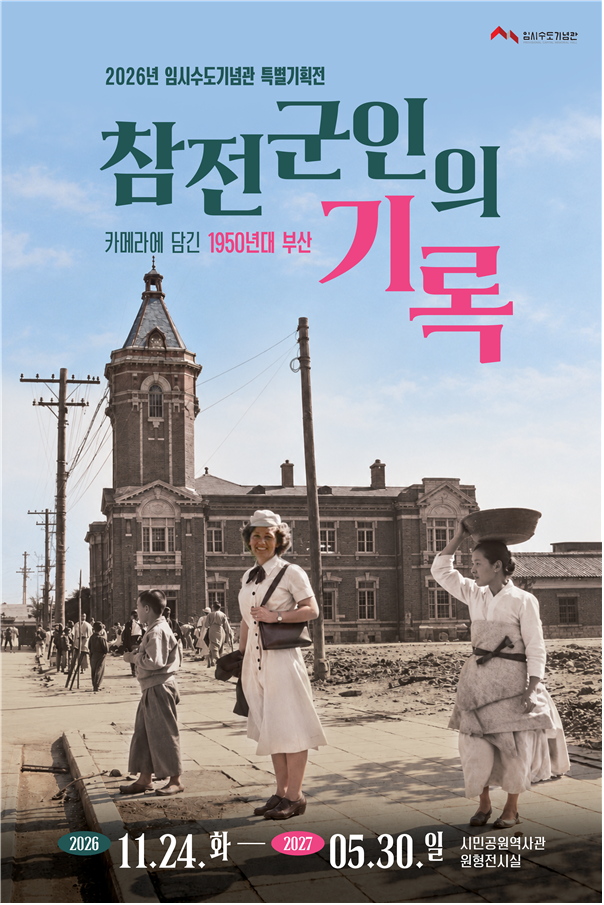
The Provisional Capital Memorial Museum, part of the Busan Modern and Contemporary History Museum, will hold a special exhibition titled "Veterans' Records: Busan in the 1950s Through the Camera" at the circular exhibition hall of the Busan Citizens Park History Museum from Nov. 24 through May 30 next year.
The exhibition presents photographs taken by war veterans who came to Busan during the Korean War, when the city served as the wartime refugee capital, offering a vivid look at the city's many faces in the 1950s. Organized in three parts, the exhibition is free and open to all.
Part 1, "A City at War: Busan as the Refugee Capital," examines wartime Busan through images of US military logistics bases and key military installations established in the city, as well as Busan Port and Busan Station, which were bustling with refugees and war supplies. Part 2, "Everyday Life in 1950s Busan," captures scenes of the refugee capital that were familiar to its residents but foreign to the visiting soldiers — showing ordinary people carrying on with daily life even amid the devastation of war.
Part 3, "Scenes from Camp Hialeah," shines a light on the USFK Busan Base Command — known as Camp Hialeah — which oversaw the supply of war materiel and directed rear-area operations during the Korean War. The section features images of the base's facilities and daily life inside, along with portraits of the American soldiers and Busan residents who lived and worked there.
The exhibition draws not only on photographs held in the Provisional Capital Memorial Museum's own collection but also on rare archival images preserved by private collector Shin Jeong-ik, offering an even richer and more vivid portrait of Busan in the 1950s.
Meanwhile, the area around Beomjeon-ri and Yeonji-ri in Busanjin-gu — where Busan Citizens Park now stands — was home to the USFK Busan Base Command, known as Camp Hialeah, after Korea's liberation in 1945. Following years of civic advocacy, the site was returned in 2010 and reopened in 2014 as Busan Citizens Park. The Busan Citizens Park History Museum, affiliated with the Provisional Capital Memorial Museum, was established that same year to highlight the historical significance and symbolic value of the park's grounds.
Ryu Seung-hun, director of the Provisional Capital Memorial Museum, said he hoped the exhibition — designed to explore the many sides of 1950s Busan as seen through outsiders' eyes and to highlight the historical value of the refugee capital and its documentary heritage — would offer visitors a meaningful opportunity to share in the memories of that era.
kaf2002@heraldcorp.com