National Assembly tax subcommittee set to review domestic production tax credit
Tax benefits tied to domestic output volumes
Solar and other loss-making firms see limited gains
Calls grow for credit transfers, direct refunds to broaden reach
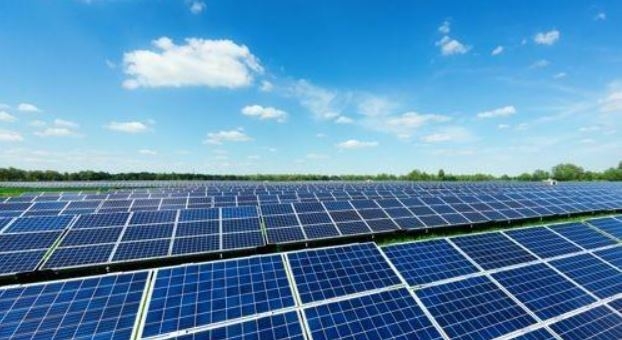
A domestic production tax credit designed to strengthen South Korea's future industrial competitiveness may prove useless for the very companies that need it most, industry observers warn. Even if tax credits are granted based on output volumes, firms running at a loss and unable to pay corporate tax will struggle to benefit. Calls are growing for supplementary measures — such as direct cash refunds — to ensure companies in troubled sectors like solar energy can actually take advantage of the system.
According to industry sources, the National Assembly's tax subcommittee under the Finance and Economy Planning Committee is expected to review this month a proposed amendment to the Special Tax Treatment Control Act that would introduce the domestic production tax credit, which the government announced in August. Known as South Korea's version of the Advanced Manufacturing Production Credit, or AMPC, the system would provide tax incentives based on output volume and a standard credit amount for eligible products manufactured and sold domestically, with the aim of reviving a domestic manufacturing base squeezed by high operating costs.
Six industry categories would be eligible for the domestic production tax credit: solar power, wind power, secondary batteries, semiconductors, core materials and AI robot components.
The problem is that companies unable to pay corporate tax due to operating losses would see limited real-world benefit. Unlike the US AMPC, the Korean version includes no safeguards such as direct cash refunds for unused credits or the ability to transfer credit entitlements. The carryforward mechanism — which allows unused credits to be applied against future profits — cannot bridge the funding gap that factories face when deciding right now whether to keep operations running or commit to next-generation equipment investment.
The solar sector is seen as the hardest hit if the system goes into effect without revision. Domestic solar companies have been struggling with poor earnings amid a supply glut driven by Chinese producers. Hanwha Solutions' renewable energy business, which includes solar operations, posted an operating loss of 85.2 billion won ($63.9 million) last year. The unit returned to profit this year, but it could slip back into the red at any time depending on Chinese production trends.
The solar industry warns that if the system is implemented without changes, weakening competitiveness will allow Chinese products to crowd out even the domestic market.
According to Korea Energy Agency data, Chinese-made modules accounted for 69.3 percent of the 3,753 megawatts of solar modules installed domestically last year, up from 21.6 percent in 2019 — more than a threefold increase. Over the same period, the share of domestically produced modules tumbled from 78.4 percent to 30.7 percent. The dependence on China is even more acute for solar cells, a key component: Chinese-made cells accounted for 96.1 percent of those used in modules installed in South Korea last year.
Concerns have also been raised about the impact on new technology development. Both Hanwha Solutions and Chinese rivals are developing tandem solar cells — which combine silicon and perovskite to overcome efficiency limits — in a race for leadership in the solar market. Without adequate government support, Hanwha Solutions risks falling behind China in that competition.
Analysts argue that the system must be redesigned to drive domestic production and investment if the solar industry is to survive. That means introducing mechanisms — such as direct refunds and credit transfers — that allow companies with insufficient tax liability to still feel the benefit.
Advocates say alternative measures should also be on the table in case direct refunds and credit transfers prove difficult to implement. Options being discussed include temporary purchase subsidies for high-quality domestically produced goods and sector-specific budget programs.
"Major economies around the world are restructuring their industrial policies to go beyond simply expanding deployment — they are placing greater weight on where production is located domestically and on the cleanliness of supply chains," a business community official said. "South Korea likewise needs to design a system where the policy's intent of encouraging domestic production actually translates into real investment and production decisions by companies."
yeongdai@heraldcorp.com