'AI is a matter of national capability — I cannot be neutral on US leadership'
Fed weighs three paths: above-trend GDP growth, labor disruption, or economic slowdown
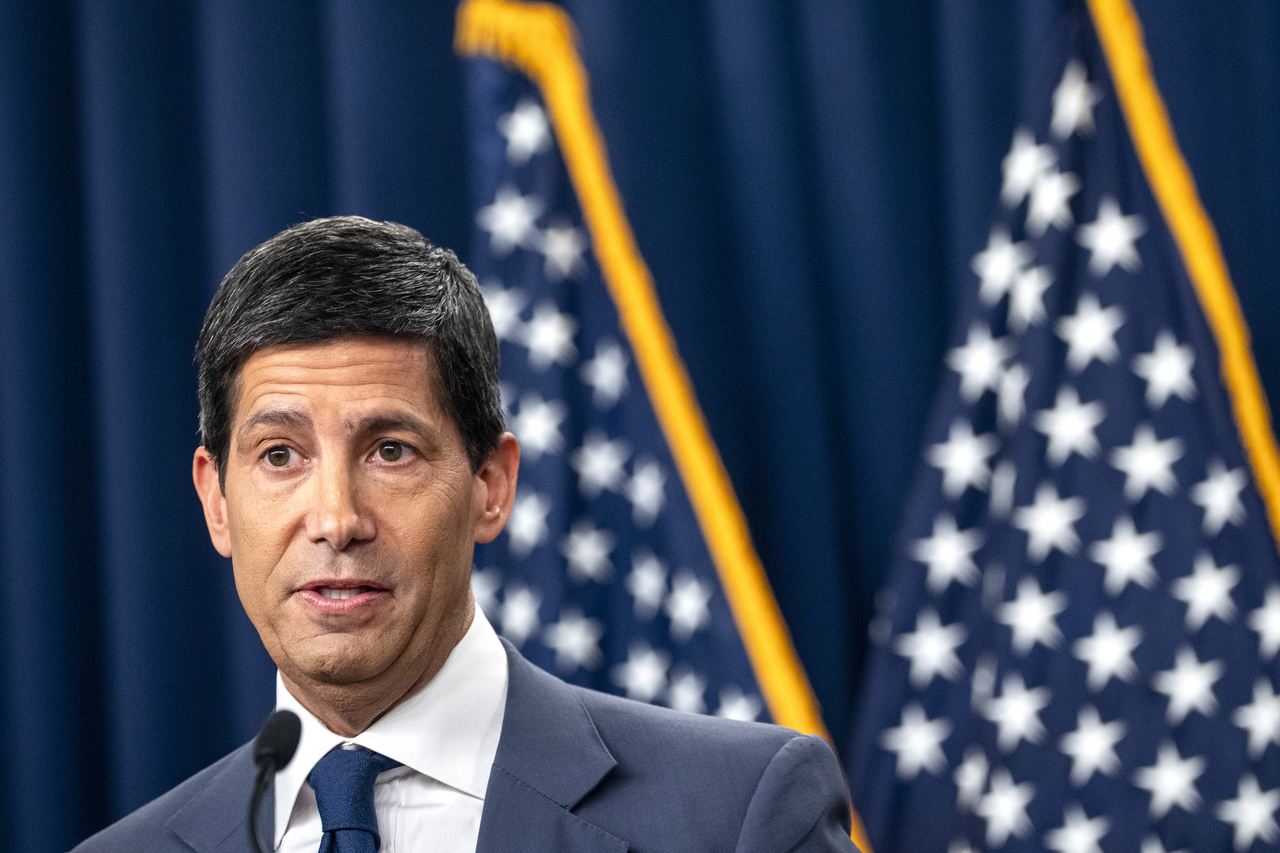
Federal Reserve Chair Kevin Warsh said Monday (local time) that artificial intelligence is a matter of national capability and announced that the Fed has begun scenario analysis on AI's potential economic impact.
Warsh made the remarks in an opening address at a "Productivity and Jobs TF" conference held in San Francisco.
He said Fed Board staff "have begun applying a structured model-based analytical framework to evaluate a range of situations in order to develop scenarios" on AI.
Those scenarios include cases in which AI displaces workers, as well as situations where expected returns turn negative following large-scale capital investment and rising share prices.
Warsh said it is the Fed's responsibility to recognize that "superintelligence — SI, the term the Donald Trump administration uses for AI — will have a significant effect on the economy and carries important implications for future monetary policy."
He invoked the late economist Robert Mundell, who identified the rise of the United States as a superpower as the most important fact of the 20th century, and said maintaining that status is a mission the country must uphold.
"We must then ask: can we be a superpower without SI?" Warsh added. "On the question of American leadership in this era of challenge and possibility, I cannot be neutral."
Warsh outlined three broad scenarios the Fed is examining.
In the first, he said, "SI leads to productivity gains and economic benefits that are widely shared across workers and capital owners." In that case, "real GDP growth would persistently exceed its long-run average and the United States would maintain full employment."
The second scenario envisions an AI-driven expansion that disrupts labor markets. GDP growth would still outpace its long-run average, but widespread automation could push unemployment higher.
In the third scenario, Warsh warned, "SI could disappoint." After substantial capital investment and a stock market rally, expected returns could turn negative and share values could fall, "leading to an economic slowdown and a marked rise in unemployment."
On the Fed's role, Warsh said the central bank takes neither a for nor against position on AI, but added that "it is the Fed's responsibility to recognize that the widespread adoption of this technology will have significant spillover effects on the economy and carries important implications for future monetary policy."
The conference marked the first public unveiling of one of five TFs Warsh formed after taking office to review the Fed's overall operations.
Warsh did not address near-term monetary policy or current economic conditions at the event.
mokiya@heraldcorp.com