First settlement under oil price cap imminent, with 5.6 trillion won in reserve funds at stake
Kepco carries 210 trillion won in debt; Korea Gas holds 14 trillion won in uncollected receivables
Price controls ease inflation but fiscal and state-enterprise burdens keep mounting — exit strategy urgent
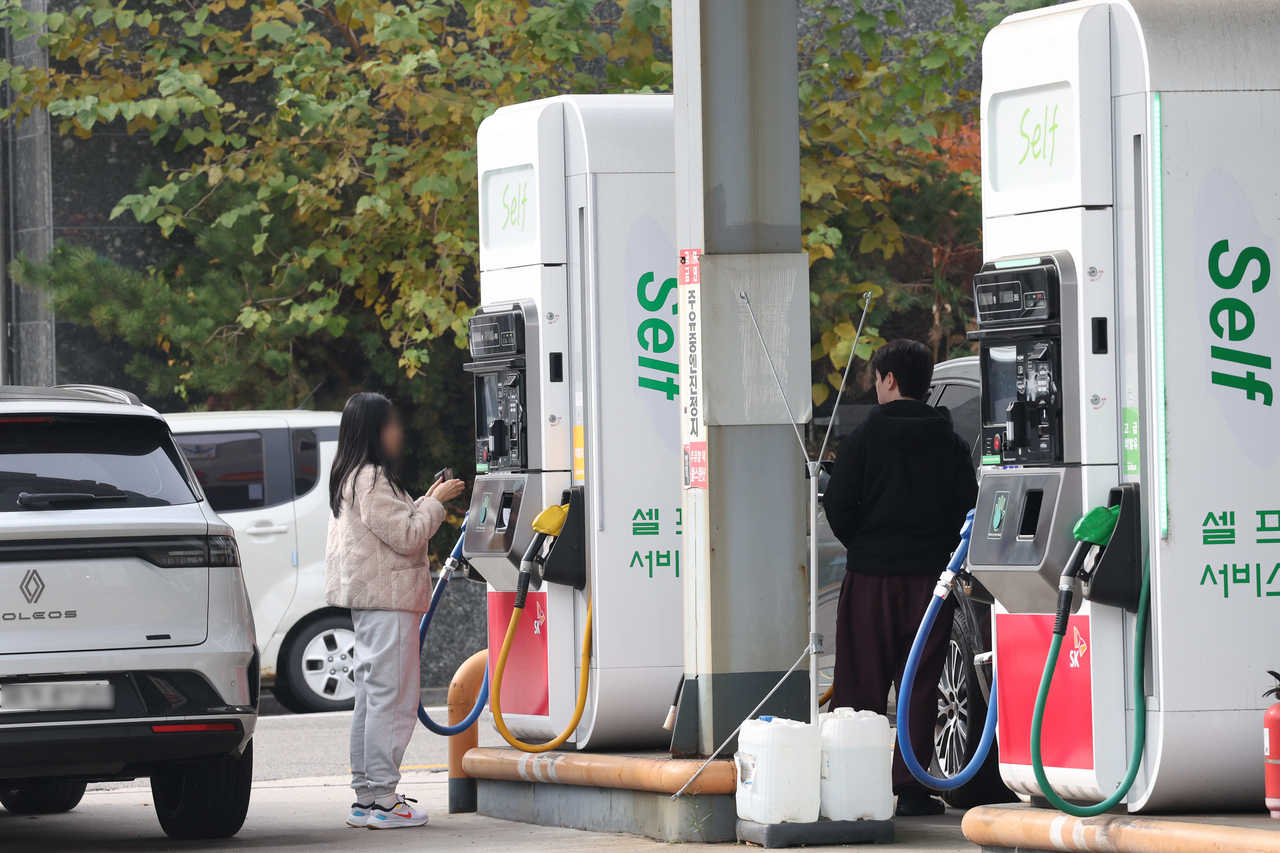
Concerns are mounting that South Korea's oil price cap and frozen electricity and gas tariffs — measures introduced to stabilize prices after the outbreak of the Middle East war — are generating an enormous bill that will eventually come due.
The government maintains that artificial price controls were unavoidable to shield households from the fallout of the Middle East conflict, but the financial burden accumulating on the state and its public enterprises is growing rapidly. Critics warn that the cost of unwinding those losses and debts will ultimately fall on the public.
According to the Ministry of Trade, Industry and Energy, the government plans to notify each refiner of its first loss-compensation settlement — covering the period from March 13, when the oil price cap first took effect, through June 30 — as early as the end of this month.
The oil price cap, the first such measure since fuel prices were liberalized in 1997, sets a ceiling on the prices refiners charge gas stations and other distributors. Under the arrangement, the government covers any resulting losses in the refining industry through public funds.
The government originally expected the measure to run for six months and set aside 4.2 trillion won ($3.15 billion) in reserve funds for loss compensation, but the program has now entered its eighth month. To cover losses in the fourth quarter, the government has earmarked an additional 1.45 trillion won in next year's budget.
The refining industry says the losses requiring compensation far exceed the reserve funds the government has secured, and the settlement process is expected to be contentious.
With the price cap likely to remain in place next year, the fiscal burden on the government is set to grow further. The government has pointed to a Korea Development Institute analysis showing the cap lowered the monthly consumer price inflation rate by an average of 0.6 percentage points between March and October this year as evidence of its effectiveness.
Even so, concerns persist that artificial price controls are distorting the market and straining the country's fiscal health.
At the National Assembly on Monday, lawmakers called on the government to prepare an exit strategy. Industry Minister Kim Jung-kwan acknowledged the dilemma. "We cannot simply continue the price cap indefinitely and are agonizing over the situation," he said, "but with the war still ongoing and the Strait of Hormuz situation uncertain, there is a heavy burden in making an immediate policy shift."
Experts have advised the government to prepare a phased exit strategy in anticipation of a prolonged Middle East conflict.
The current oil price control framework is a package of five interlocking policies — the price ceiling, loss compensation, export volume restrictions, domestic supply obligations and fuel tax cuts — and analysts say regulations should be unwound in an order that minimizes market disruption.
"If volume controls such as export restrictions are lifted first while the price ceiling remains in place, refiners could divert supply overseas and destabilize the domestic market," said Lee Hong, an associate research fellow at the Korea Institute for Industrial Economics and Trade. "Price controls should be lifted first for fuel types with the least market impact, followed by a gradual normalization of volume restrictions and fuel tax cuts."
Unlike the oil sector, where the government directly injects public funds, the costs of frozen electricity and gas tariffs are being absorbed by state-owned energy companies, whose losses and debts continue to pile up.
Korea Electric Power Corporation reported consolidated operating profit of 1.64 trillion won for the third quarter of this year, a 70.9 percent drop from the same period last year. On a standalone basis — excluding subsidiaries — Kepco posted an operating loss of 99.8 billion won, swinging back into the red for the first time in two years.
The freeze on electricity tariffs is seen as the primary cause, even as the cost of generating power has risen with higher prices for liquefied natural gas and thermal coal since the Middle East war began. Residential electricity rates have been frozen for 14 consecutive quarters; industrial rates for eight.
Kepco is now forecast to post a consolidated net loss in the fourth quarter as well. Its total debt stood at 209.6 trillion won at the end of the third quarter, already about 4 trillion won more than at the end of last year, with borrowings reaching 132.8 trillion won.
Even as its debt grows, Kepco faces mounting capital expenditure demands. The company must invest more than 55 trillion won in transmission and distribution infrastructure between this year and 2030.
There are also concerns that suppressing electricity tariffs to contain near-term inflation could disrupt the expansion of the power grid essential to running semiconductor industrial complexes, AI data centers and other advanced industries.
Korea Gas Corporation faces a similar predicament. Its uncollected receivables from residential city gas supply stood at 13.83 trillion won as of the third quarter, up 288.6 billion won from 13.54 trillion won at the end of the first half of this year. Receivables from power generation use rose by 142.8 billion won to 533.7 billion won.
These receivables represent money the company has not collected from customers because it supplies gas below cost — effectively an accumulating tab that inflates borrowings and interest expenses over time. With winter heating demand set to surge, Korea Gas's uncollected receivables are likely to grow further.
LNG import costs have soared since the Middle East war began, yet residential gas tariffs have been frozen since August 2024.
While freezing electricity and gas tariffs can help stabilize prices in the short term, the burden of resolving the accumulated losses and debts will ultimately fall on the public.
Analysts say the cost will only grow over time as interest expenses mount, and call on the government to devise a phased tariff normalization plan that balances price stability against the financial health of state energy companies.
Korea Electric Power Corporation President Kim Dong-chul said at a press briefing in Naju, South Jeolla Province, on Nov. 4 that "a minimum level of electricity tariff adjustment needs to be resolved somehow through discussions with the government."
oskymoon@heraldcorp.com