Kimbap up 43.6% from 5 years ago, now averaging 3,923 won per roll
Jjajangmyeon has climbed 41.0% from 5,538 won five years ago
Rising ingredient costs compounded by higher labor and rent expenses
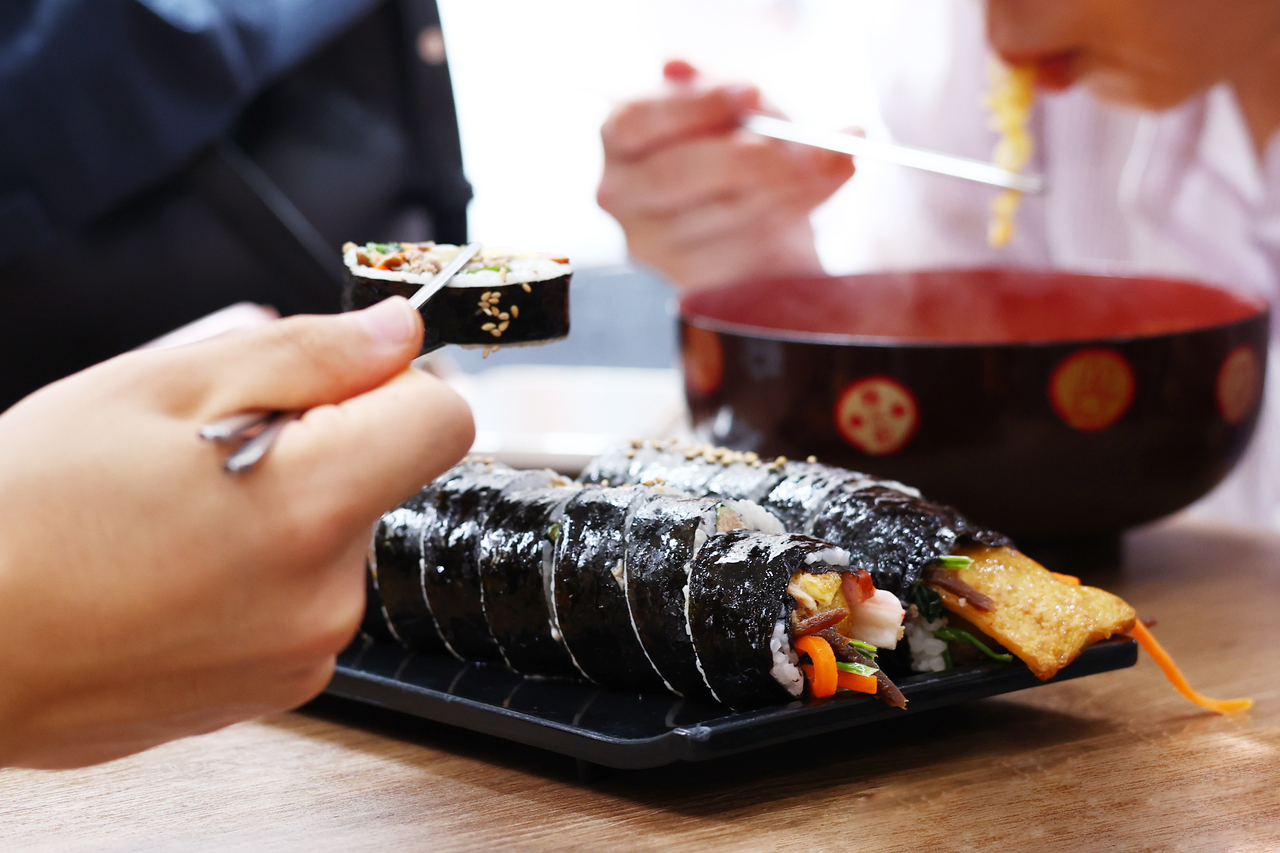
Just five years ago, a roll of kimbap could be had for around 2,000 won. Now it is closing in on 4,000 won. A bowl of jjajangmyeon, once priced in the 5,000-won range, is edging toward 8,000 won. Rising ingredient costs, labor expenses and other overhead are pushing up prices at the casual eateries that many Koreans rely on for affordable meals.
According to data released Saturday by the Korea Consumer Agency's price information portal, the average price of a kimbap roll in Seoul stood at 3,923 won in September — up 300 won, or 8.3 percent, from a year earlier. That was the steepest increase among the eight major dining-out items tracked in the survey. Bibimbap (3.7 percent), kimchi jjigae set meals (3.1 percent), samgyeopsal (3.1 percent), jjajangmyeon (3.0 percent), kalguksu (2.8 percent), naengmyeon (2.2 percent) and samgyetang (1.5 percent) followed.
At major kimbap franchise chains, a basic roll already sells for 4,000 to 5,000 won. Gimbane's signature kimbap is priced at 5,000 won, Gobongmin Gimbap's house roll at 4,700 won, and Barda Kimseongsaeng's "Bareun Kimbap" at 4,900 won.
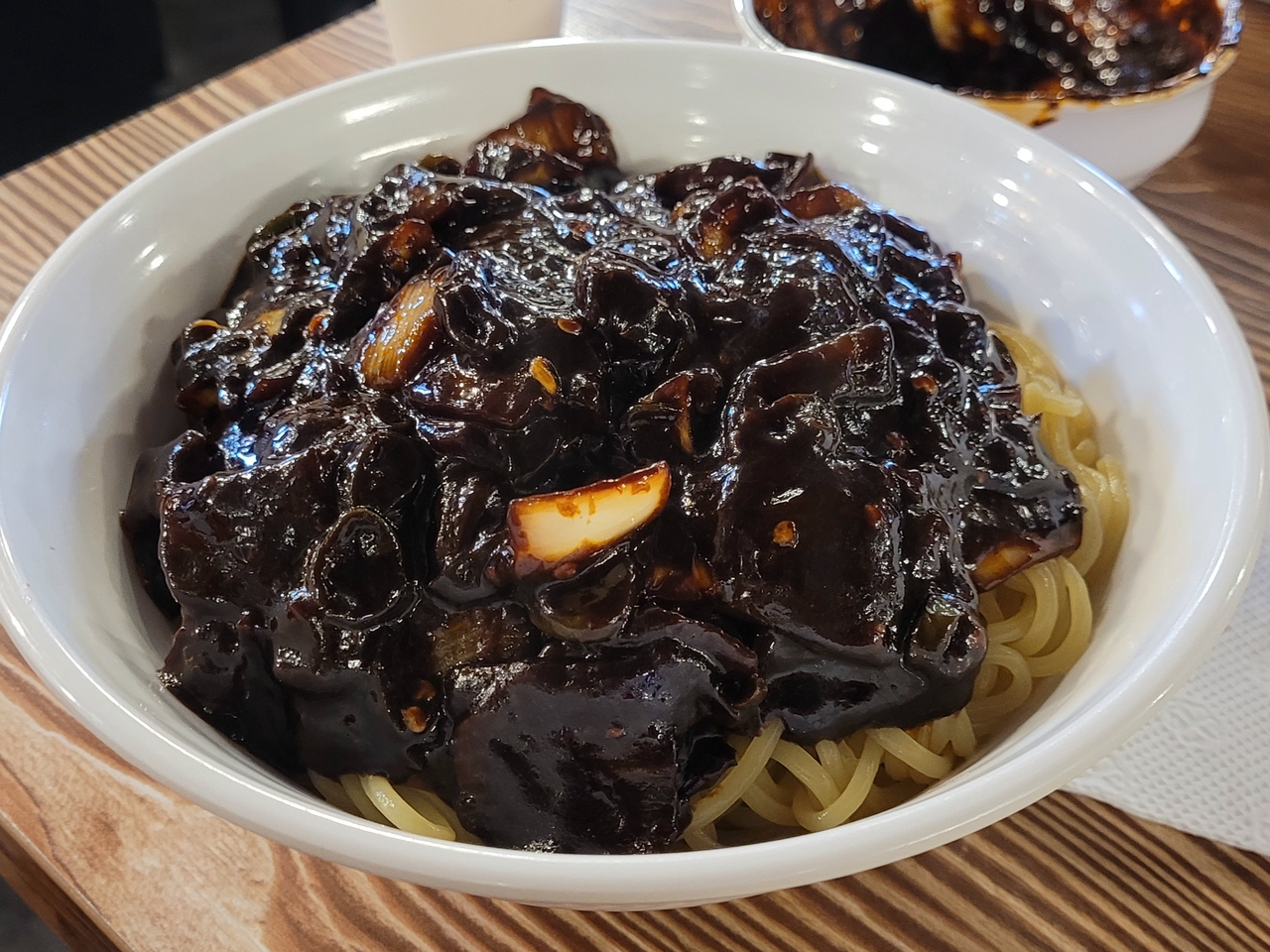
Kimbap has also recorded the sharpest price increase over the past five years. A roll in Seoul averaged just 2,731 won in September 2021, meaning prices have risen 1,192 won, or 43.6 percent, over that period. Over the same span, jjajangmyeon climbed from 5,538 won to 7,808 won — a gain of 2,270 won, or 41.0 percent. A 200-gram serving of samgyeopsal at a restaurant jumped from 17,188 won ($13) to 21,321 won, up 4,133 won, or 24.0 percent.
Analysts attribute the rise in dining-out prices to a combination of higher ingredient costs driven by broad inflation, along with increased labor and rental expenses. According to the Korea Agricultural Marketing Information Service, operated by the Korea Agro-Fisheries and Food Trade Corporation, the average annual retail price of 10 sheets of dried seaweed rose 58.5 percent over five years, from 899 won in 2021 to 1,425 won this year. Over the same period, 100 grams of spinach climbed 17.8 percent, from 962 won to 1,133 won, while a 20-kilogram bag of rice rose 5.7 percent, from 59,080 won to 62,451 won.
According to an explanatory document the Ministry of Agriculture, Food and Rural Affairs released in August, the ingredient cost for a single kimbap roll was 1,299 won — equivalent to 33.6 percent of the average Seoul kimbap price of 3,869 won at the time. By ingredient, the breakdown was estimated at 238 won for 56 grams of rice, 195 won for 25 grams of burdock root, 179 won for ham, 178 won for 31 grams of cucumber, 158 won for one sheet of dried seaweed, and 158 won for 60 grams of egg garnish.
Beyond ingredient costs, the burden of labor and rent has also grown. The ministry said ingredient costs account for 40.4 percent of the cost structure in the food-service industry, with labor at 29.4 percent and rent at 8.7 percent. The minimum wage rose 18.3 percent over the five-year period, from 8,720 won per hour in 2021 to 10,320 won this year. Over the same span, the per-square-meter rent for small commercial spaces in Seoul increased 6.9 percent, from 49,400 won to 52,800 won.
Meanwhile, data from the Ministry of Statistics, which covers a broader range of items, showed that among all dining-out categories, raw fish had the highest year-on-year consumer price increase in October at 5.9 percent. Kimbap (5.0 percent), dosirak (4.6 percent), galbi-tang (4.0 percent), tteokbokki (3.8 percent) and haejangguk (3.7 percent) followed.
korean@heraldcorp.com