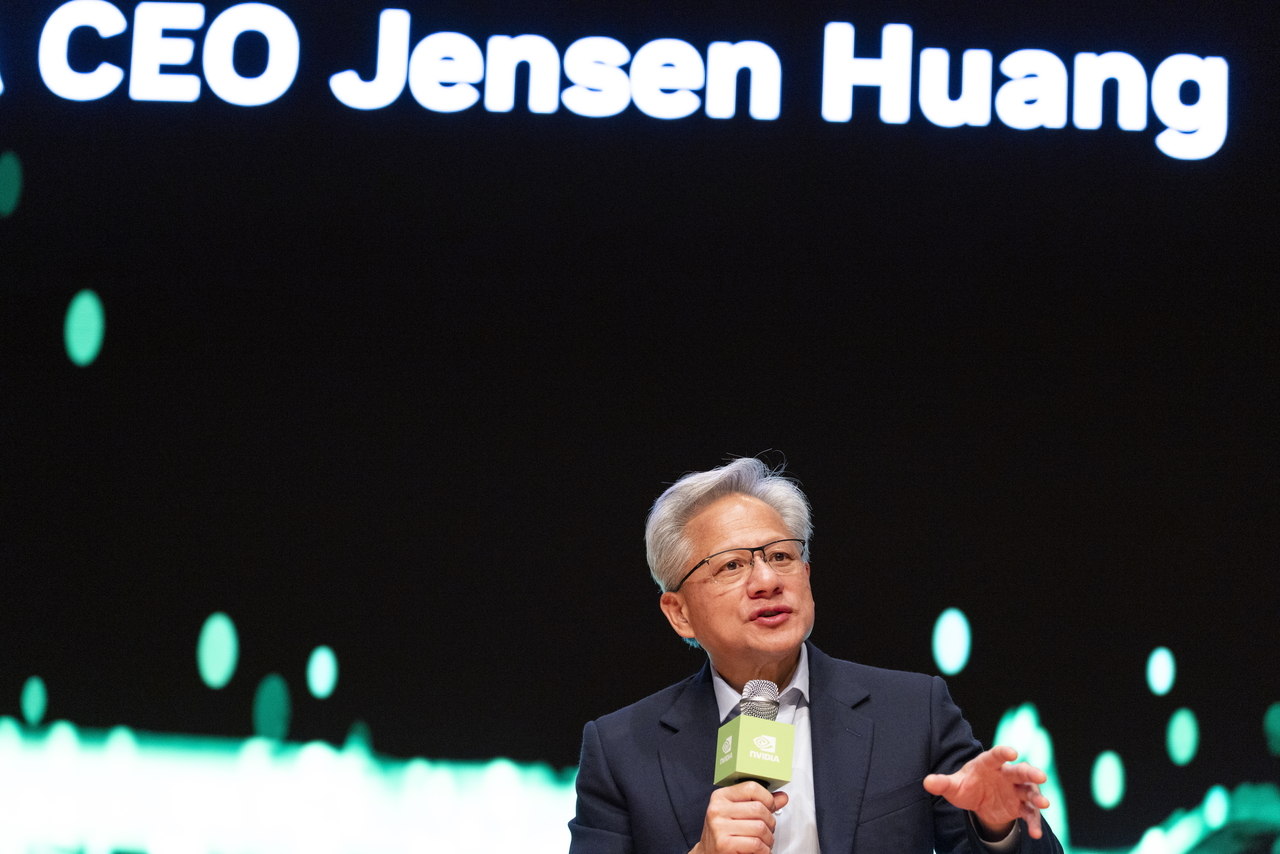
Nvidia, long seen as the central hub and de facto central bank of AI finance, is facing an unprecedented leadership crisis following CEO Jensen Huang's extramarital affair scandal. Analysts say the episode starkly illustrates the risks embedded in the circular financing that has come to define the AI financial network.
The scandal is rattling not just Nvidia but Silicon Valley and Wall Street as a whole. Nvidia has played such a central role in AI finance that it has been likened to a central bank for the sector, and a leadership vacuum there could ripple outward — dampening investment and stunting growth at the many AI companies whose dealings are intertwined with Nvidia's.
In an analysis published Wednesday (local time) under the headline "Is Nvidia 'too big to fail'?", CNBC said Nvidia "has made hundreds of billions of dollars in financial commitments to other companies to support the growth of the AI industry," warning that serious trouble at Nvidia "could cause widespread damage to the broader economy and financial system."
Nvidia has struck deals with neo-cloud companies — firms that build data centers using Nvidia chips and lease computing capacity to others — in which each side becomes a customer of the other. A disclosure filed in July showed Nvidia had purchased up to $36 billion in cloud services from those neo-cloud providers. The arrangement is designed so that each party generates revenue for the other.
This is commonly known as circular financing. Nvidia has also acted as a financial backer, making direct investments in and providing guarantees to companies that use its chips. The company pledged to provide up to $105 billion in phased guarantees for a large data center project in Ohio being planned by OpenAI and SB Energy. Columbia Business School finance professor Stijn Van Nieuwerburgh estimated the total value of Nvidia's financial commitments to AI companies at $400 billion.
That means any serious disruption at Nvidia could send shockwaves through the companies and financial institutions that have received its backing. "If the value of Nvidia's GPU chips were to fall, for example, investors could question whether companies that borrowed money to buy those chips would be able to repay their debts," CNBC said.
Jason Wu, a deputy director at the IMF who warned in last month's Global Financial Stability Report that AI-boom leverage could trigger broader problems, said: "I think this is a real concern, because both the economy and financial markets are relying on the same one leg. It means that if a downturn occurs, both sides could amplify each other's shocks."
In the $15 trillion investment-grade bond market, corporate bonds issued by hyperscalers have grown from 1 percent to 10 percent of the total in just two years. Hedge funds and retail investors are raising the stakes further by taking on debt to fund AI bets or pouring money into funds with built-in leverage. The Federal Reserve had already discussed in July the possibility of a "broad asset price correction" should problems emerge in the AI sector. The IMF, too, has flagged that circular financing could cause a crisis in any one part of the AI ecosystem to spread rapidly across the entire industry.
The risks could diminish if companies entangled in financial dealings with Nvidia succeed in achieving a degree of independence through their own chip development. According to professor Van Nieuwerburgh, AMD, Broadcom, Intel, Google, Microsoft and OpenAI are all pursuing in-house AI chip development.
If those companies replace Nvidia's products with their own chips, the economic fallout from any problems at Nvidia would be reduced. Paradoxically, that same shift would mean Nvidia losing some of its most important customers.
kate01@heraldcorp.com