Province trims routine spending amid falling grants
Four priority areas: industry, welfare, culture, rural balance
South Gyeongsang education office submits 6.98 trillion won budget
Provincial assembly to vote on both plans Dec. 15
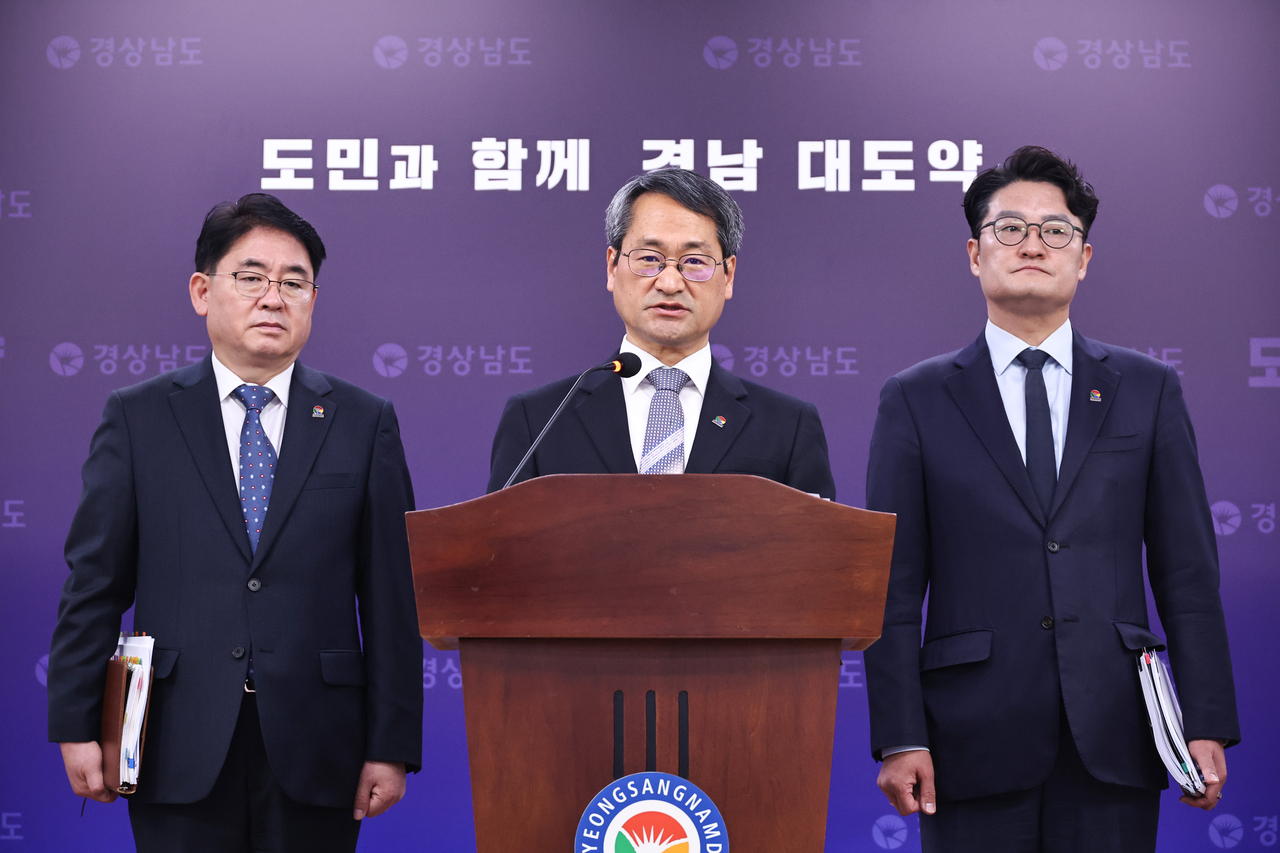
South Gyeongsang Province announced Wednesday that it has drawn up a 14.74 trillion won ($11 billion) budget proposal for 2027, a 3.2 percent increase — or 451.7 billion won — from this year. The general account stands at 13.05 trillion won and the special account at 1.69 trillion won.
The province said it overhauled routine spending despite a difficult fiscal environment — marked by stagnant local tax revenue, a reduction in local grants caused by the creation of a new future-response fund, and rising provincial co-financing obligations tied to expanded national subsidy programs — and redirected the freed-up resources toward stabilizing livelihoods and securing future growth engines.
The province channeled the secured funds into four priority areas under the banner of "a great leap forward for South Gyeongsang together with its residents": robust industry and vibrant livelihoods; comprehensive welfare and healthy daily life; culture to enjoy and cities worth staying in; and balanced growth and prosperous farming and fishing communities.
For industry and livelihoods, the province allocated 507.1 billion won, up 76.9 billion won (17.9 percent) from this year, focusing on crisis response for key industries, securing future growth engines, and reviving the local economy for small business owners and small and medium-sized enterprises. Specific allocations include 19.4 billion won for nurturing regional innovation-leading companies through research and development, 12.6 billion won for employment support in South Gyeongsang's key industries, and 3.1 billion won to establish a global small modular reactor manufacturing and inspection hub.
The budget also includes 3 billion won for a space industry cluster and 1.8 billion won for a naval vessel maintenance, repair and overhaul cluster. The allocations aim to narrow wage and benefit gaps between prime contractors and subcontractors in the shipbuilding and aviation sectors, and to build small modular reactor fabrication support and manufacturing-parts quality testing infrastructure at the Changwon National Industrial Complex.
Additional allocations include 25 billion won for interest-rate subsidies on small and medium enterprise development funds, 9.5 billion won for commercial district revitalization and traditional market environment improvements, and 2 billion won for the "South Gyeongsang Emergency Livelihood Loan" — a provincial program that lends up to 3 million won in emergency living expenses to residents in the bottom 20 percent by credit score.
The social welfare, health and safety sector received 8.45 trillion won, up 185.2 billion won (2.2 percent) from this year, to provide tighter coverage of residents' daily safety, health and lifecycle welfare needs. Key items include 273.6 billion won for disaster-risk area improvements, 2.9 billion won to expand meal support for children during school vacations, 5.7 billion won to expand the South Gyeongsang Residents' Pension, and 4 billion won for 365-day secure hospital wards. The residents' pension program will grow from 30,000 beneficiaries this year to 50,000 next year.
The culture, tourism and sports sector, along with regional and urban development, received 710.6 billion won — up 57.3 billion won (8.8 percent) from the previous year — with a focus on developing tourism resources along the South Sea coast and broadening residents' access to cultural and sports activities. Allocations include 49.1 billion won for a southern-region wide-area tourism development project, 14 billion won to develop a pilgrimage trail through Admiral Yi Sun-sin's battle sites, and 8.5 billion won for a marine leisure tourism hub project. The southern-region tourism development initiative will advance 13 projects, including establishing Jinhae's cherry blossom road as a signature destination.
Agriculture, forestry, fisheries, transportation, logistics and water resources received 1.99 trillion won to support income stability for farmers and fisherfolk, build a foundation for the future of rural and coastal communities, and promote balanced regional development. Key allocations include 255.4 billion won for basic public direct payments, 113.5 billion won for widening and paving nationally supported local roads, 44 billion won for farmer and fisher allowances, and 1.4 billion won to establish a K-oyster specialized seafood cluster.
South Gyeongsang Province Vice Governor for Administrative Affairs Park Il-ung said the province faces growing fiscal pressure from stagnant local tax revenue, declining grants and rising provincial co-financing burdens. "In particular, the central government's decision to redirect 30.5 trillion won — part of the grant funding pool — into a newly created future-response fund has cut the province's share of grants by 532.8 billion won," Park said.
Meanwhile, the South Gyeongsang Provincial Office of Education submitted its own 2027 budget proposal to the provincial assembly, totaling 6.98 trillion won — up 5.6 percent, or 373.2 billion won, from this year. Facing fiscal uncertainty from a restructuring of education grants, the office streamlined overlapping programs and reallocated resources toward essential costs such as personnel expenses and field-centered projects.
The education office will invest 320 billion won in creating safe learning environments, including upgrades to aging facilities and cafeteria improvements. It allocated 311.4 billion won for early childhood and special education support and the Nuri curriculum, and 163.7 billion won to expand education welfare — covering school uniforms and sportswear for new students and tuition support for families with multiple children. Additional allocations include 50.4 billion won for after-school and childcare programs, 41.7 billion won for AI and digital future education, and 34.1 billion won for basic academic achievement programs.
Both budget proposals will go through deliberations at the 438th regular session of the South Gyeongsang Provincial Assembly before a final vote at the plenary session on Dec. 15.
ook967@heraldcorp.com