Industry group pushes back against plan to raise fair market value ratio from 70% to 100%
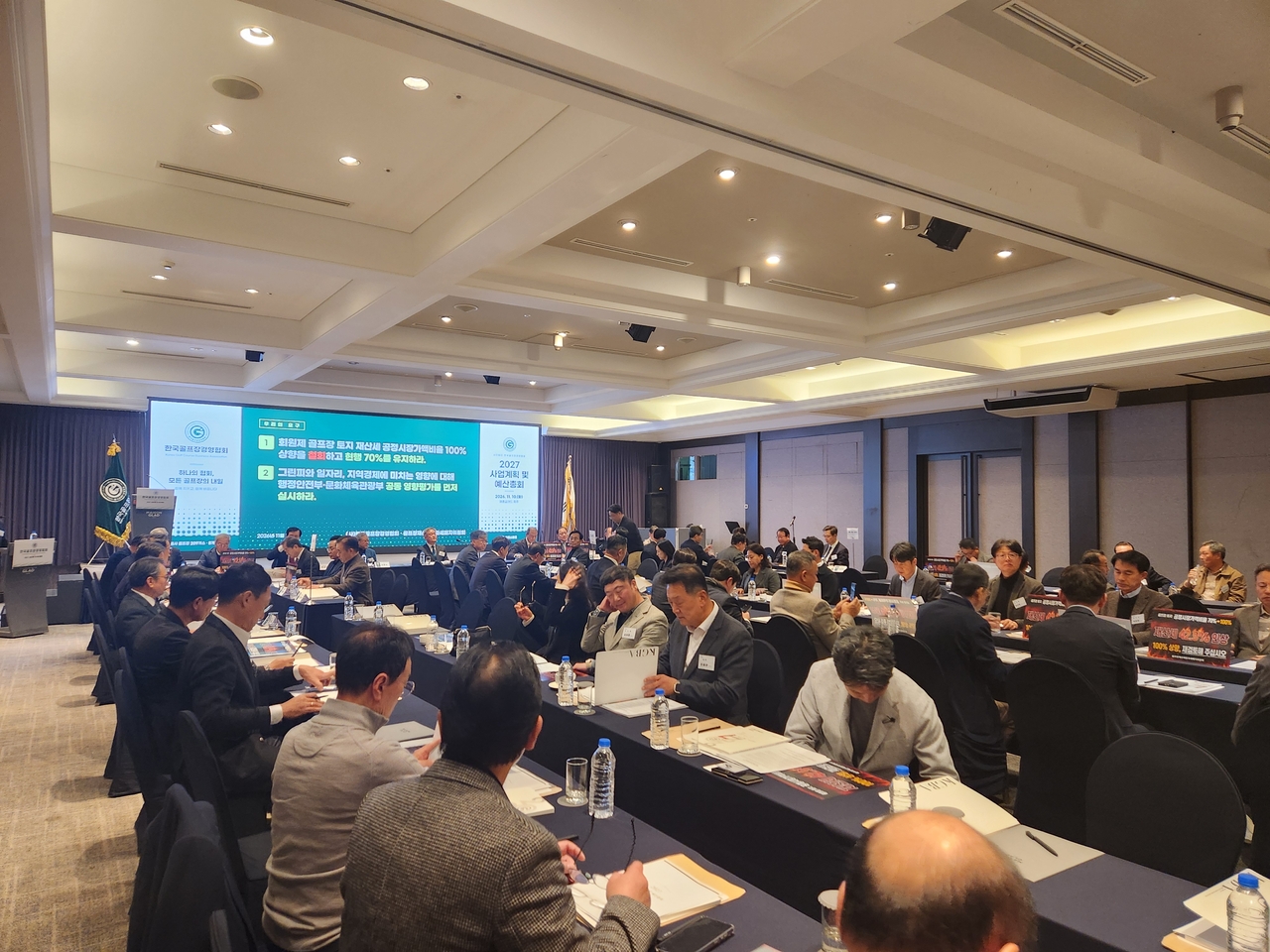
The Korea Golf Course Business Association has condemned a government plan to raise the property tax assessment standard for membership golf courses as an excessive tax increase and urged the government to reverse course. The group also approved a budget for next year that cuts spending by 8.1% while directing resources toward tax and labor issues.
The association announced Thursday that it held its 2027 Business Plan and Budget General Assembly on Tuesday at Maison Glad Jeju in Jeju, where members approved next year's business plan and budget.
Before the assembly, the association issued a joint statement with the Committee for Abolition of Heavy Property Tax on Golf Courses, calling for the government to drop its plan to raise the fair market value ratio for membership golf course land from the current 70% to 100%. The assembly also adopted a joint resolution in the name of member companies.
Land at membership golf courses is subject to a heavy tax rate of 4% — eight times the top general land rate of 0.5%. The association said raising the fair market value ratio to 100% on top of that could increase the property tax burden by 42.9%.
"Raising the assessment standard on top of an already high heavy tax rate is a clear double burden and an excessive tax measure," the association said in a press release. The group plans to work alongside its legal advisory team during the National Assembly's Public Administration and Security Committee review scheduled for early December to push for maintaining the current 70% ratio.
The association set next year's operating budget at 4.09 billion won, down 358.7 million won, or 8.1%, from this year's 4.45 billion won ($3.31 million). General accounts stand at 3.19 billion won and special accounts at 899 million won. Membership dues will be frozen and operating costs reduced, while funds needed to protect member interests and respond to legislation will be prioritized.
The association also plans to address labor issues. It said the proposed introduction of an employee presumption rule could affect the status of golf caddies as independent contractors and their contractual arrangements, and said it would seek industry-specific exemptions and a delay in implementation. The group will also establish a legal advisory framework for member companies to prepare for demands by subcontracted workers' unions to bargain directly with primary employers under the revised Trade Union Act.
"The property tax issue is not just a problem for membership courses — it is a challenge for our entire industry," association Chairman Choi Dong-ho said. "An excessive tax burden on golf courses ultimately affects green fees, jobs and local economies, so membership and public courses must speak with one voice to make our members' position clearly heard by the government and the National Assembly."
yjc@heraldcorp.com