PMI survey of 1,000 adults nationwide
46.8% felt their appearance worked for or against them in hiring
41.2% cited self-satisfaction and confidence as top reason for grooming
Half of respondents retouched their photos within the past three months
Women in their 40s most bothered by others uploading unedited photos of them
A campus bulletin board at a prominent university once reported that a professor had told students in class that being attractive was "almost like passing a civil service exam from birth" — a remark that drew fierce backlash.
It is easy to dismiss such a comment as inappropriate coming from an academic, yet anyone who has spent time in the working world knows how hard it is to ignore the influence of appearance. The idea has even spawned a phrase: "looks are a spec," meaning physical appearance has become a credential in the job market.
There is no hard empirical data on exactly how much weight appearance carries in hiring decisions or how much it tips the outcome, but a significant share of job seekers say they feel its effect is far from negligible.
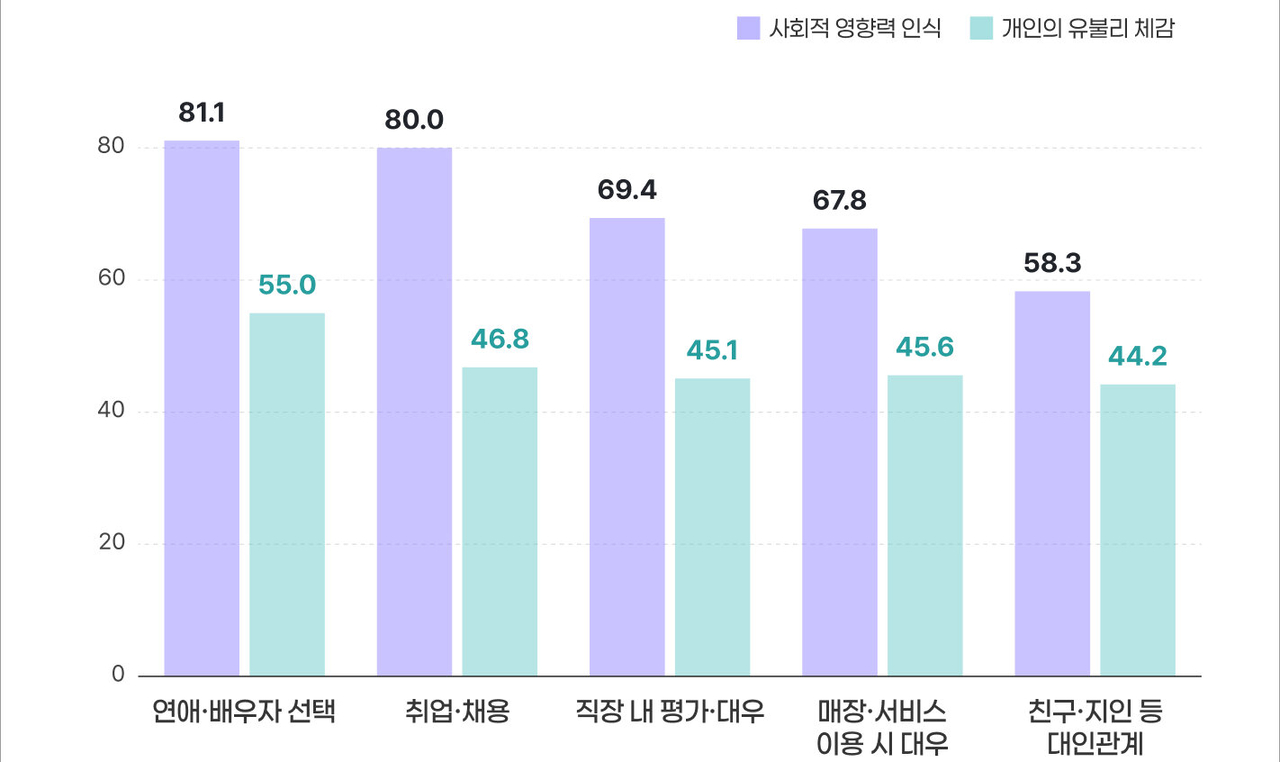
According to PMI's "2026 Appearance Perception Survey" of 1,000 men and women aged 20 to 59 across the country, 80.0 percent of respondents said appearance influences the hiring and recruitment process.
By contrast, 46.8 percent said they had personally felt their own appearance work in their favor or against them during hiring, while 53.2 percent said they noticed no particular difference. The gap suggests that while vague anxiety about appearance runs high, the actual impact people experience tends to fall somewhat short of their fears — though it remains too significant to dismiss.
Among the areas where respondents believed appearance matters, romantic relationships and choosing a partner ranked highest at 81.1 percent, followed by hiring and recruitment at 80.0 percent, workplace evaluation and treatment at 69.4 percent, treatment when using stores or services at 67.8 percent, and personal relationships with friends and acquaintances at 58.3 percent.
The share who said their appearance had actually worked for or against them was 55.0 percent for romantic relationships and partner selection, 46.8 percent for hiring and recruitment, and 45.1 percent for workplace evaluation and treatment.
The belief that appearance affects hiring grew stronger with age. It stood at 71.6 percent among respondents in their 20s, 75.6 percent among those in their 30s, 83.6 percent among those in their 40s, and 89.2 percent among those in their 50s — a gap of 17.6 percentage points between the youngest and oldest age groups.
Some 45.3 percent of respondents said they had received unwanted comments or criticism about their appearance in the past year. Family members such as parents and siblings were cited most often at 15.7 percent, followed by friends and acquaintances at 14.7 percent, strangers or people they had just met at 11.9 percent, and coworkers, supervisors or work contacts at 11.6 percent.
By age group, 52.0 percent of respondents in their 20s said they had received unwanted appearance-related remarks — the highest of any age group. Women in their 20s were particularly affected: 26.4 percent said they had heard such comments from family members, a figure 10.7 percentage points above the overall average of 15.7 percent.
When asked which aspect of their appearance they were most conscious of, respondents overall cited skin condition most frequently at 23.3 percent, followed by facial features at 19.0 percent and body shape at 17.9 percent.
Among those in their 20s, skin condition and facial features drew the most concern, while respondents in their 30s focused primarily on skin condition and body shape. Those in their 50s, by contrast, were most preoccupied with hair thinning, hair loss and hairstyle, as well as wrinkles and sagging that make them look older.
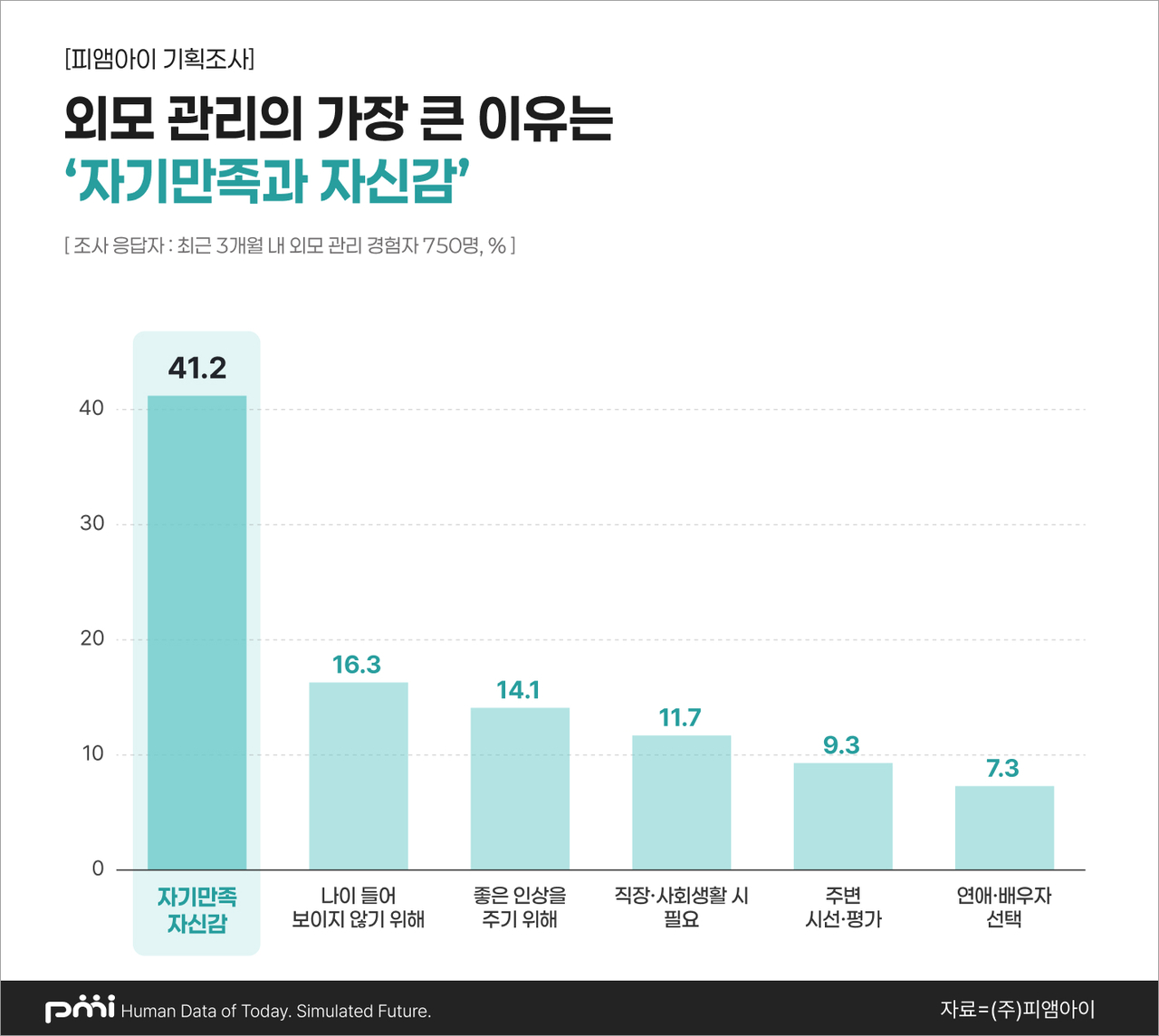
Among the 750 respondents who said they had engaged in some form of appearance management in the past three months, the top reason given was "to satisfy myself and build confidence," cited by 41.2 percent. That was followed by not wanting to look older at 16.3 percent, making a good impression on others at 14.1 percent, and professional or social necessity at 11.7 percent. Only 9.3 percent said they managed their appearance because they were concerned about how others perceived or judged them.
Women were more likely than men to cite self-satisfaction and confidence as their primary motivation for appearance management — 47.2 percent versus 35.0 percent. Among women in their 20s, the figure reached 56.7 percent.
Some 46.7 percent of all respondents said they had used photo or video retouching tools on images of themselves in the past three months. The rate was 56.0 percent among those in their 20s and 36.4 percent among those in their 50s, while women in their 20s recorded the highest rate at 61.6 percent.
When asked whether they were bothered by others uploading unedited photos of them on social media, women in their 40s showed the highest level of concern at 60.0 percent. The corresponding figure for women in their 20s was 48.0 percent.
Jo Min-hee, chief executive of PMI, said the survey found a high level of awareness that appearance affects employment and social life, but that individuals' actual experiences of advantage or disadvantage — and their motivations for managing their looks — told a different story. "When we look at both social perceptions of appearance and individual experiences and behaviors together, we can gain a more three-dimensional understanding of the diverse ways our society views appearance," Jo said.
abc@heraldcorp.com