172 applications received for services including light fixture replacements; 76% of applicants are women
Services to be provided sequentially through December
Full operations to resume in February after satisfaction survey
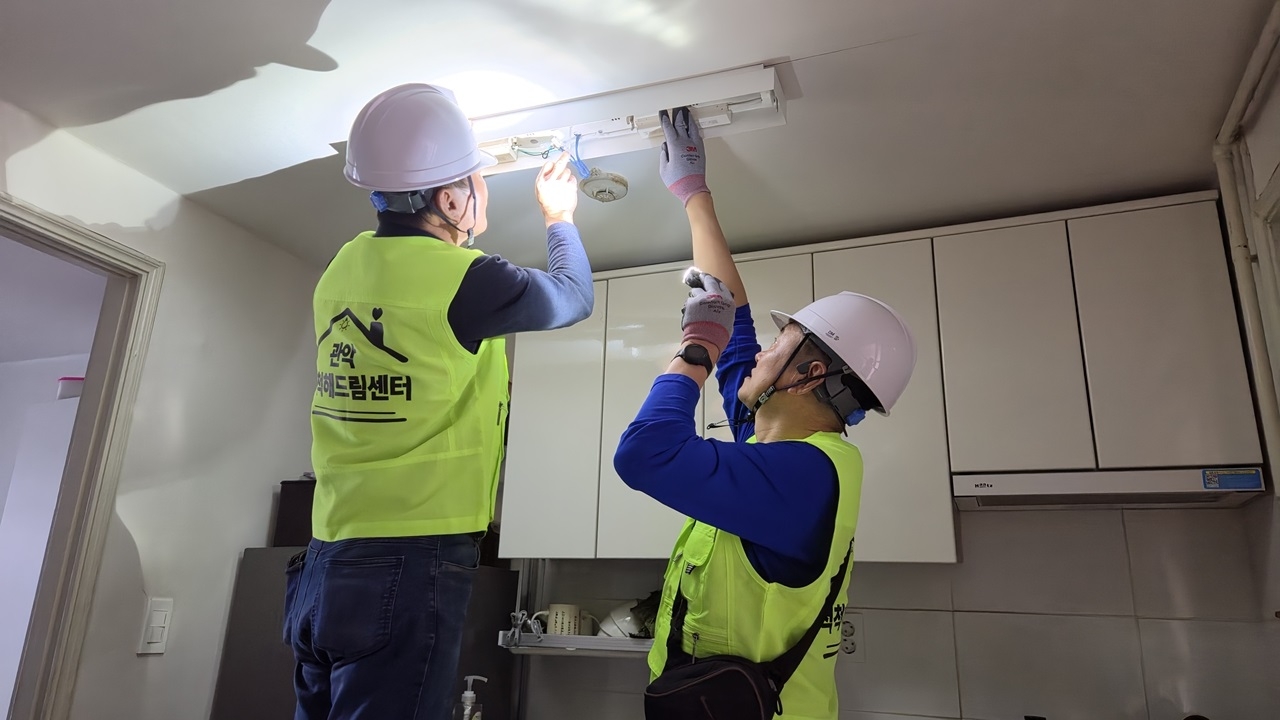
Gwanak-gu in Seoul announced Thursday that it has launched a pilot program through a dedicated service center to send workers directly to single-person households to resolve minor residential inconveniences.
Single-person households account for 64 percent of all households in Gwanak-gu — the highest share among Seoul's 25 autonomous districts. The district said it designed the program with that demographic in mind, so that residents living alone can receive help in a safe and comfortable setting.
Applications were open to all single-person households in the district regardless of income, and the center received 172 requests in total before closing early on Tuesday. Women made up 131 of the applicants, or 76.2 percent. By age group, residents in their 30s accounted for the largest share at 28.5 percent, followed by those aged 70 and older at 20.9 percent. The district plans to fulfill all requests on a rolling basis through December.
A two-person mobile response team will visit each applicant's home to provide support across four categories: replacing light fixtures, faucets, door handles and showerheads; repairing hinges and simple window screens; installing safety grab bars and anti-slip pads; and carrying out basic handyman tasks such as small-scale silicone work and nail driving.
The service does not cover work requiring specialized skills or extensive construction — including wallpapering, flooring, boiler repairs, waterproofing, and appliance installation or repair — nor tasks that pose a significant safety risk or cause no meaningful disruption to daily life.
The district will also conduct follow-up checks to verify conditions before and after each job, and will administer a QR-code satisfaction survey immediately after service. Based on the results and user feedback, the district plans to review and refine its procedures — from application through on-site visits to job completion — before relaunching the center in February next year.
In addition, the district is running tailored physical activity programs in partnership with community welfare centers across Gwanak-gu to promote health and social connections among single-person households. Five designated operators, one for each sub-district zone, offer a range of programs and small-group activities — including walking, table tennis, badminton, yoga, Pilates, health exercises, wellness dance and running — tailored to local characteristics and resident demand.
"We will continue to deliver community-centered lifestyle welfare that provides real, practical help to residents' daily lives — just as one would look after the needs of one's own family," Gwanak-gu District Mayor Park Jun-hee said.
ikson@heraldcorp.com