Banks to review ruling before deciding on response
Industrial Bank of Korea, Korea Development Bank also face criminal referral
FSS checks capital ratios, sees limited impact
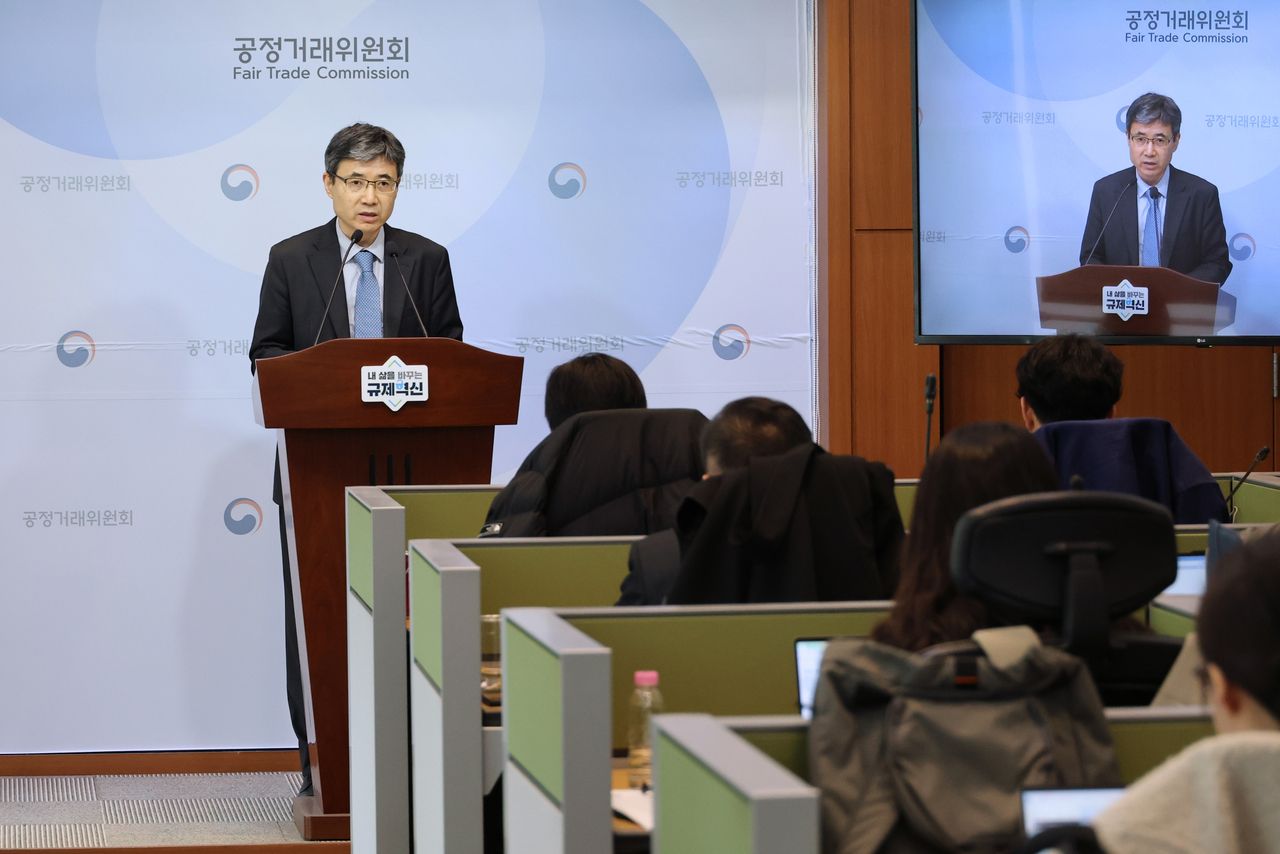
Banks hit with fines totaling around 250.55 billion won ($186 million) for alleged bid-rigging in treasury bond auctions are carefully weighing whether to mount a legal challenge. Although the penalties came in lower than what had been anticipated during the investigation, the banks remain at odds with regulators over the collusion finding itself and the method used to calculate the fines. Financial supervisory authorities are monitoring the potential impact on bank soundness but expect no significant strain on capital ratios in the near term.
The Korea Fair Trade Commission on Wednesday imposed a combined fine of 250.55 billion won on five institutions — Industrial Bank of Korea, Korea Development Bank, Hana Bank, NH NongHyup Bank and KB Kookmin Bank — for allegedly coordinating bid rates and volumes, or exchanging related information, ahead of competitive treasury bond auctions. The commission determined that the banks had artificially raised winning bid rates, increasing the government's borrowing costs.
Industrial Bank of Korea received the largest individual fine at 135.84 billion won, followed by Korea Development Bank at 62.31 billion won. Both banks were also referred for criminal prosecution. Hana Bank was fined 25.46 billion won, NH NongHyup Bank 23 billion won and KB Kookmin Bank 3.92 billion won.
The Financial Supervisory Service has been examining how the fines could affect the banks' financial soundness and capital adequacy ratios. A lump-sum payment of a large penalty can weigh on capital ratios once the loss is recognized. However, regulators take the view that with the combined fines for all five banks totaling around 250 billion won, there is no immediate cause for concern over their financial health.
The banks are taking a cautious approach to deciding whether to pursue legal action. Industrial Bank of Korea and Korea Development Bank, both of which face criminal referral, said they would determine their course of action after reviewing the Fair Trade Commission's written ruling. Whether the banks will mount a coordinated response has also yet to be decided. Each institution is expected to examine the commission's reasoning in the ruling before exploring the possibility of a joint challenge.
The banks maintain that routine information exchanges conducted to gauge market rates and bond demand cannot be treated the same as conventional bid-rigging. There is also significant disagreement over how the fines were calculated. The commission counted the full value of treasury bonds awarded at auction as the relevant sales figure, while the banks argue that bond purchase costs and actual profit must be distinguished.
The episode has raised the prospect of another round of administrative litigation, following a similar case earlier this year involving loan-to-value ratio information sharing. KB Kookmin Bank, Shinhan, Hana Bank and Woori Bank filed administrative suits after being collectively fined 272 billion won in that case. In that dispute, the commission found that the information exchanges had restricted market competition, while the banks countered that the practice was routine risk management.
forest@heraldcorp.com
hyuk@heraldcorp.com