Paper published in November issue of Journal of the Korean Society for Aeronautical and Space Sciences proposes five-level classification based on network, collaboration and autonomy
Company achieves sole direct target strike at '2026 Korea Drone Offense-Defense Exercise,' demonstrates precision strike in GNSS-denied environment
Five new patents registered covering flight control and mission execution, bringing total core patent portfolio to 69
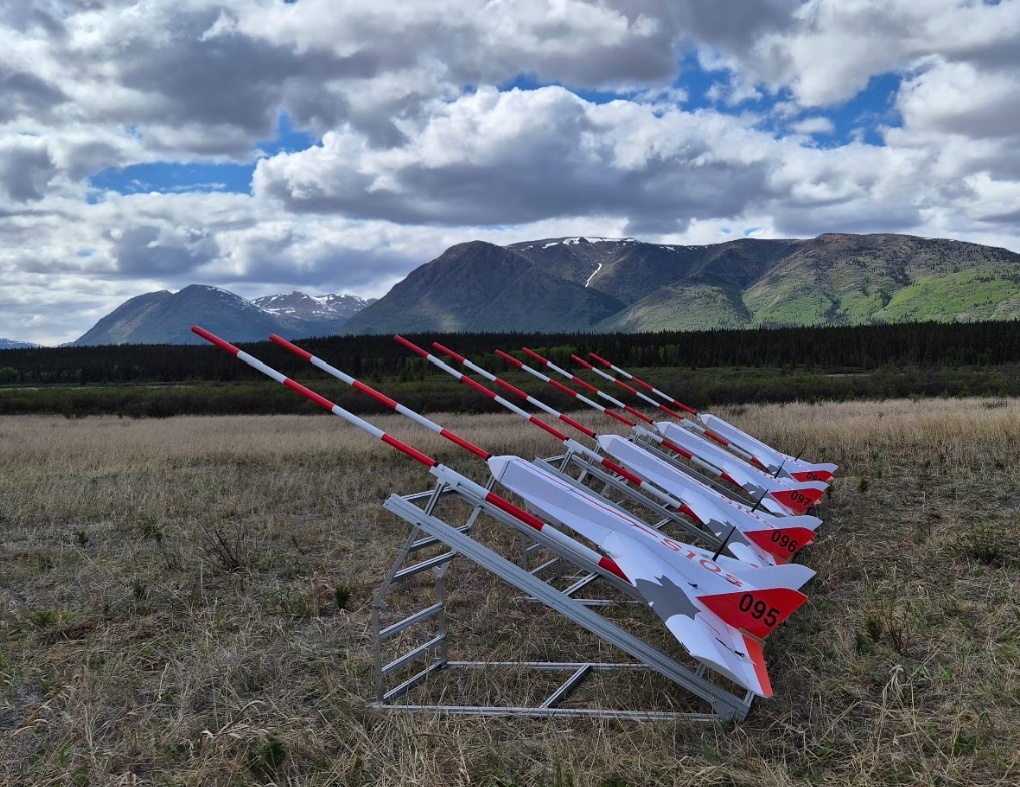
Pablo Air, a swarm AI aviation and defense platform company, has published a research paper establishing a systematic standard for swarm drone technology — widely regarded as a core next-generation capability for unmanned aerial vehicles — and secured five new related patents.
The company announced Thursday that the paper, which systematizes the technical levels and development trajectory of UAV swarm technology, has been published in the November issue of the Journal of the Korean Society for Aeronautical and Space Sciences, a leading domestic aerospace journal, and that five new core patents related to swarm flight control have been registered.
Swarm technology is an AI-based next-generation capability that endows multiple unmanned aerial vehicles with "swarm intelligence," enabling them to share information and cooperate to carry out complex missions. Major countries around the world are developing it as a strategic technology in response to rapidly growing demand for autonomous unmanned systems across defense and industry.
Until now, however, the term "swarm" has been used loosely — applied to everything from the simple simultaneous operation of multiple aircraft to high-level autonomous collaborative missions — making it difficult to objectively compare technical maturity and operational capability.
To resolve this terminological ambiguity and lay out a technology development roadmap, Pablo Air published a paper titled "Definition and Classification Framework for Swarm Level of Unmanned Aircraft System Swarms (UASSw)."
The paper proposes, for the first time in the world, a five-level "Level of Swarm" (LoS) classification framework built around three core axes — network, collaboration and autonomy (NCA) — synthesizing operational modes with externally observable swarm behavior.
Under this framework, drone shows that perform only simple synchronized formation flying without inter-vehicle communication or collaboration fall under "Swarm Level 2," while defense swarm drones capable of dynamic role switching and autonomous reorganization are clearly classified as "Swarm Level 4."
The paper also outlines the required technologies and application areas for each level, and is expected to serve as a technical reference for future research and development roadmaps. Together with a paper on "Distributed Decision-Making and Path Planning for Autonomous Swarm UAVs Under Communication Constraints," published in the Journal of the Korean Society for Aerospace System Engineering in March, it is recognized as a foundational resource for advancing domestic swarm technology.
Pablo Air became the first domestic company to reach "Swarm Level 4" in July last year and has since demonstrated its capabilities at defense validation events. The company advanced to the finals of the 2026 Korea Drone Offense-Defense Exercise in first place this month, becoming the only participating drone team to achieve a direct target strike, and in September supported Korean Air's AI swarm drone demonstration involving 22 aircraft at the 2026 Korea Defense Drone Technology Exhibition.
After becoming the first in the industry to receive a "Swarm Drone Combat Experiment Certificate" at a combat experiment hosted by the Army Training and Doctrine Command in December last year, the company last month succeeded — during a validation test for a Korea Research Institute for Defense Technology (KRIT) project — in maintaining autonomous flight using image-based reference navigation and precisely tracking and striking a target using vision-based terminal guidance, even in an environment where GNSS signals were completely jammed.
Pablo Air is also accelerating its intellectual property portfolio alongside its academic research. The company recently registered five new core patents — covering a wind-information-estimation-based flight control method and system for swarm aircraft, a spatially adaptive swarm flight control method and system, a swarm flight control method and system for unmanned aerial vehicles using a machine-learning-based weight calculation model, a mission execution method and system using swarm aircraft, and a swarm aircraft recovery control method and system along with a swarm aircraft recovery device — bringing its total core patent holdings to 69.
Kim Young-jun, chairman and founder of Pablo Air, said the company's swarm technology research goes beyond simply building corporate competitiveness. "Our goal is to lay the groundwork for the development of future national strategic technologies and to internalize core capabilities," Kim said. "We will focus on advancing our swarm technology to a globally recognized level and accelerate UAV innovation across industries."
The achievement is significant for being the first in the world to standardize evaluation criteria for what had been an abstract area of swarm drone technology, establishing a technical benchmark for the domestic UAV industry, while simultaneously combining all three elements — academic standard-setting, real-world defense validation and foundational patent acquisition — to stake an early claim to leadership in the global defense and unmanned systems market.
silverpaper@heraldcorp.com