Fines to increase sharply after stroke penalties were tightened last year; players timed on 35 holes in a season will face $35,000 penalty; pace of play has worsened despite existing rules
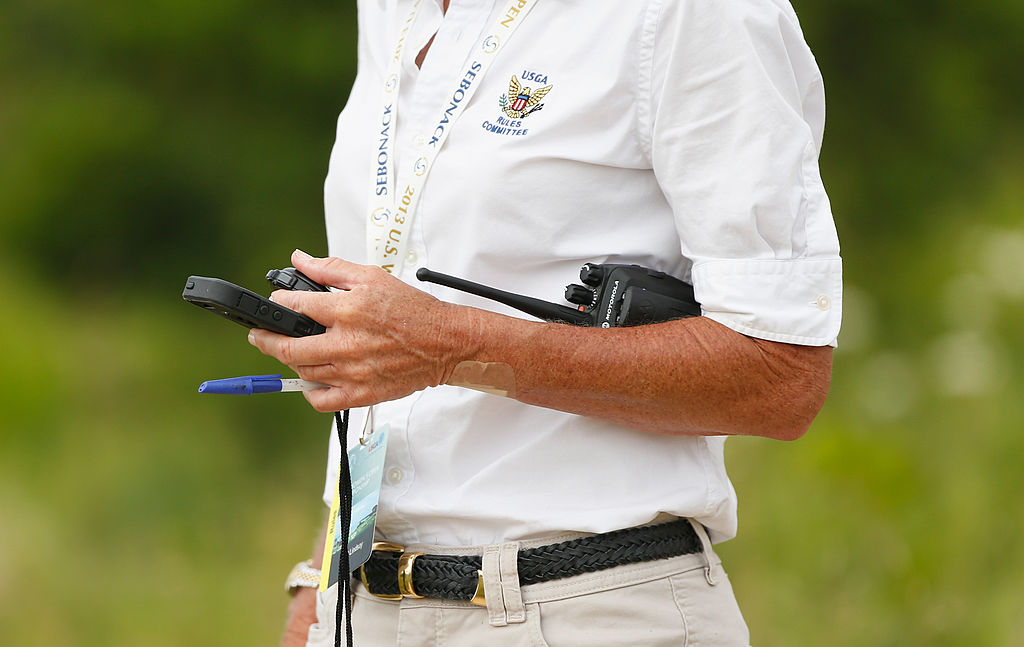
The LPGA Tour is sharply raising its slow-play fines in an effort to stamp out a problem that has resisted repeated attempts at reform. Having tightened stroke penalties last year, the tour will significantly increase the financial burden on players starting in the 2027 season.
Golf Week and Golf Digest reported Wednesday (local time) that the LPGA Tour announced new pace-of-play rules to players during the Annika championship in Belleair, Florida. The rules will take effect in the 2027 season.
Under the new policy, a first violation for exceeding the allotted time by one to five seconds will carry a $2,000 fine — a sharp departure from the current rule, which requires three violations before a $5,000 fine is imposed. Exceeding the limit by six or more seconds will draw both a stroke penalty and a fine. A separate threshold for excessively slow individual shots will also be tightened, dropping from 70 seconds to 60 seconds.
Penalties for cumulative timed holes over a season will also be strengthened. Currently, a player is fined $5,000 upon reaching 40 timed holes in a season; starting next year, that fine rises to $35,000 and kicks in at 35 holes. The count includes not only holes where a player received a stroke penalty for exceeding the time limit, but all holes that were officially subject to timing.
The LPGA Tour has long sought to address slow play. In February last year it overhauled its existing rules, with the changes taking effect the following month. That revision introduced a tiered system of fines and one- or two-stroke penalties depending on how far a player exceeded the allotted time.
Under the tour's pace-of-play system, a group that falls too far behind the group ahead receives a warning. If the pace does not improve on the next hole, a referee begins timing the shots of players in the warned group. If a specific player is identified as the cause of the delay, only that player's shots are timed.
Triggers for a slow-play determination include falling more than three minutes behind the group ahead's starting interval, or failing to complete all tee shots on a par-4 hole before the group ahead has holed out. Shot timing begins when it is a player's turn and there is no interference preventing the shot. Time spent on distance calculations, club selection, checking wind conditions and practice swings is all included.
The standard allotted time per shot is 30 seconds, with an additional 10 seconds granted to the first player to play on par-3 tee shots, approach shots to the green and putts. Penalties are assessed by totaling the time recorded across all shots measured on a given hole. For example, if four of a player's shots are timed, the base allotment is 120 seconds; if two of those shots each qualify for the 10-second extension, the total allotment becomes 140 seconds.
The LPGA Tour's repeated tightening of its rules reflects the fact that pace of play has not improved despite earlier measures. According to Golf Week, the number of timed holes across 15 tournaments this year rose 12 percent compared with last year. The median round time for two-player groups also increased by seven minutes, from three hours and 55 minutes last year to four hours and two minutes this year.
Stroke penalties for slow play have likewise increased. According to Golf Digest, citing LPGA Tour data, there were three one-stroke penalties and two two-stroke penalties for slow play last year. With two tournaments remaining in the current season, those figures have already risen to five and two, respectively.
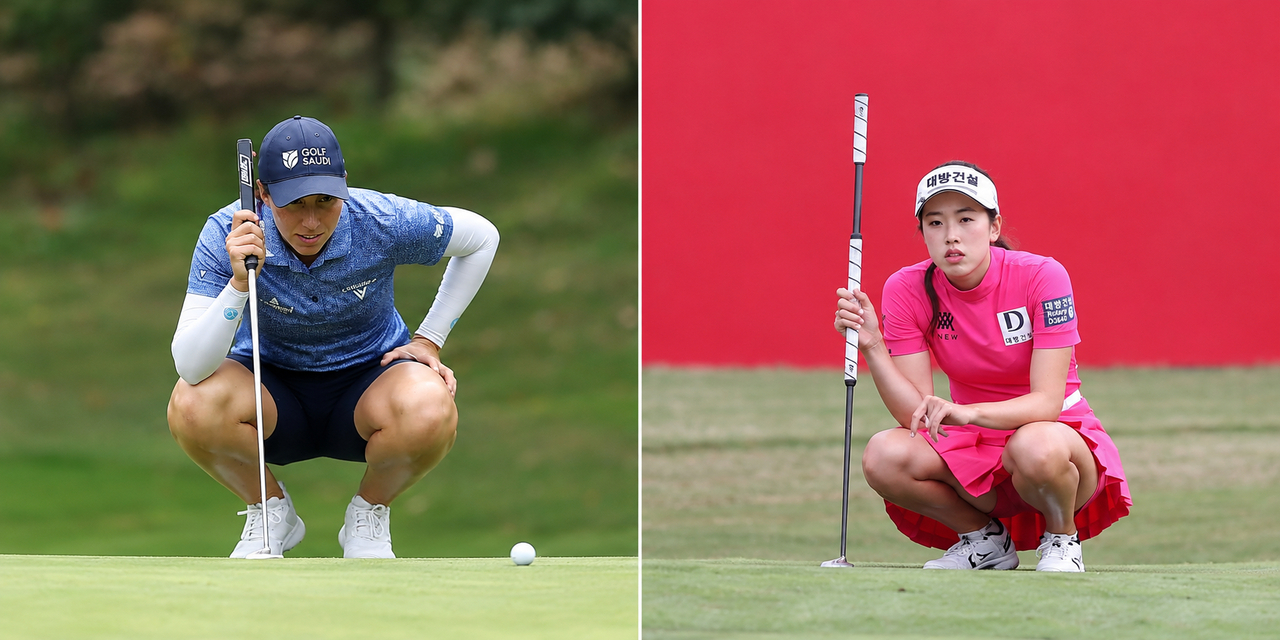
At the Buick LPGA Shanghai in China last month, Carlota Ciganda of Spain and Noh Yee-rim of the United States each received two-stroke slow-play penalties in the third round. Im Jin-hee also received a one-stroke penalty in the third round of the JM Eagle LA Championship this year and went on to lose in a playoff.
World No. 1 Nelly Korda of the United States welcomed the stricter rules. "I'm all for it. Nobody wants to play a five-hour round, and nobody wants to watch it either," she said.
The LPGA Tour plans to hold an education session for players and caddies on the new rules in January.
yjc@heraldcorp.com