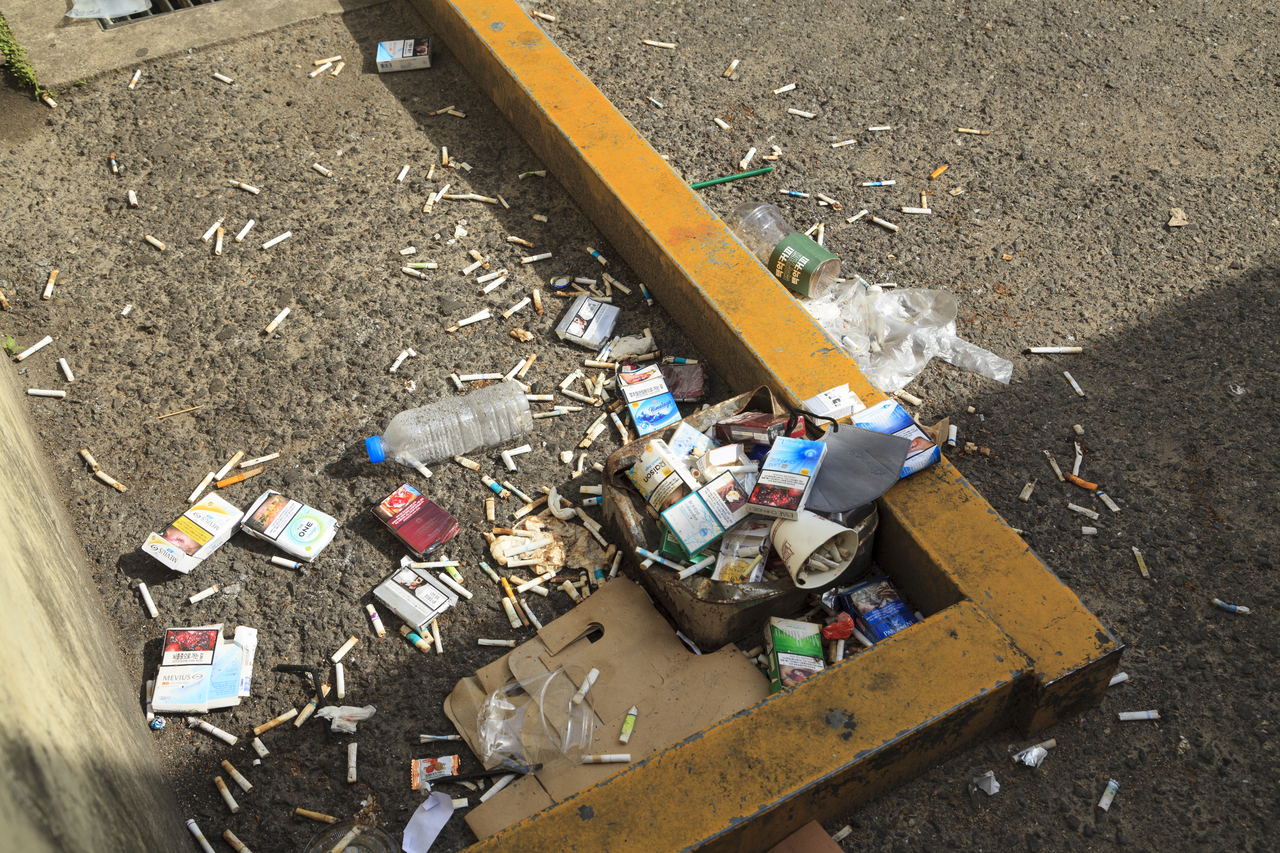
Smoking harms not only the smoker but those nearby — and South Korea's smoking culture has long been notorious for antisocial behavior such as spitting phlegm and littering cigarette butts. Now experts are calling for the price of a pack of cigarettes to be raised to 8,500 won, arguing the resulting drop in smoking rates could help address these problems.
The National Academy of Medicine of Korea and the Korean Medical and Biotech Journalists Association held their sixth media forum Tuesday at the Korea Press Center in Jung-gu, Seoul, on the theme of "New Tobacco Trends and the Direction of Smoking Cessation Policy."
Park Eun-cheol, vice president for health policy at the National Academy of Medicine of Korea, presented findings showing that South Korea scored an average of 3.563 out of 5 in the WHO's evaluation of smoking cessation policies — a middling result. The country fared particularly poorly on tobacco tax increases, scoring 2.5, and on secondhand smoke protection, at 2.125.
Park said the domestic cigarette price has been frozen at 4,500 won since 2015 and that the price adjusted for purchasing power parity remains among the lowest in the OECD. "To reduce tobacco consumption, the current price of 4,500 won per pack should be raised to 8,500 won," he said.
A scenario analysis presented by the academy projected that raising the price by 4,000 won — from 4,500 won to 8,500 won — would cause cigarette sales to drop 35.6 percent. The adult smoking rate would fall 3 percentage points, from 17.0 percent to 14.0 percent, while annual tobacco-related tax revenue would increase by approximately 2.76 trillion won ($2.05 billion).
Park also proposed that the price increase not be a one-time measure but be linked to inflation and income growth through an automatic adjustment mechanism for tobacco taxes and the national health promotion levy. He added that the share of levy revenue directed to national health insurance support should be reduced from the current 65 percent to 50 percent, with the freed-up funds redirected toward disease prevention and health promotion — the fund's original purpose.
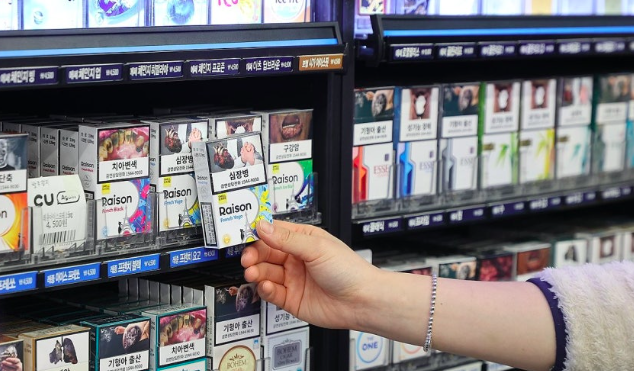
Tighter regulation of new inhalation products was also raised as a pressing issue alongside the proposed price hike. Lee Seong-gyu, director of the Korea Tobacco Control Research and Education Center, said that since the revised Tobacco Business Act took effect and tightened rules on synthetic nicotine, new types of inhalation products have emerged that fall outside the scope of existing law.
In practice, imports of synthetic nicotine liquids dropped sharply after the revised law came into force, while imports of nicotine-free liquids in the first eight months of this year already exceeded the full-year import total for last year by more than double. Cases were also cited in which nicotine and nicotine-like substances were detected in some nicotine-free products.
Other smoking cessation measures were also proposed at the forum. Cho Hong-jun, an emeritus professor at the University of Ulsan College of Medicine, called for restrictions on flavoring agents, a cigarette price increase and the introduction of plain packaging — a standardized approach to cigarette pack design and labeling intended to strengthen regulatory controls on tobacco products. Kim Ji-eun, a director at the Korea Health Promotion Institute, said authorities should better track the dual use of e-cigarettes and conventional cigarettes and strengthen youth prevention policies.
Participants also argued that tobacco litigation should be used as a tool to improve regulatory effectiveness. Lim Hyeon-jeong, head of the legal support division at the National Health Insurance Service, said that regardless of how tobacco products change in form, liability for smoking-related harm does not change. Tobacco lawsuits, Lim said, can constrain companies' advertising, promotional and sales practices and enhance the effectiveness of regulation.
123@heraldcorp.com