North Gyeongsang Province, Gangwon Province and North Jeolla Province currently form the top three regions with the highest proportions of elderly residents. South Jeolla Province had previously ranked first, but following its merger with Gwangju to form the Jeonnam-Gwangju Special City, the combined entity's elderly population ratio dropped to fifth place.
Busan ranks fourth, followed by South Gyeongsang Province in sixth, North Chungcheong Province in seventh and South Chungcheong Province in eighth — all in the upper tier among the 16 local governments. Roughly two to three in every 10 residents in these areas are elderly.
While the productive capacity of an economically active workforce is naturally prized, how South Korea harnesses the energy and financial resources of its older population has become a critical variable in the country's future development. Older Koreans were long seen as outside the workforce, but that view now risks losing a vital pillar of the nation's economic engine.
Older adults are, however, easy targets for criminals — swindlers and those with predatory tendencies — precisely because they are perceived as physically vulnerable.
Legislation to restrict employment at senior-related institutions for those convicted of crimes against the elderly has been introduced in the National Assembly.
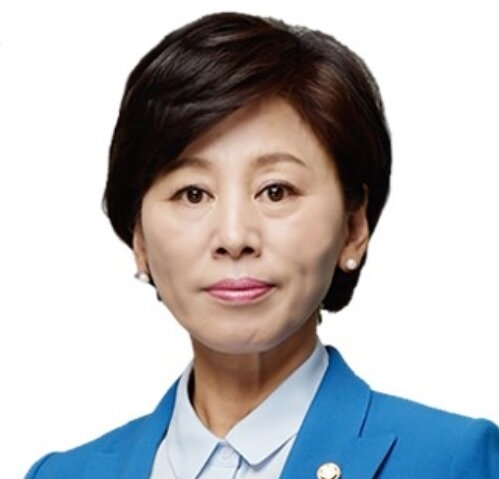
Rep. Nam In-soon of the Democratic Party of Korea, who represents Songpa-gu Byeong in Seoul and sits on the Assembly's Health and Welfare Committee, introduced a bill Wednesday to amend the Welfare of Older Persons Act by expanding the definition of "elder-abuse-related crimes" to include serious offenses such as murder and assault causing death.
Under current law, crimes committed by a caregiver against a person aged 65 or older — including bodily injury, assault, abandonment and abuse — are classified as elder-abuse-related crimes. Anyone sentenced for such offenses may be barred by court order from operating or working at elder-related institutions for up to 10 years.
However, offenses that gravely threaten the life and physical safety of older persons — including murder, aggravated bodily injury, assault causing death, abandonment causing death or injury, and crimes involving abduction, inducement or human trafficking — are not currently covered under the definition of elder-abuse-related crimes. Critics have long pointed to the resulting gap in protection, noting that perpetrators of such offenses can still seek employment at elder-related institutions on the grounds that their crimes do not fall within the defined category.
The amendment would add the following offenses to the definition of elder-abuse-related crimes: murder offenses under the Criminal Act, including murder, patricide or matricide, killing upon request or consent, solicited killing by deception, attempted murder, and preparatory acts or conspiracy; aggravated bodily injury and assault causing death; assault causing death or injury; abandonment causing death or injury; and abduction or inducement for the purpose of indecent acts, human trafficking, and offenses involving bodily injury or injury arising from abduction, inducement, trafficking or transfer.
"It is a clear legislative gap that a person who assaulted an elderly individual is barred from working at elder-related institutions, while someone who assaulted an elderly person and caused their death is not subject to the same restriction," Nam said. "Those with a record of serious crimes that directly threatened the life and safety of older adults must never again come face to face with them in a care setting."
Nam added that as South Korea enters a super-aged society, the number of older adults entrusting their daily lives to care facilities and home-based services is growing rapidly. "Through this amendment, we aim to close the blind spots in elder-abuse-related crime coverage and establish a protection framework that gives older adults and their families peace of mind," Nam said.
The bill was co-sponsored by lawmakers Kang Deuk-gu, Park Sang-hyeok, Yong Hye-in, Lee Su-jin, No Jong-myeon, Park Yong-gap, Yun Jong-gun, Lee Yong-u, Jang Jong-tae and Jeon Jin-suk.
abc@heraldcorp.com