Agentic finance emerges as new trend at WDAF
SK Telecom, Shinhan Card, Hana Card discuss agent-driven payments
Disputes loom as AI interprets user intent on its own
Liability questions cloud high-value transactions
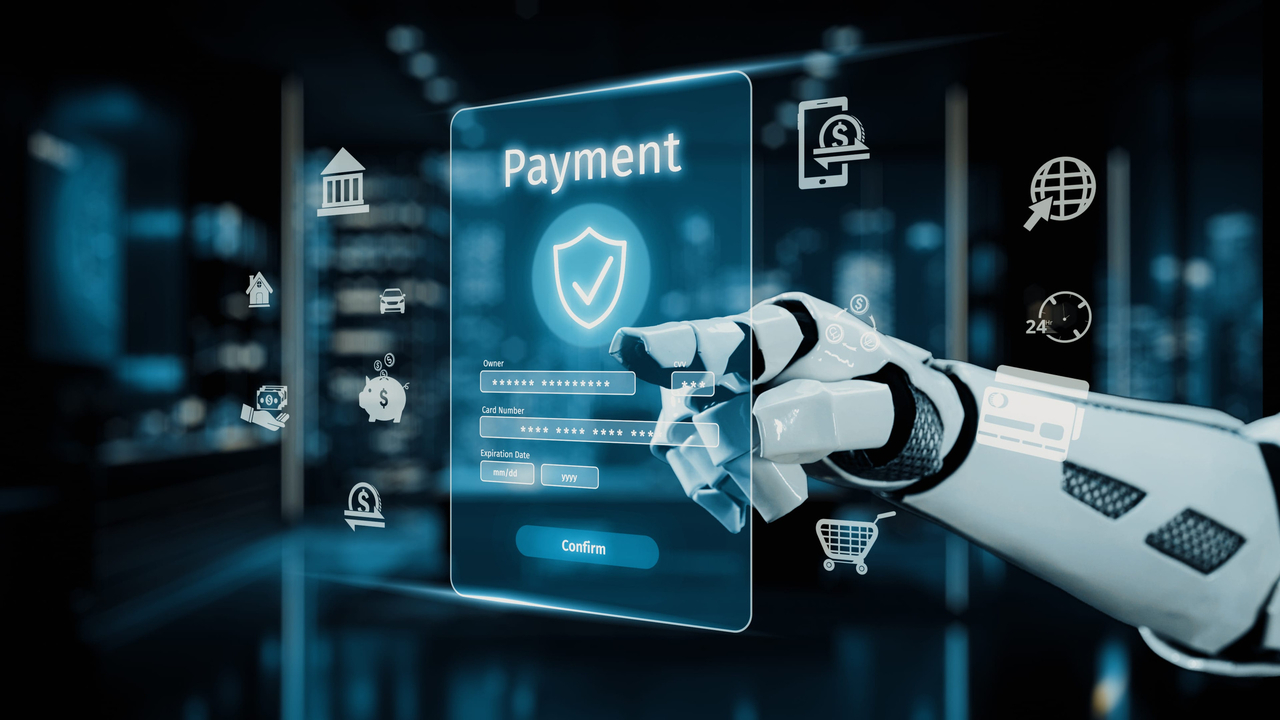
"Agentic payments" — in which AI handles purchases and transactions on a person's behalf — are drawing attention as a new growth engine for the digital asset market. Industry voices warn that companies failing to adopt the technology risk losing customers to rivals. Yet with the sector still in its infancy, building robust authentication and earning public trust remain the central challenges.
Agentic finance, where AI agents independently manage and trade assets, took center stage at the inaugural World Digital Asset Forum (WDAF), hosted by The Herald Business and The Korea Herald on Monday.
Don Tapscott, chairman of the Blockchain Research Institute, traced the evolution of asset management from an era when humans directly controlled physical assets — currencies, securities, bonds and real estate — through the rise of blockchain-powered smart contracts that execute and settle automatically when preset conditions are met. "We have now entered the age of agentic AI, where systems act and execute on their own without separate instructions," he said.
David Katz, vice president of strategy and policy for Asia-Pacific at Circle, predicted that "agentic commerce" — technology enabling AI agents to transact independently — would drive demand for non-dollar stablecoins.
At the OBA.RUN Hackathon hosted by Hashed on Saturday, Hashed CEO Kim Seo-jun made a similar point. "In one to two years, orders placed through AI agents will grow just as people now order directly through delivery apps," Kim said. "Companies that do not open their doors to AI agents risk losing their customers."
SK Telecom, which unveiled an AI agent payment service design at the forum, is participating in the government-led "AI for All" project through a consortium it formed with financial firms including Shinhan Card and Hana Card. The companies are also jointly discussing an AI agent payment prototype.
As the AI agent era is expected to arrive rapidly, authentication and trustworthiness were flagged as problems yet to be solved. Yoon Hyun-sang, head of A. planning at SK Telecom, warned that disputes could arise if an agent makes payment decisions by arbitrarily interpreting a user's intent. "For AI agents to handle payments, existing authentication systems — including one-time passwords — will also need to change," Yoon said. Cho Uk-rae, project leader of A. business development at SK Telecom, added that how users delegate payment authority to agents and how prior approval is obtained are "homework that various industries must solve together."
High-value transactions present additional risks. Consider a scenario in which a user instructs an AI agent to buy an airline ticket once the price drops below 1.5 million won ($1,120), then purchases one elsewhere — only for the agent to separately charge 1.49 million won for another ticket that cannot be refunded, resulting in a real financial loss. With AI agent payments still at an early stage, questions of liability among service providers in the event of such incidents also require discussion.
Park Jong-ho, an investment analyst at Hashed, said the financial sector needs more time to adopt the technology because identity verification and security frameworks are not yet fully in place, making it difficult to fully control AI agent behavior. "Because AI technology is advancing so quickly, we review our investment focus areas every three months," Park said.
Potential customers for agentic payment companies down the road include established payment networks such as Visa and Mastercard, stablecoin operators, digital asset exchanges, neobanks and traditional financial institutions. Park said neobanks such as Chime and Nubank could choose to acquire agentic payment firms as they move into the payments market.
kyoung@heraldcorp.com