'3 p.m. dismissal' policy for early elementary grades effectively shelved
Fairness concerns cloud plan to add essay questions to college entrance exam
Long-term education development plan delayed for fifth time
Critics say planners must first understand what students and parents actually need
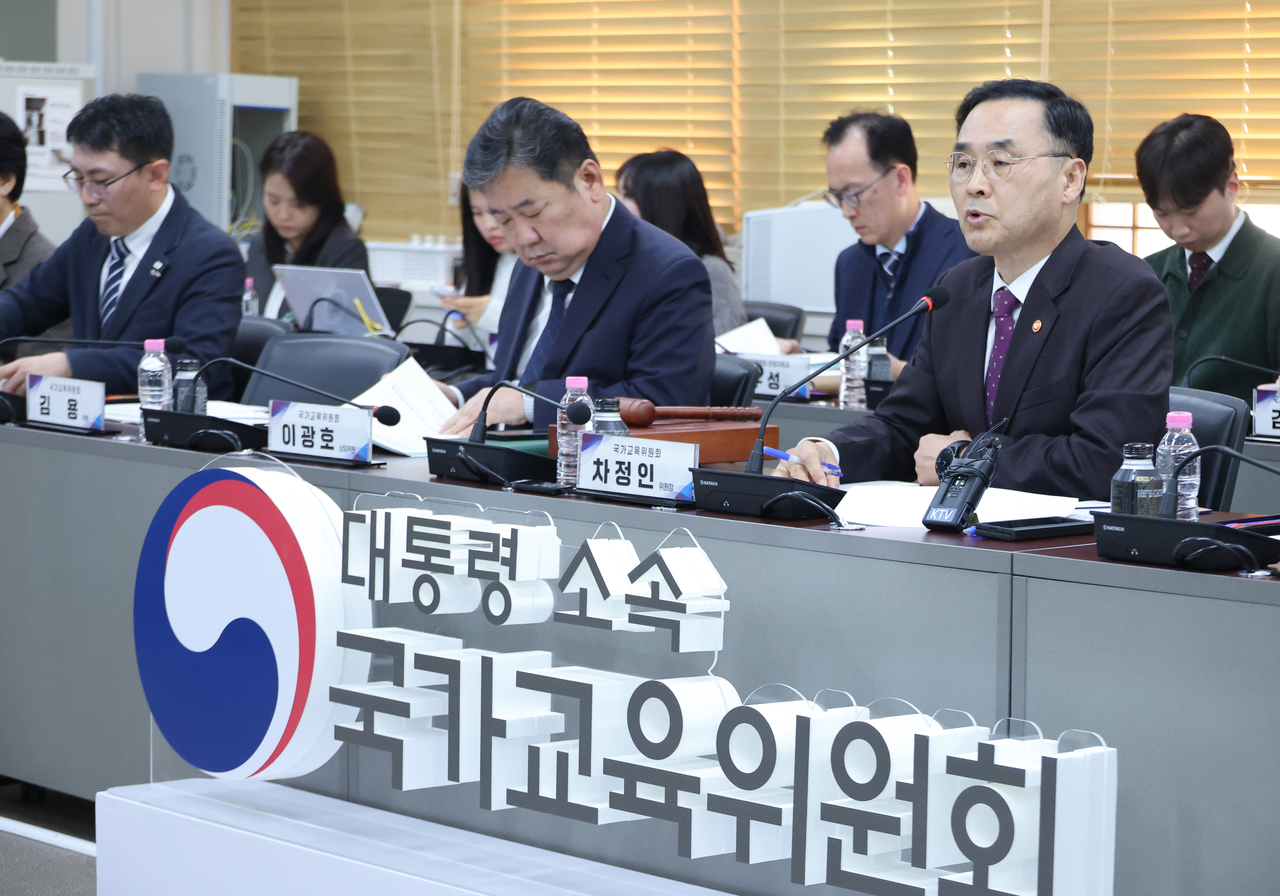
South Korea's National Education Commission is struggling to finalize its "2028–2037 Mid- to Long-Term Education Development Plan," with disagreements surfacing across issues ranging from elementary school dismissal times to college admissions. A proposal to extend regular classes for first- and second-grade elementary students until 3 p.m. has in effect entered withdrawal proceedings, while a separate plan to introduce essay and short-answer questions to the College Scholastic Ability Test has run into concerns over grading fairness.
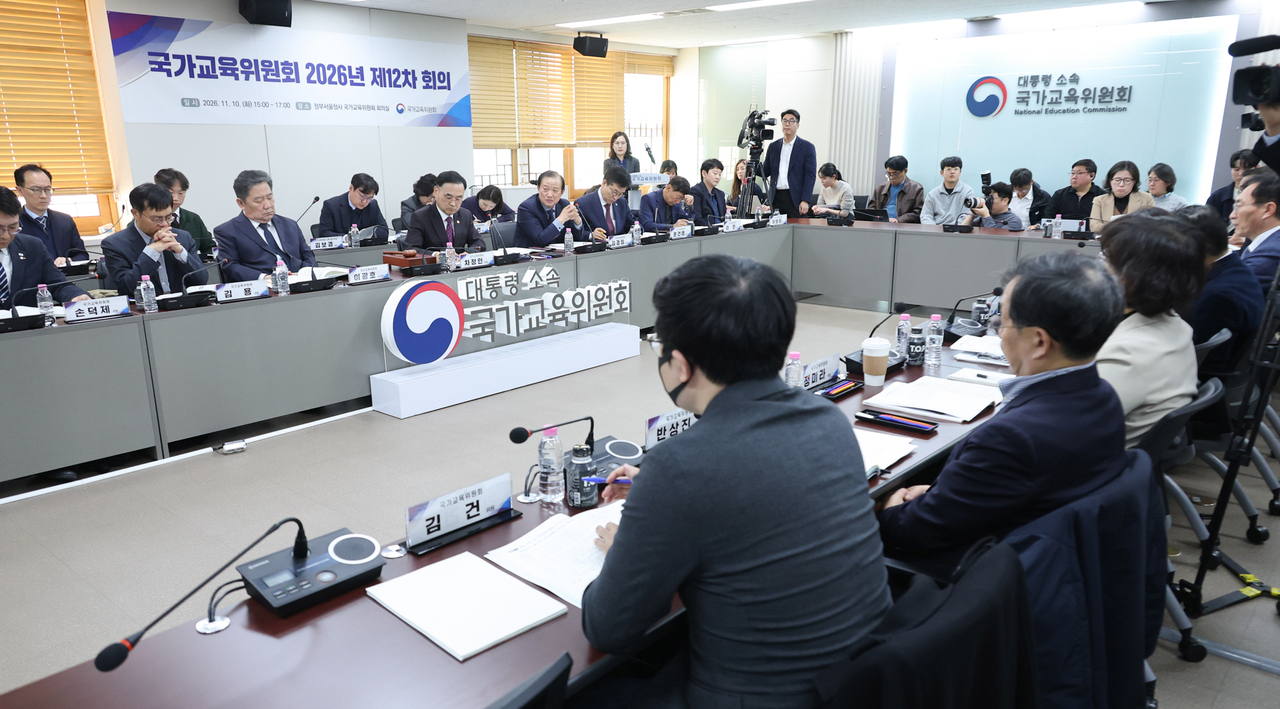
At the commission's 12th meeting, held Tuesday at Government Complex Seoul in Jongno-gu, a motion to begin gathering and mediating public opinion on opposition to the 3 p.m. dismissal policy was voted down, with five members in favor and 11 against. The vote was triggered after 54,121 people endorsed a petition opposing the policy on the commission's public opinion platform in late August, meeting the threshold required for a formal review.
Proposal to extend classes and ease child-care gap draws backlash
65.5% of first- and second-grade homeroom teachers say longer school day would leave students worn out
The 3 p.m. dismissal policy would push back the end of the school day for first- and second-graders by roughly two hours from the current norm of around 1 p.m. The measure was discussed at a policy forum co-hosted by the commission in September, with the aim of reducing the burden on parents who send their children to hagwon because no one is available to look after them before the end of the workday.
The proposal drew immediate controversy over whether it was appropriate to extend regular class hours for all lower-grade students simply to address child-care needs for some families. First- and second-graders who want additional supervision can already enroll in free after-school programs for up to two hours a day. Parents were divided: some welcomed a 3 p.m. end time as giving them a realistic chance to pick up their children, while others argued that even a later dismissal would still leave a gap before parents finish work.
Teachers' organizations opposed the plan. In a survey of 22,768 elementary school teachers conducted by the Korean Teachers and Education Workers' Union in late August, 99.1 percent of respondents said they were against the policy. A separate survey by the Elementary School Teachers' Union asked 29,136 first- and second-grade homeroom teachers how students would feel about attending classes through sixth or seventh period and leaving at 3 p.m.; 65.5 percent said students would find the longer day tiring and worn out.
Commission member Lee Bo-mi called for a different approach at Tuesday's meeting. "I am opposed to including in the national education development plan a discussion that simply puts the topic of a 3 p.m. dismissal on the table and asks us to come up with alternatives," Lee said. "We need to accurately identify what children in schools are lacking and what parents are actually asking for before we can have a meaningful discussion."
While the commission did not vote to formally scrap the policy, the debate appears likely to fade. The commission's public opinion deliberation subcommittee concluded that the policy direction and key issues had not been sufficiently defined to proceed immediately with public consultation. Chairperson Cha Jeong-in left the door open, saying the matter "could be revisited if the need for broader public deliberation arises in the future."
Hanja in textbooks, expanded teaching licenses also spark opposition
'2028–2037 long-term education plan' release delayed for fifth time
The 3 p.m. dismissal proposal is not the only contentious issue to surface before the long-term plan is made public. A proposal to include hanja alongside Korean text in elementary school textbooks to improve literacy, and a separate measure to grant temporary teaching licenses to outside specialists in arts and vocational fields at the high school level, have also met with opposition.
The Federation of Korean Teachers' Associations held a press conference ahead of Tuesday's commission meeting, calling for the withdrawal of the teaching license exemption. "If there is a shortage of teachers, the first step should be identifying which schools need teachers in which subjects," the group said.
Efforts to reform the college entrance exam have also run into a fairness problem. In an online public consultation on introducing essay and short-answer questions to the exam, the most common concern among 3,246 responses was that subjective grading by examiners would make results unreliable — a view expressed in 754 submissions, or 23.2 percent of the total. Another 708 responses, or 21.8 percent, said schools should first focus on teaching reading and writing before changing the assessment format. The underlying criticism is that before overhauling the exam, educators must answer how schools will teach students effectively and ensure consistent scoring of identical answers.
On Oct. 21, the commission pushed back the release of a draft "2028–2037 National Education Development Plan" from the end of October to sometime before the end of the year. Members agreed on the delay but were split over whether to set a new deadline; the decision to aim for a year-end release was ultimately made by a vote of 10 to 6. It was the fifth time the commission has postponed the plan's release schedule.
The commission said it needed more time for deliberation and kept its target of finalizing the plan by the end of March next year. Next year will mark five years since the commission was established with the stated goal of crafting education policies durable enough to outlast changes in government.
brunch@heraldcorp.com