Cash paid to 505 corporate heads in exchange for company insurance sign-ups
Ring evaded 22.9 billion won in taxes through shell companies, caused 22.4 billion won in losses to insurer
231 people referred to prosecutors, ringleader detained
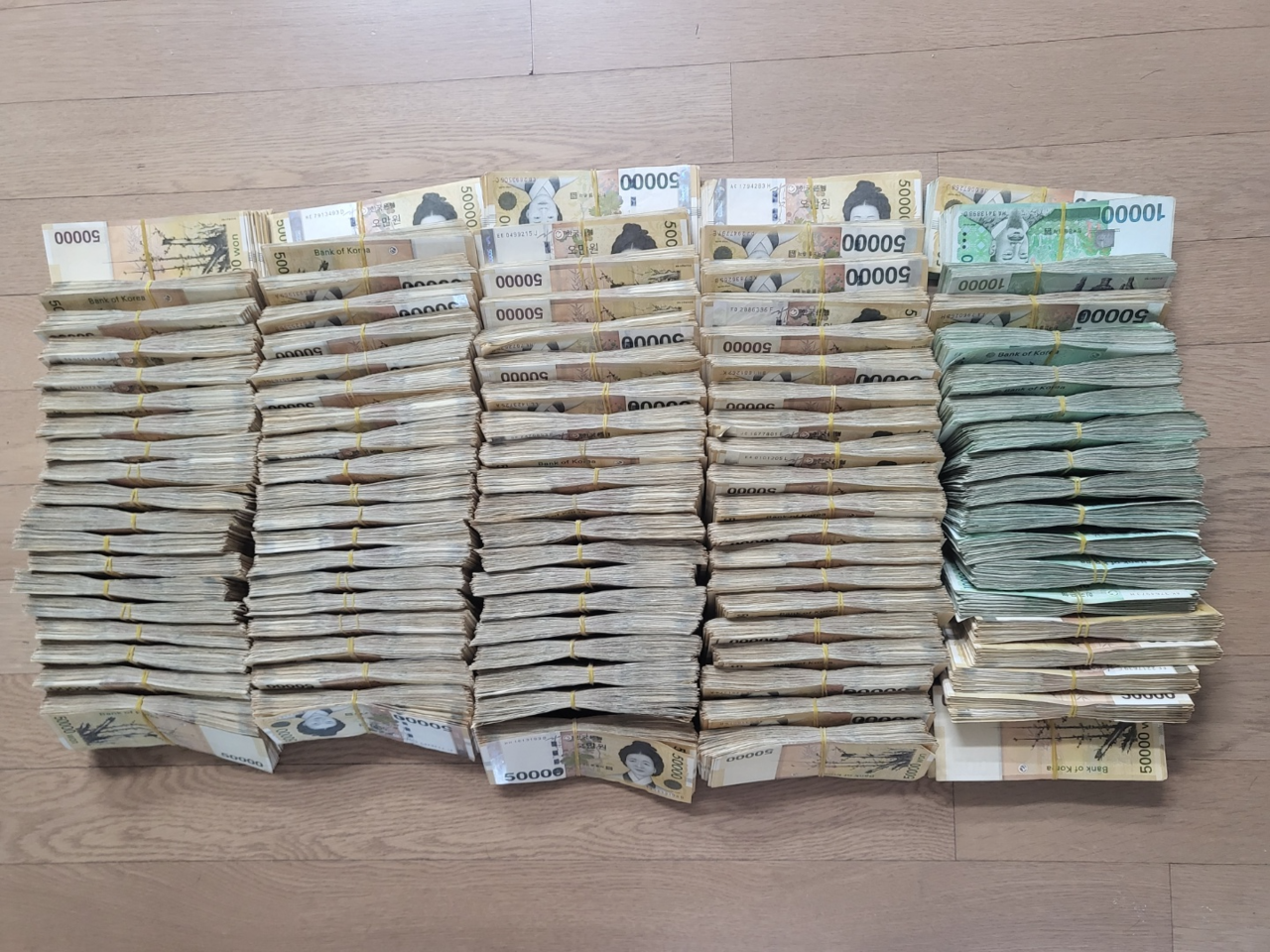
Police have broken up an insurance sales ring that paid 73.2 billion won ($54.5 million) in illegal cash rebates to corporate executives by signing up their companies for insurance policies and funneling a portion of the commissions back to them personally. The group also faces charges of evading 22.9 billion won in taxes through fictitious transactions involving shell companies.
The Seoul Metropolitan Police Agency Metropolitan Investigation Unit said Wednesday it had detained the ringleader, identified only as A, on charges including violations of the Insurance Business Act, breach of fiduciary duty and tax evasion, and referred 230 others to prosecutors without detention. The 231 people referred in total include 27 members of the organization, 46 corporate heads and 158 people who lent their names to accounts used in the scheme.
A and associates operated branches of an insurance agency and solicited corporate heads to take out "executive term life insurance" policies — products designed to pay a lump sum to a company if its chief executive dies, helping the firm absorb the resulting financial loss. The ring offered to kick back cash to the executives personally if their companies paid the premiums.
The scheme exploited the large recruitment commissions paid out when insurance contracts are signed. "When you sell a corporate insurance policy with a monthly premium of 10 million won, the recruitment commission comes to about 200 million won, of which roughly 80 million to 120 million won is paid upfront," a police official said. "They received that money into accounts held in other people's names, withdrew it as cash, and then paid the corporate head 10 million won a month for 14 months."
Under this arrangement, the company bore all the premiums while the executive personally pocketed a total of 140 million won. Applied across 505 corporate heads, the rebates reached 73.2 billion won in total.
Shell companies also served as the vehicle for tax evasion. Because the insurance business does not qualify for youth startup tax credits, A's group set up separate shell companies outside the greater Seoul metropolitan area's overcrowding-control zone to take advantage of those credits. The ring then transferred recruitment commissions received under other people's names into the shell companies' accounts and fabricated transactions to make it appear the shell companies had sold customer data to the insurance agency.
The insurance agency used the fictitious purchase costs to reduce its taxable income, while the shell companies applied youth startup tax exemptions to the funds they received and paid no tax. Police determined that between 2021 and 2023 the group concealed about 36.8 billion won in income and evaded 22.9 billion won in taxes.
The ring also caused 22.4 billion won in losses to the insurance agency's head office. When funds for paying rebates ran short, A's group arranged the early cancellation of 410 insurance contracts.
"Insurance companies pay out recruitment commissions upfront and recoup them through subsequent premiums, so when a contract is cancelled early they demand the agency's head office return the advance," a police official explained. "That process left the head office with losses of about 22.4 billion won." The total insurance commissions the ring collected came to 116.3 billion won, a figure that includes the 73.2 billion won in rebates.
Of the 505 corporate heads involved, police referred only 46 to prosecutors in the first round. Because there is legal ambiguity over whether simply receiving a rebate at the solicitation of an insurance sales organization constitutes a violation of the Insurance Business Act, investigators applied breach-of-fiduciary-duty charges only to executives for whom sufficient evidence had been secured.
"Receiving a rebate alone does not automatically make someone subject to punishment under the Insurance Business Act," the police official said. "We referred the 46 executives whose contracts were more recent and for whom more evidence remains, and we plan to review the rest further."
jookapooka@heraldcorp.com