Cho Jeong-sik says 1987 constitution no longer adequate for $40,000-income era
Calls for advisory panel under speaker's office to guide reform agenda
Urges ruling and opposition parties to compete on policy, not political attacks
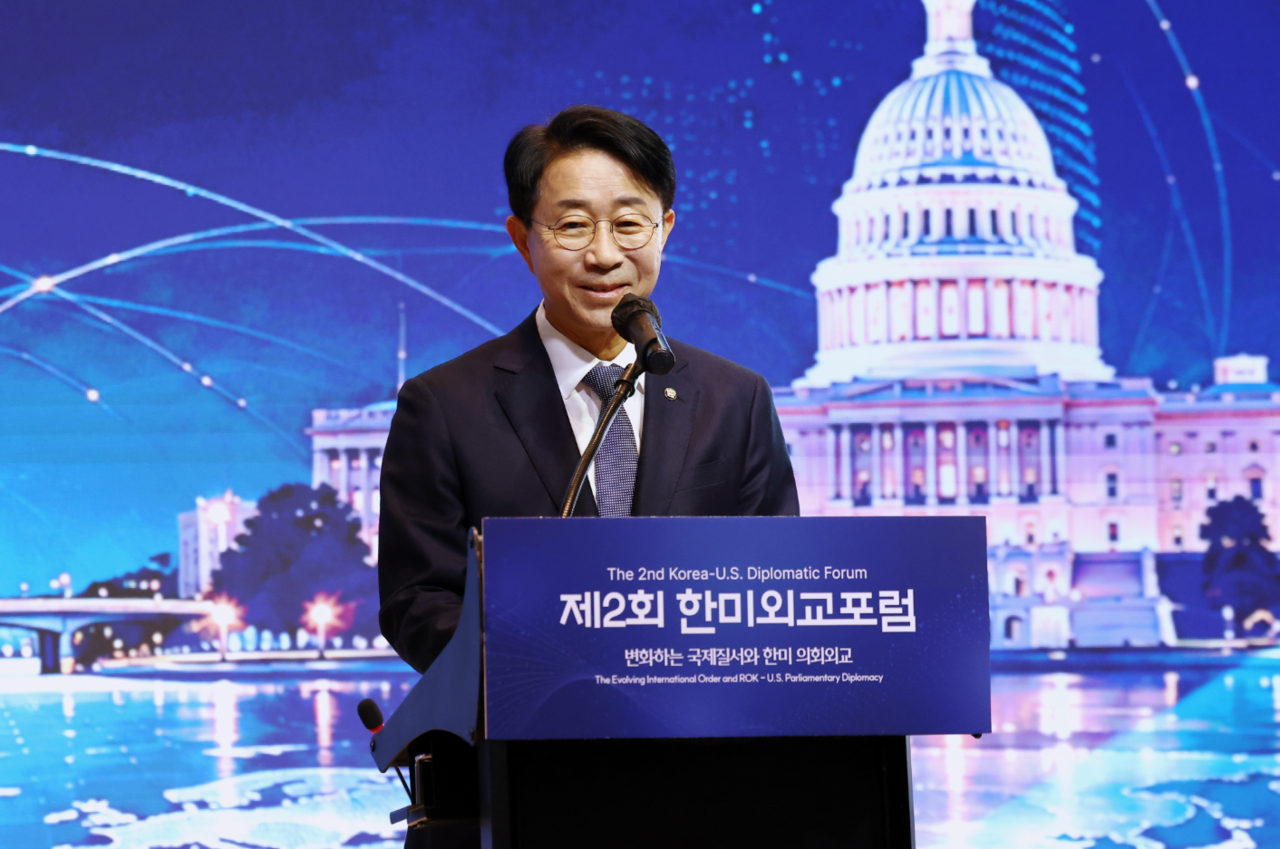
National Assembly Speaker Cho Jeong-sik said Wednesday he would push for constitutional reform in the 22nd National Assembly to better reflect citizens' lives and close gaps in political participation rights, adding that the question of whether a sitting president could seek re-election should be removed from political debate entirely.
Speaking at a keynote address before the Kwanhun Club in Jung-gu, Seoul, Cho said the current constitution — won through the June 1987 pro-democracy movement — will mark its 40th anniversary next year, and that a charter drafted for a per-capita income era of $3,000 is no longer adequate to govern a South Korea where that figure has reached $40,000. "Re-election by a sitting president is simply not possible, so it should not even be part of the constitutional reform discussion," he said. "We must stop turning this issue into a political battleground."
Cho said constitutional reform should be led by the National Assembly and announced plans to soon launch a Constitutional Reform Advisory Committee under the speaker's office to set the direction and agenda. He added that public opinion would be gathered through a citizen participation platform called "Modu-ui Heonbeop" (Everyone's Constitution).
He stressed that any revision must have the agreement of both the ruling and opposition parties as well as broad public consensus. "We will work through the agenda step by step, starting with issues where inter-party agreement is strongest and public support is widest," he said.
Cho noted that next year will have no nationwide elections, making it an ideal time for calm deliberation on constitutional reform. He said the preamble and fundamental rights provisions would be addressed first, with discussions on restructuring the power structure to follow within the scope of what both sides can agree on.
Cho also set the legislative direction for the second half of the Assembly under the banner of a "people's livelihood effectiveness legislature," pledging to pursue legislation that earns public trust. He outlined three priorities: building the foundations of a basic social safety net covering care, education, residential welfare and healthcare; laying the groundwork for an economic leap forward through legislation on advanced industries; and advancing balanced national development, including the construction of the Sejong Assembly building.
On the 2027 budget bill currently under Assembly review, Cho said he would do his utmost to ensure it is passed within the constitutional deadline, describing it as a catalyst for improving citizens' lives and preparing for the future.
Addressing the intensifying political clashes between the ruling and opposition parties, Cho said he takes seriously, as speaker, the criticism that the Assembly is falling short of public expectations. "What the people want is dignified politics — politics that listens to their demands and resolves them through dialogue and communication," he said. "We must compete on policy and alternatives, not on attacking each other."
bigroot@heraldcorp.com