Songpa-gu says 50.5 billion won; association says zero
Closing-point home value gap reaches 180 billion won
Disputes over official price ratios, commercial space
Experts warn unclear standards invite legal battles
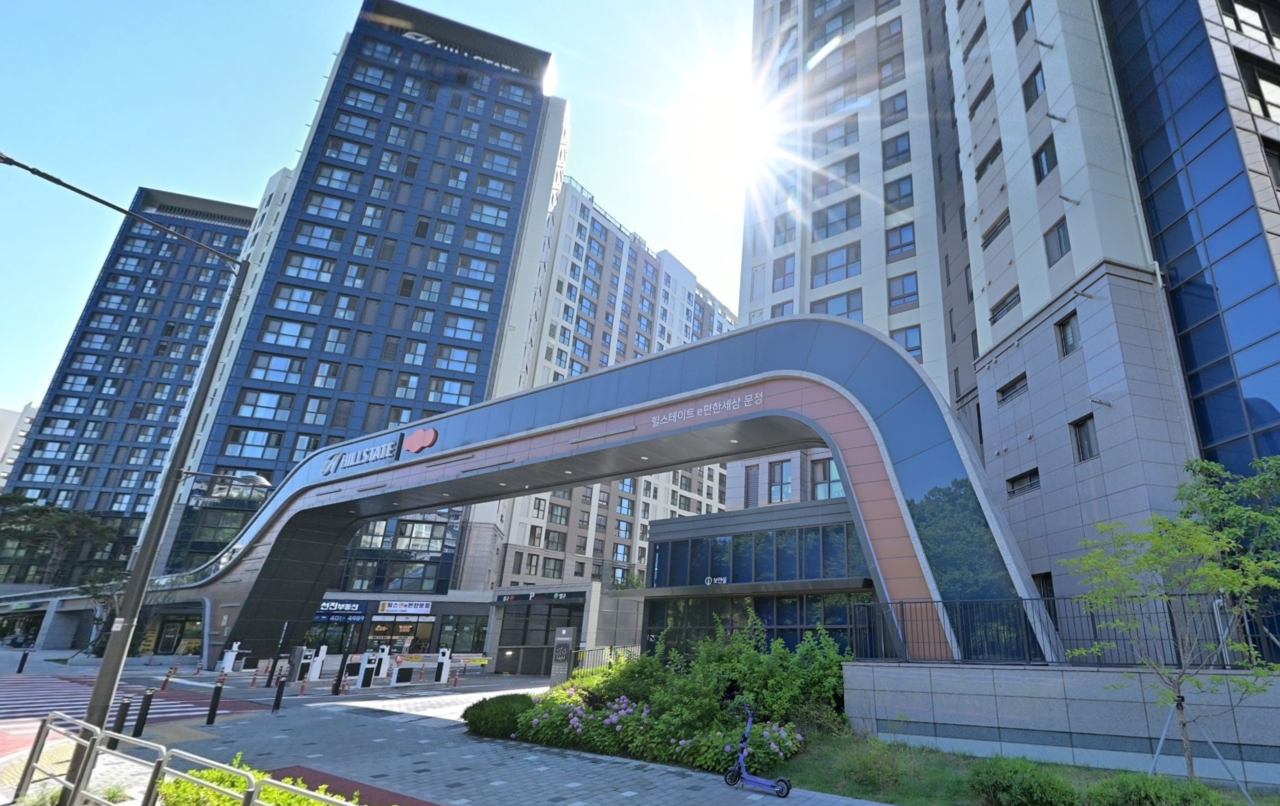
A reconstruction project in Munjeong-dong, Songpa-gu — the second complex in the Gangnam area to receive a preliminary levy notice under the reconstruction excess profit recapture regime — is locked in a dispute with the district office over how the levy should be calculated. When Songpa-gu issued its preliminary notice in 2018, it put the figure at 50.5 billion won ($37.6 million). The association's own estimate last year came to zero. The gap stems largely from a roughly 180 billion won difference in the assessed value of homes at the point of reconstruction completion, and the association says it is prepared to take the matter to court.
According to industry sources Wednesday, the reconstruction association for the Munjeong-dong 136 site has retained a law firm and is preparing an administrative lawsuit against the levy. The association said it submitted objections twice on the grounds that the closing-point home value calculated by the Korea Real Estate Board was excessive, but that its main requests were not accepted.
The Munjeong-dong 136 site was the second complex in the Gangnam area to receive a preliminary reconstruction excess profit recapture notice, following Banpo Hyundai in Seocho-gu in September 2018. Songpa-gu calculated the total levy at 50.5 billion won at the time, averaging about 58 million won per association member. The association's own estimate submitted last year put the figure at zero.
The sharpest disagreement between the two sides concerns the assessed value of homes at the point of reconstruction completion. The association's own estimate for the closing-point home value is about 870 billion won, while the Korea Real Estate Board's figure is about 1.04 trillion won — a gap of roughly 170 billion to 180 billion won. The association attributes the discrepancy to differences in the official price-to-market-price ratio used in the valuation.
"The official prices of nearby apartments reflect about 60 percent of market value, but a 67 percent realization rate was applied to this complex," an association official said. "We asked for the assessed value to be adjusted to reflect actual transaction prices, but the request was not accepted."
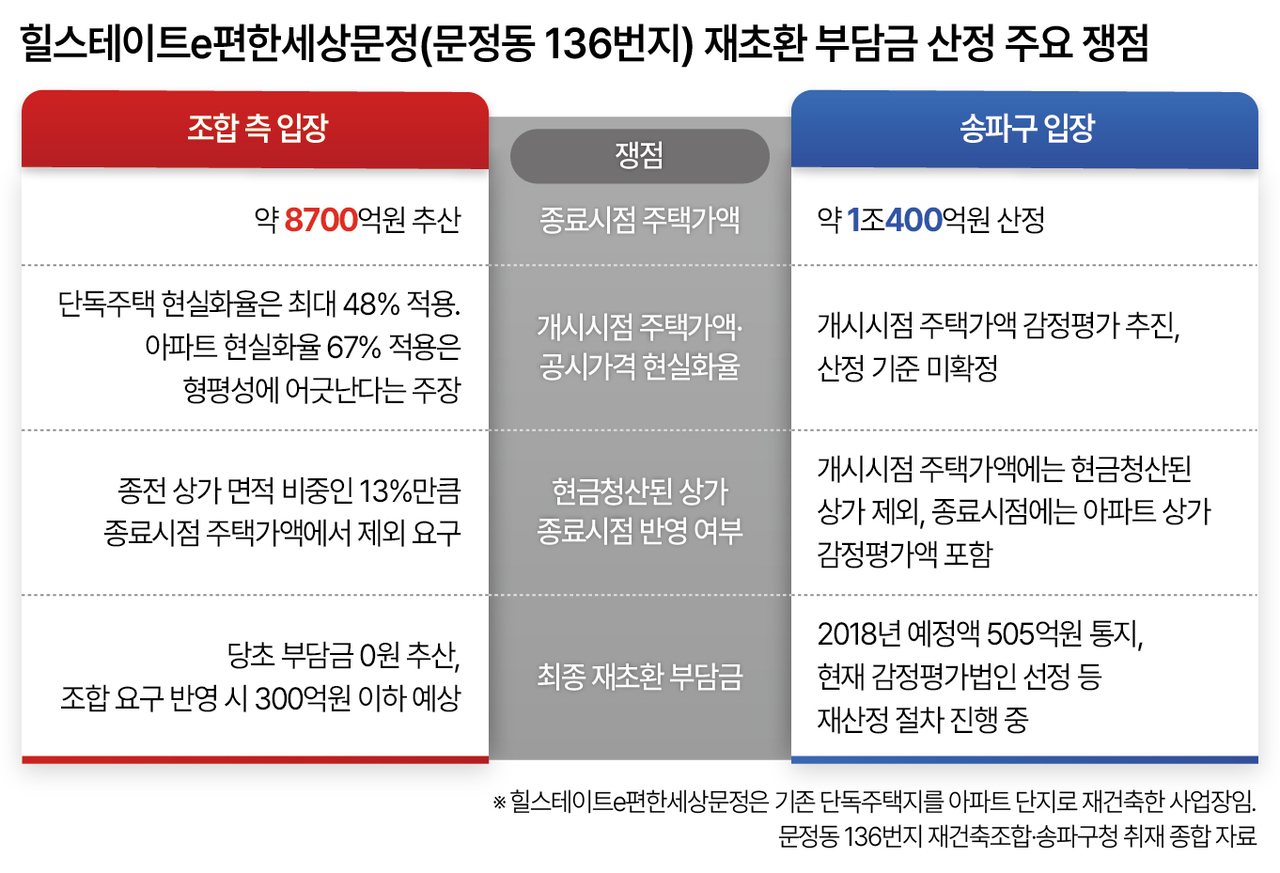
Another point of contention is the difference in official price realization rates between the original single-family homes and the newly built apartments. According to the association, the realization rate for single-family homes at the start of the reconstruction period was at most 48 percent. Because a higher rate applies to the completed apartments, the association argues that the calculated excess profit ends up larger than the actual development gain.
There is also a dispute over commercial space. The association argues that because commercial property owners within the original single-family housing site took cash settlements rather than receiving apartment units, the roughly 13 percent share of floor area that was commercial should be excluded from the closing-point home value calculation — just as it was excluded from the opening-point calculation. Including it at the closing point inflates the excess profit figure, the association says.
"The commercial property owners received cash settlements and did not get apartments, so they should be excluded from the calculation at both the opening and closing points on the same basis," an association official said. "We asked for that portion to be deducted from the closing-point home value, but it was not reflected."
The association estimates that if the current calculation method stands, the final levy could reach nearly 50 billion won in total. But if its demands are met — adjusting the closing-point home value and excluding the commercial floor area — the figure could fall well below 30 billion won or drop to zero.
Songpa-gu has completed the closing-point home value assessment and is now working on the opening-point figure. On Nov. 3, the district posted a public notice to select an appraisal firm for the adjusted opening-point home value assessment for the Munjeong-dong 136 single-family housing reconstruction project.
"The closing-point home value assessment is done, but the opening-point figure is still being calculated," a Songpa-gu official said. "Unlike a typical apartment reconstruction, this was a single-family housing redevelopment, so there are few comparable transactions and the valuation is more complex. The full picture of the levy will only emerge after additional assessment and verification."
The association was formally dissolved Friday, but procedures related to the reconstruction excess profit recapture levy remain unresolved. A designated liquidator has continued handling the levy calculation process since the dissolution.
"We have conveyed our objections to the calculation method on multiple occasions, and at a general meeting we selected and contracted a law firm in preparation for litigation," an association official said. "If the levy is imposed without our requests being reflected, we will proceed with the lawsuit."
Experts warn that ambiguity in the reconstruction excess profit recapture calculation standards could give rise to similar disputes elsewhere. They note that in assessing unrealized development gains, interpretations of what counts as home value and allowable development costs can diverge significantly.
"The reconstruction excess profit recapture regime assesses unrealized gains, so the amount will inevitably vary depending on the valuation criteria and how they are interpreted," said Seo Jin-hyung, a professor in the real estate law department at Kwangwoon University. "The government has not clearly laid out specific calculation standards and levy methods, which undermines the predictability of the law."
"If the levy amount varies widely depending on the calculation method, confusion will only deepen," Seo added. "There is a real possibility that a string of tax tribunal claims and lawsuits will follow, driving up unnecessary social costs."
quq@heraldcorp.com