Lawmaker calls for 182.1 billion won set aside for discount stations in next year's budget
Ministry of Trade pushed to cover losses caused by government policy
Korea Expressway Corporation's ex-OIL files suit against GS Caltex over settlement dispute
Ministry of Planning and Budget holds firm against government intervention

The government is set to notify oil refiners this month of the loss compensation amounts owed under the petroleum price cap regime for the first time, and the National Assembly is now pushing to reshape the related budget for next year. Lawmakers say the compensation should extend to discount gas stations that also suffered losses in the settlement process following the price cap's introduction, while the government insists it has no obligation to intervene in what it considers a private contractual dispute between industry players.
Since the petroleum price cap took effect in March, refiners have claimed losses running into the trillions of won while discount gas station operators say their losses are in the hundreds of billions of won range — and the conflict over who should be compensated is widening.
Assembly demands 182.1 billion won for discount gas stations
Assembly member Yun Han-hong of the National Assembly's Trade, Industry, Small and Medium Enterprises and Startups Committee sent a written inquiry to the Ministry of Trade, Industry and Energy calling for 182.1 billion won ($134 million) to be carved out of next year's 1.45 trillion won "petroleum price stabilization support project" budget and designated specifically for discount gas stations.
The government currently plans to commit a total of around 5 trillion won to cover refiner losses under the price cap. That figure combines the 4.2 trillion won allocated through last year's supplementary budget with the newly created petroleum price stabilization support project included in next year's budget proposal. The ongoing nature of the price cap, which has been in effect since March, means refiner losses continue to accumulate.
Yun's office argued that by limiting loss compensation to refiners, the government has deepened tensions within the industry. "Disputes between refiners and discount gas station operators over settlement standards have arisen, along with additional financial burdens," the office said in its written inquiry. "Fiscal compensation is needed for losses caused by government policy."
Price cap sparks distribution disputes — ex-OIL sues GS Caltex
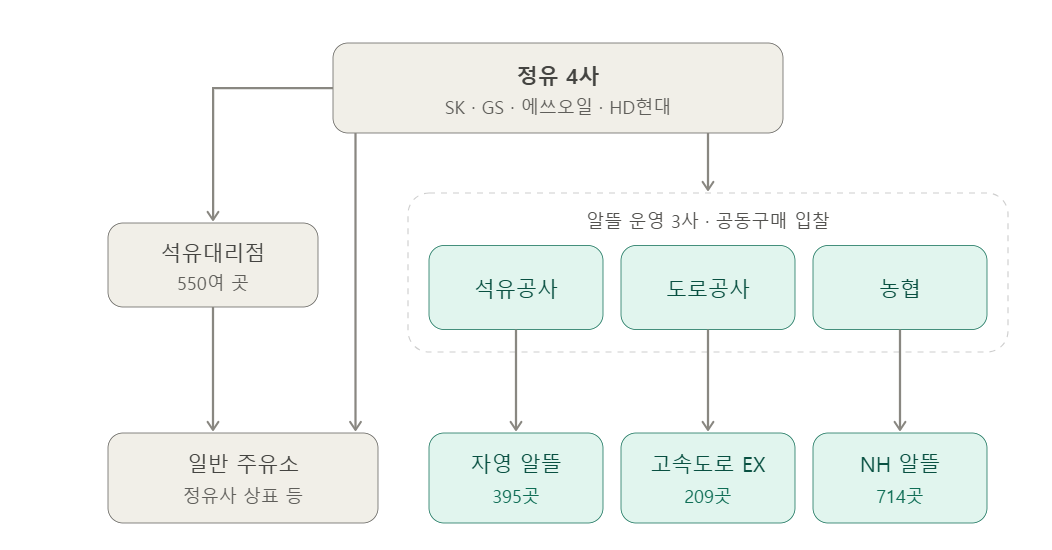
Settlement disputes stemming from the price cap have escalated into litigation between discount gas station operators and refiners. Ex-OIL, the discount gas station brand operated under Korea Expressway Corporation, recently filed a suit against GS Caltex seeking the return of unjust enrichment.
Ex-OIL claims GS Caltex settled March payments — after the price cap had already taken effect — using pre-cap prices, causing losses running into the tens of billions of won. GS Caltex rebuffed the claim, saying it had held discussions with ex-OIL over the settlement but, unable to reach an agreement, processed the payment in accordance with the existing contract and saw no wrongdoing in doing so.
The gap between what refiners and discount gas station operators say is owed in settlement payments amounts to as much as 160 billion won, and industry observers expect similar lawsuits to follow.
Government holds firm: no need to intervene in settlement disputes
The debate over compensating losses from the price cap — introduced to stabilize consumer prices during a period of high oil costs — has shifted into a broader standoff between the government and the National Assembly over the related budget. The government has drawn a firm line against extending compensation to discount gas stations, maintaining that settlement issues arising after the price cap's introduction are private contractual matters that do not require government intervention.
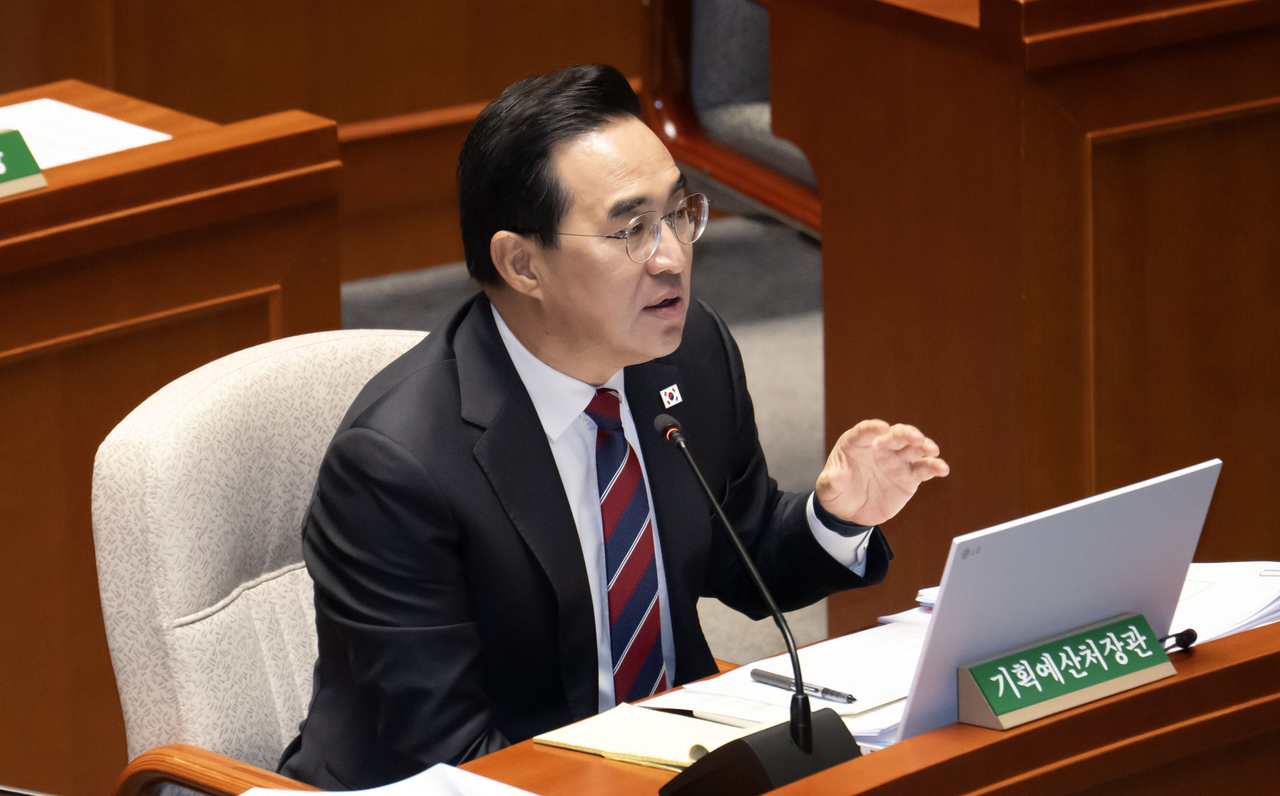
Ministry of Planning and Budget Minister Park Hong-keun made the government's position clear at a plenary session of the National Assembly's Budget and Accounts Committee on Tuesday. "No matter how many times I think it over, I cannot convince myself that it is appropriate to cover those losses with public funds," Park said. "Is this not, in effect, a matter governed by private contracts?"
The government, having received loss-related data from refiners, plans to notify them of the first calculated settlement amount as early as the end of this month. The first settlement period covers March 13, when the price cap was introduced, through June 30. Refiners have maintained that their cumulative losses in the first half of the year already exceeded 5 trillion won, making it likely they will contest the government's figures once notified.
The Assembly has also criticized the government for finalizing the loss compensation budget on vague grounds. In a report on the 2027 budget proposal published Oct. 30, the National Assembly Budget Office said the government "takes the position that the budget was calculated through simulations based on the Korea Energy Economics Institute's international oil price outlook, but has not been able to present the specific simulation data."
The office added that "during the Assembly's budget review, it will be necessary to comprehensively examine the status of the price cap's implementation and the potential use of contingency reserves, and to adjust the 2027 budget to an appropriate scale." The implication is that the final budget figure should be set only after the price cap ends and the full scope of settlement amounts is determined.
Yun said he would "do everything possible to ensure that the budget needed to resolve the price cap settlement disputes is reflected during the review of next year's budget proposal."
klee@heraldcorp.com