Low, wide four-door sports car
Gemini-integrated conversational voice feature on board
Design to carry over to Polestar 2, 7 production models
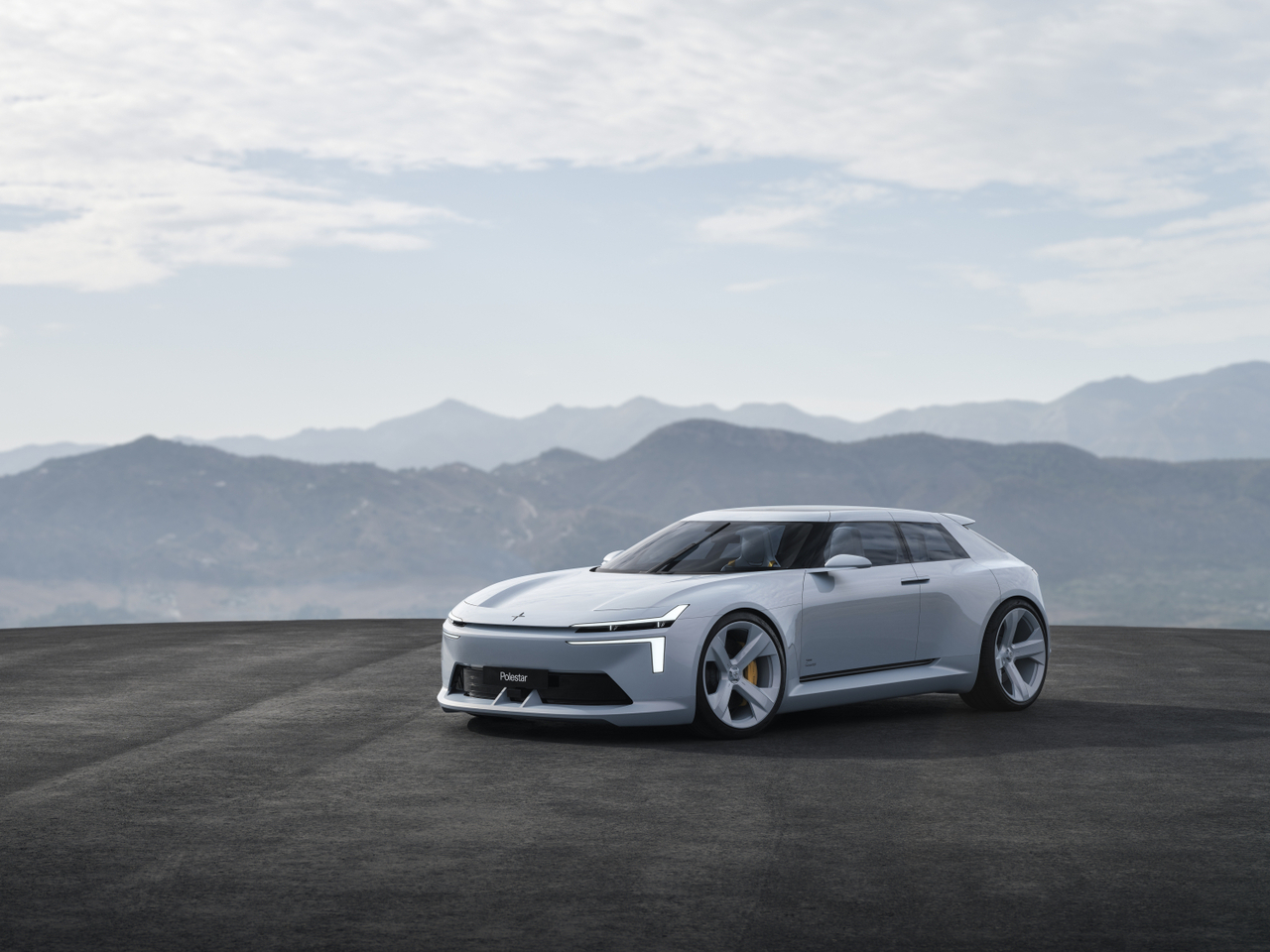
Swedish premium electric vehicle brand Polestar announced Wednesday it has unveiled the Formula 2030 concept car, a showcar embodying the brand's future design direction.
The concept car gives physical form to Polestar's medium- to long-term strategy, "Formula 2030," and marks the first showcar produced under Design Director Philip Römers. Polestar said it made its global debut in October at a Polestar 4 SUV international test-drive event held in Spain.
Polestar plans to carry key design elements from the concept car over to the next-generation Polestar 2 and Polestar 7 production models.
"The Formula 2030 concept car shows how Polestar's core values of design, performance and sustainability will be realized in future production models," Design Director Philip Römers said. "We wanted to boldly evolve Polestar's unique design DNA and further cement performance as the brand's core identity."
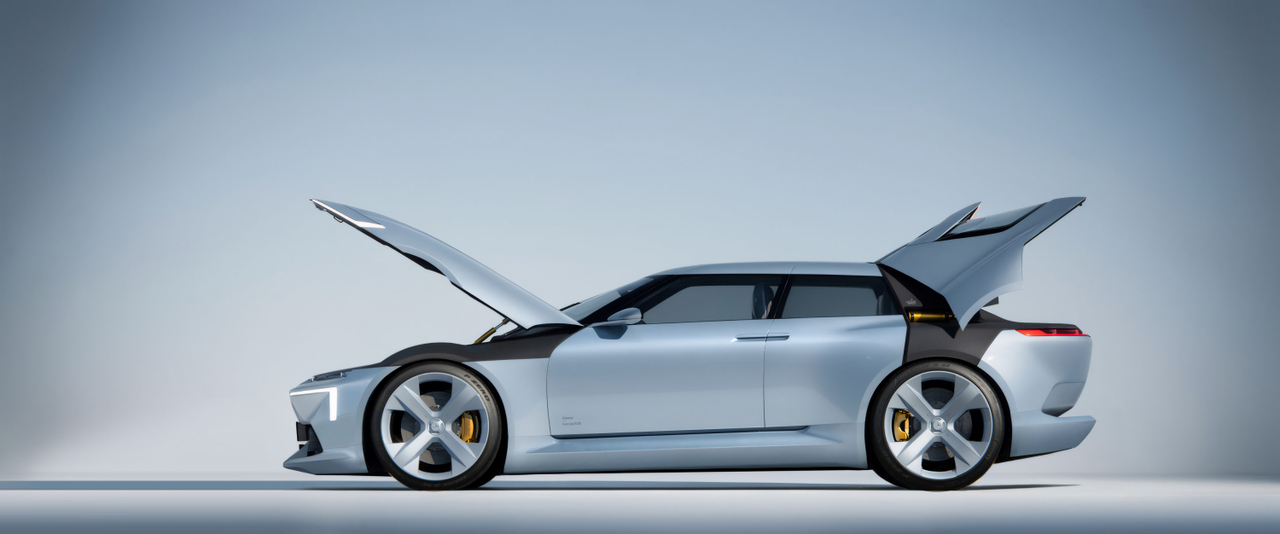
The body is a compact four-door sports car measuring 4,680 millimeters in length, 2,021 millimeters in width, 1,350 millimeters in height and 2,780 millimeters in wheelbase. Its low, wide proportions are complemented by a long hood, short overhangs and 22-inch wheels. The side profile features a modern reinterpretation of the classic cab-rearward style, with voluminous rear fenders.
The front carries dual-blade headlights inspired by the Polestar 3, flowing naturally into the front aero wing and previewing the design direction of the next-generation Polestar 2, set for a global launch in 2027. A shark-nose design, a deeply sculpted front splitter and a motorsport-inspired vertical single windscreen wiper complete the front end.
At the rear, a new signature single-blade rear light replaces the brand's previous integrated light bar. The design evolves Polestar's characteristic geometric forms and sharp lines and is set to appear on future production models as well. A wraparound rear windshield, a sturdy C-pillar, and an aerodynamically considered spoiler and diffuser are also featured. With no B-pillar, the doors open facing each other, improving cabin access.
"We wanted to build on and further develop the design characteristics of existing models that represent Polestar," said Nahum Escobedo, Polestar's head of exterior design. "Drawing on Polestar's unique design elements — the dual-blade headlights, the visor-style wraparound windscreen and the voluminous rear fenders — we aimed to express performance in a new way, while adding new elements such as the single-blade rear light to create a differentiated look."
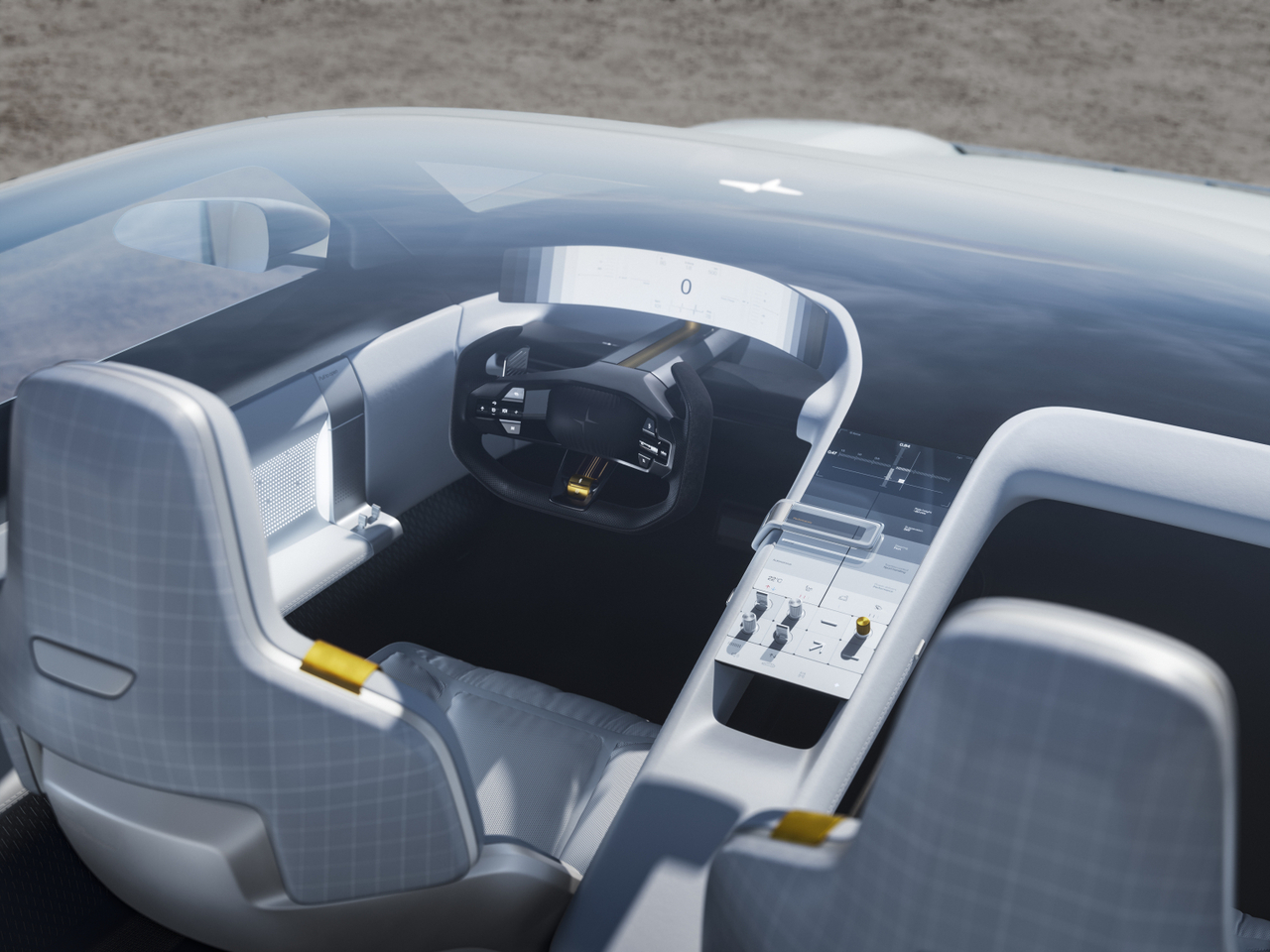
The interior is styled as a driver-focused performance cockpit. A 20-inch HyperDIM driver information display sits on the steering column, while a 12.2-inch center screen display is positioned on the center tunnel. Each of the four individual seats features air-inflatable bolsters and cushions that adjust to the occupant's body shape.
Display positioning and seat settings vary across three driving modes — Performance, Normal and Autonomous. In Performance mode, the steering wheel and driver information display move closer to the driver. In Autonomous mode, the center display rises and the seats move away from the steering wheel, creating additional space.
A mechatronics-based control system balances digital interfaces with physical controls. Eight freely configurable controls sit below the center display. Google Built-in integrates Google Gemini to provide a conversational voice feature.
The exterior features a new color exclusive to this concept car called "Nitrogen," designed to reveal varied hues depending on natural light. A tone-on-tone design applied across the body realizes a Scandinavian minimalist aesthetic. Swedish Gold, the signature color of Polestar Performance, is used as an accent on the Brembo brake calipers, valve caps, interior details and seat belts.
Materials were selected with sustainability and circularity in mind. The inner door panels use a single fully recyclable material, while structural components such as seat frames incorporate low-emission steel produced from recycled raw materials and renewable energy. The seat backrests use a composite material combining European flax fiber and bio-based polypropylene, replacing conventional virgin plastic. Opening the rear clamshell reveals a natural fiber composite from Bcomp featuring Polestar's signature woven pattern, and Öhlins dampers are exposed externally as a design element.
eyre@heraldcorp.com