'Moderate' range covers 16–35 ㎍/㎥, already above WHO's daily guideline of 15
Standard set in 2018 to match US and Japan
As US and Europe tighten limits, Seoul weighs revisions
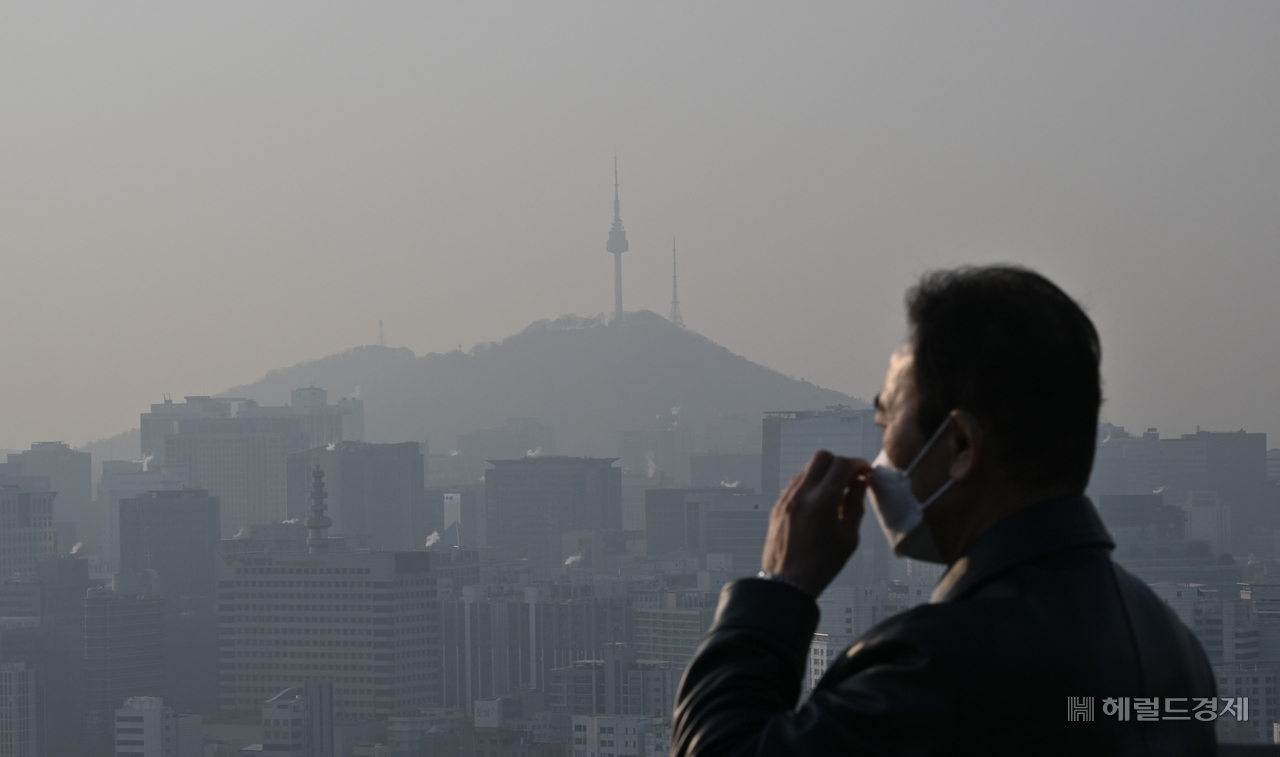
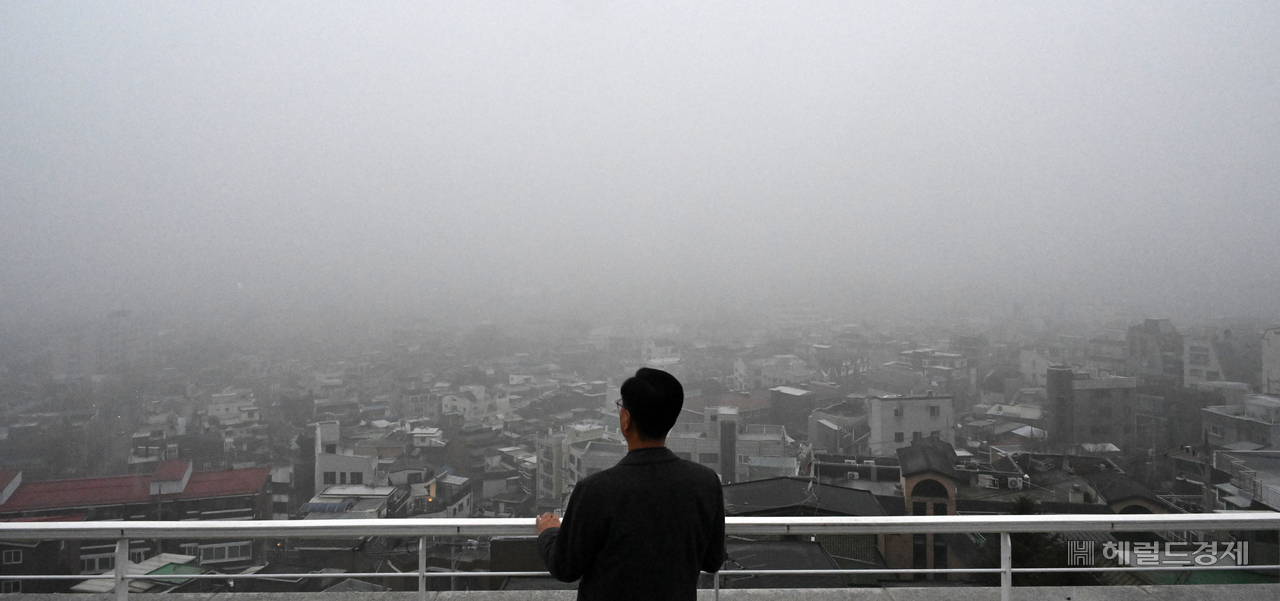
A "moderate" forecast for fine particulate matter may not be cause for reassurance.
The WHO recommends that daily average concentrations of PM2.5 stay at or below 15 micrograms per cubic meter of air. According to AirKorea, South Korea's PM2.5 forecast classifies only readings up to 15 ㎍/㎥ as "good."
Readings from 16 to 35 ㎍/㎥ fall under "moderate" — a range that already exceeds the WHO guideline by more than double. The "bad" category begins at 36 ㎍/㎥, which is 2.4 times the WHO recommended level. A microgram is one-millionth of a gram.
PM2.5 refers to particles with a diameter of 2.5 micrometers or less — between one-twentieth and one-thirtieth the width of a human hair, which measures about 60 micrometers. Because of their tiny size, these particles bypass nasal filters and penetrate deep into the lungs.
The International Agency for Research on Cancer, a WHO body, classified outdoor air pollution and fine particulate matter as Group 1 carcinogens — substances known to cause cancer in humans — in October 2013.
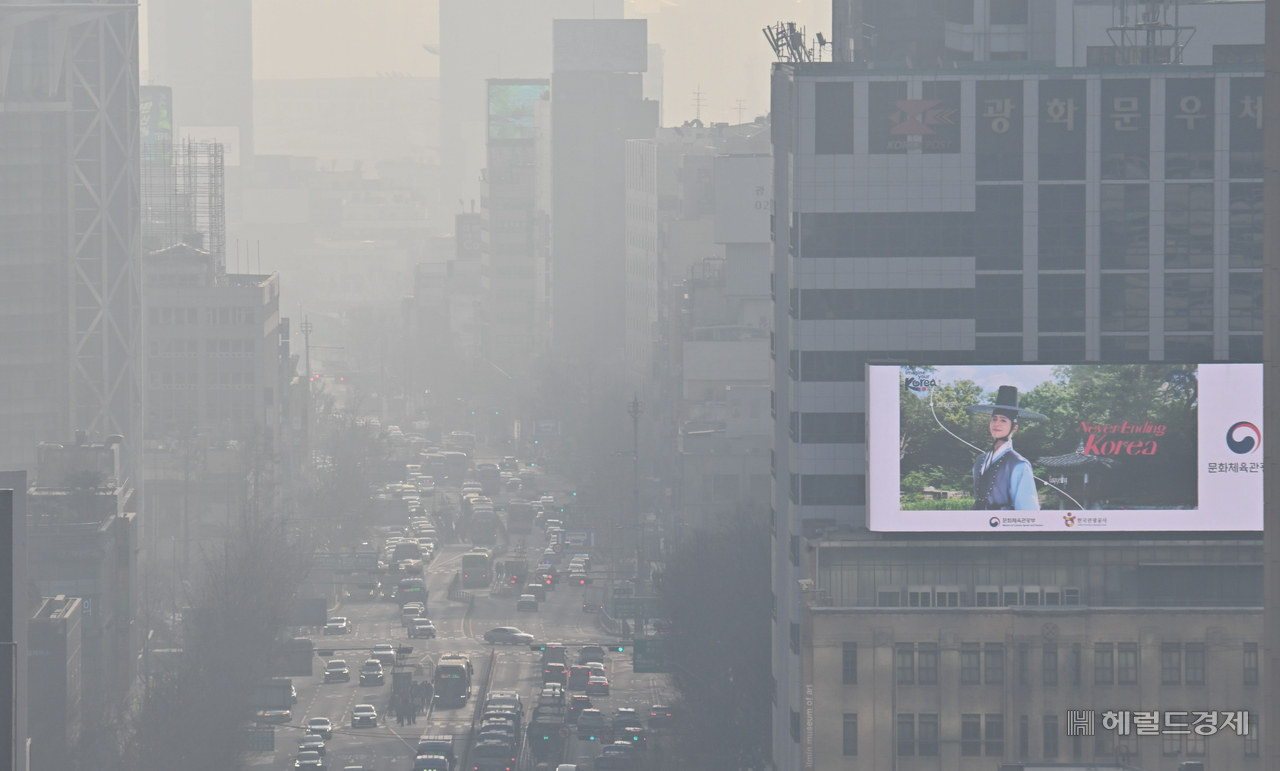
WHO says 15, but Korea's 'moderate' goes up to 35
In September 2021, the WHO revised its air quality guidelines for the first time in 16 years, sharply lowering its PM2.5 recommendations. The daily average guideline dropped from 25 ㎍/㎥ to 15 ㎍/㎥, while the annual average guideline fell from 10 ㎍/㎥ to 5 ㎍/㎥.
The WHO estimated at the time that bringing global PM2.5 concentrations down to the new guideline levels could prevent roughly 80 percent of PM2.5-related deaths. The upper limit of South Korea's "good" forecast category — 15 ㎍/㎥ — matches the WHO's daily guideline.
South Korea's official environmental standards are also more lenient than the WHO's. Under the enforcement decree of the Framework Act on Environmental Policy, the national PM2.5 standard is set at a daily average of 35 ㎍/㎥ or below and an annual average of 15 ㎍/㎥ or below — 2.3 times and three times the WHO's respective guidelines.
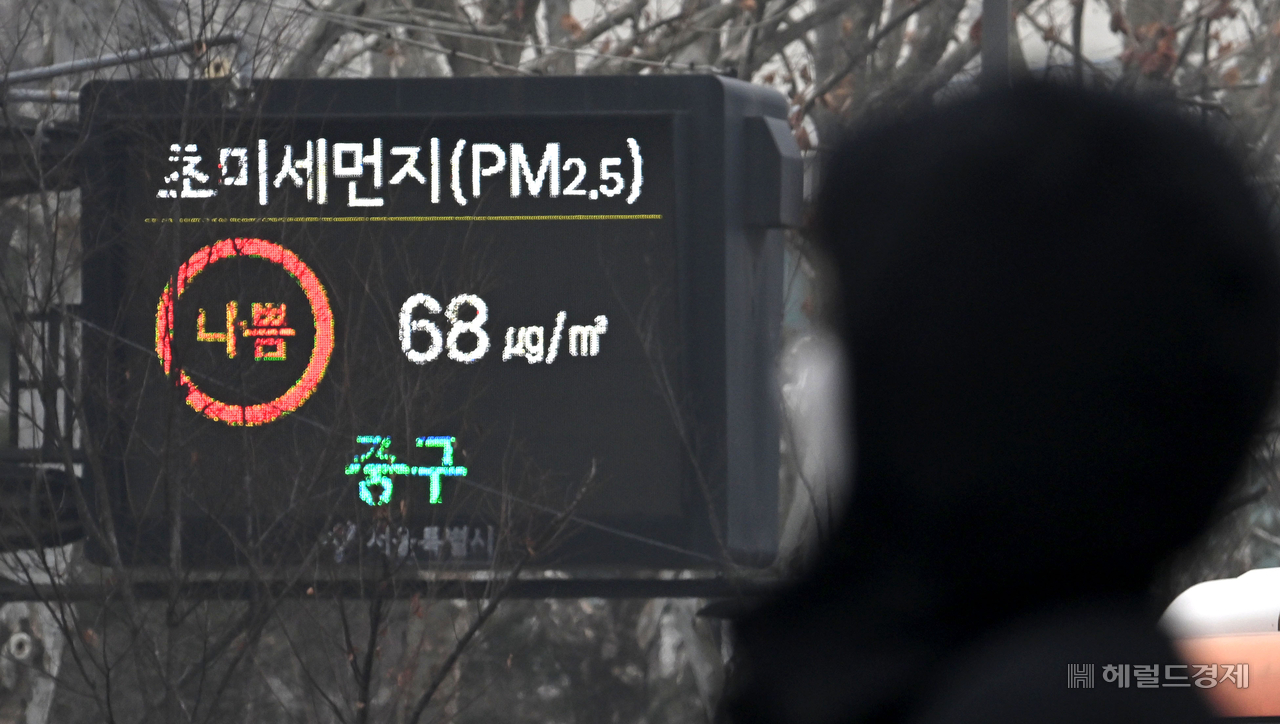
According to the Ministry of Climate, Environment and Energy, the national annual average PM2.5 concentration fell from 26 ㎍/㎥ in 2016 to a preliminary 16 ㎍/㎥ in 2025. Even so, the 2025 figure slightly exceeded the annual environmental standard of 15 ㎍/㎥ and stood at three times the WHO's annual guideline of 5 ㎍/㎥.
Final figures compiled by the ministry for 2024 show that days with a daily average at or below 15 ㎍/㎥ — classified as "good" — numbered 212, the highest on record, while days rated "bad" or worse totaled just 10, the fewest ever recorded.
However, of the 366 days in 2024 — a leap year — the 154 days that did not qualify as "good" all recorded daily average concentrations above the WHO guideline of 15 ㎍/㎥. That is more than 40 times the roughly three to four days per year that the WHO considers an acceptable number of exceedances.
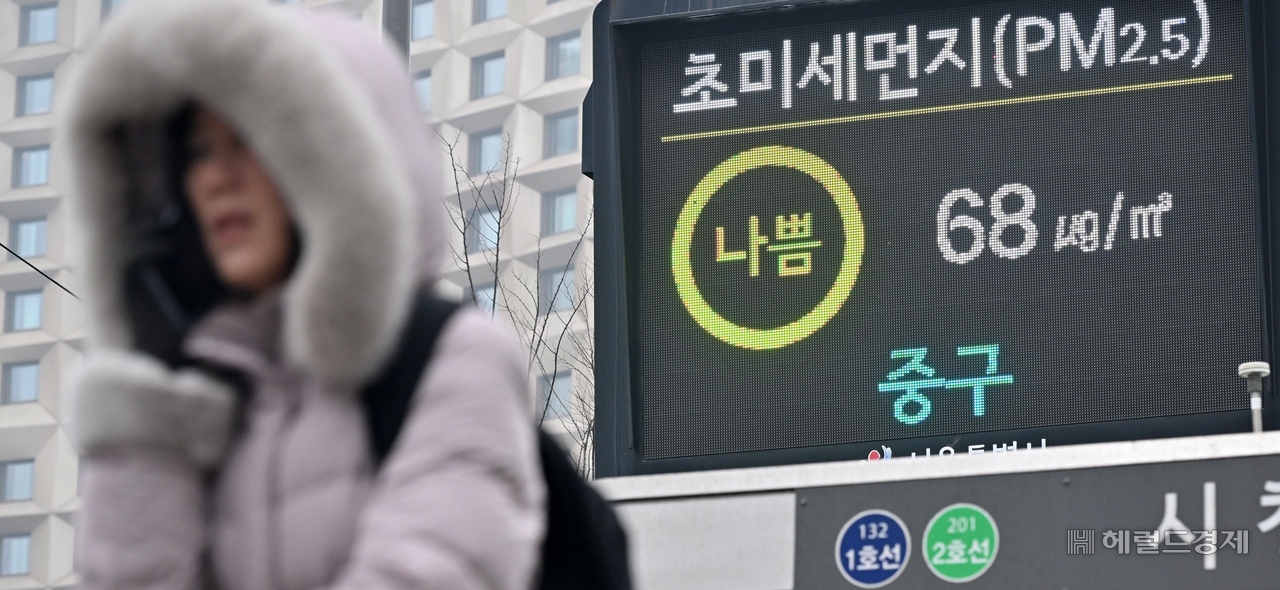
The '36' threshold traces back to a 2018 benchmark set by the US and Japan
The current "bad" threshold dates to 2018. The Ministry of Environment approved an amendment to the enforcement decree of the Framework Act on Environmental Policy at a Cabinet meeting on March 20, 2018, and tightened the PM2.5 standards effective March 27 of that year. The daily standard was lowered from 50 ㎍/㎥ to 35 ㎍/㎥, and the annual standard from 25 ㎍/㎥ to 15 ㎍/㎥.
The forecast's "bad" threshold was also lowered at that time, from 51 ㎍/㎥ to 36 ㎍/㎥. The ministry said the new standards were in line with those of the United States and Japan. It also projected that applying the new benchmark to 2017 measurement data would increase the number of "bad" days from 12 to 57 per year.
The benchmark South Korea adopted in 2018 has since been tightened further abroad. The US Environmental Protection Agency lowered its annual PM2.5 standard from 12 ㎍/㎥ to 9 ㎍/㎥ on Feb. 7, 2024. The EPA estimated the new standard could prevent up to 4,500 premature deaths by 2032.
The EU revised its air quality directive in October 2024, committing to reduce the annual PM2.5 limit from 25 ㎍/㎥ to 10 ㎍/㎥ by 2030. Japan has maintained its standards set in 2009 — an annual limit of 15 ㎍/㎥ and a daily limit of 35 ㎍/㎥.
The government has also decided to revisit its standards. In its 2026 air environment work plan, announced Jan. 21, 2026, the Ministry of Climate, Environment and Energy said it would tighten the annual PM2.5 standard of 15 ㎍/㎥, citing South Korea's limit as significantly higher than those of the WHO (5 ㎍/㎥), the United States (9 ㎍/㎥) and Canada (8.8 ㎍/㎥). The new standard will be determined after expert forums and public hearings.
The seasonal fine dust management program, introduced in December 2019 to curb high-concentration episodes during winter, enters its eighth edition this year. The eighth cycle runs from Dec. 1 through March next year.
dbsdn1110@heraldcorp.com