489,190 days lost through September — Hyundai Motor alone accounts for 59.8% of total
Korea Enterprises Federation raises alarm over profit-linked bonus demands in auto, shipbuilding sectors
Ministry of Employment and Labor cites bonus, retirement-age disputes; number of labor disputes down 11%
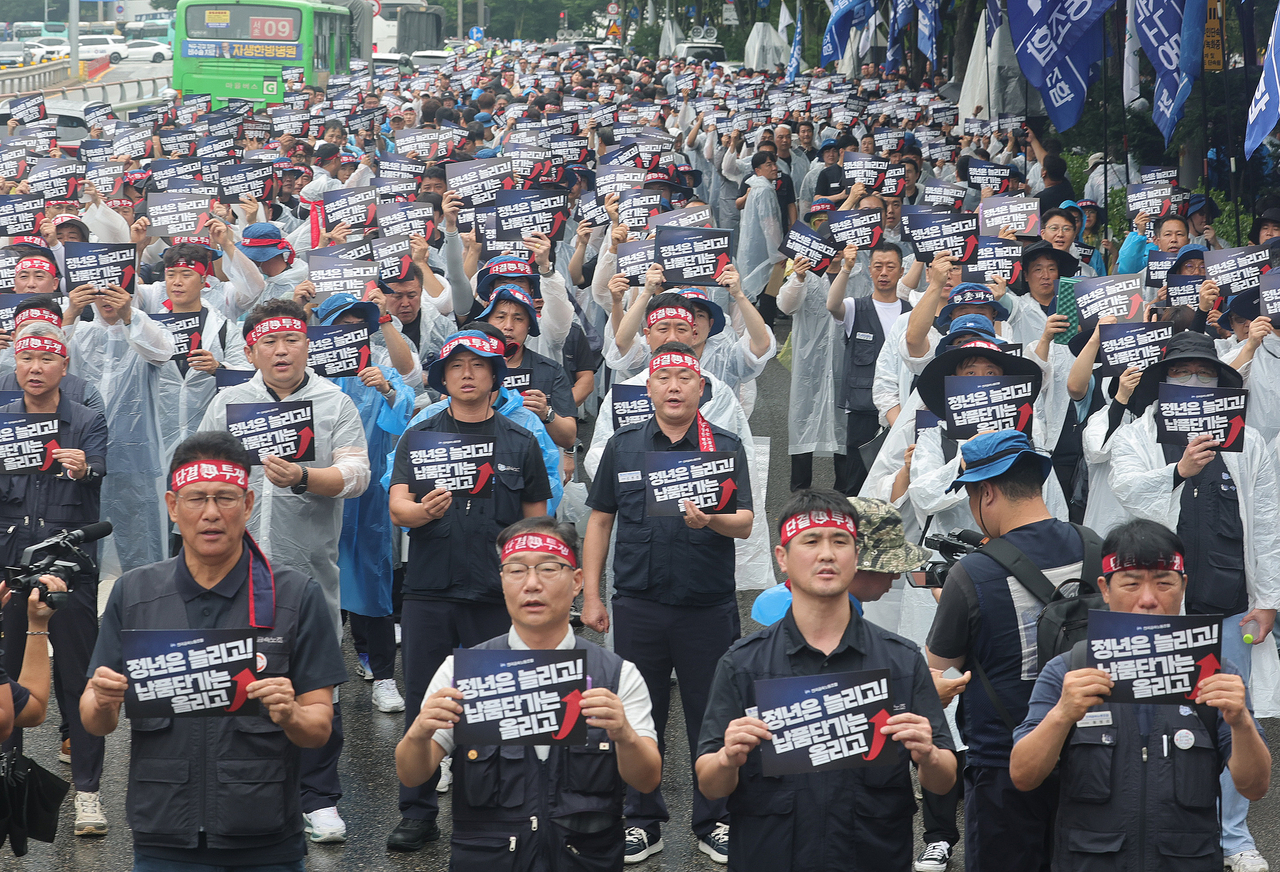
Working days lost to labor disputes in South Korea rose 45 percent through September compared with the same period last year, with roughly 60 percent of the total concentrated at a single company — Hyundai Motor. When Hyundai Motor is excluded from both years' tallies, working days lost actually fell 33.5 percent over the same period.
The Korea Enterprises Federation flagged a growing trend of unions in major manufacturing sectors demanding bonuses tied to a fixed share of company profits, prompting the Ministry of Employment and Labor to clarify that this year's surge in lost working days was concentrated in wage and collective bargaining negotiations at one large company.
According to the ministry, working days lost stood at 489,190 through the end of September, up 152,390 days from 336,800 in the same period last year. The number of labor disputes fell 11.1 percent over the same period, from 99 to 88. Working days lost is a measure that converts total hours of work stoppage by strike participants into equivalent eight-hour workdays; the figure rises with more participants or longer stoppages.
Hyundai Motor's working days lost surged from 41,000 through September last year to 292,500 this year, an increase of 251,500 days — exceeding the overall national increase by 99,110 days. At all other workplaces combined, working days lost fell from 295,800 to 196,690 over the same period.
The Korea Enterprises Federation, in a report released Sunday on labor relations in major manufacturing industries including automobiles and shipbuilding, said profit-linked bonus demands had appeared repeatedly in key bargaining rounds this year. The Hyundai Motor union demanded a bonus equivalent to 30 percent of the previous year's net profit, the HD Hyundai Heavy Industries union sought 30 percent of operating profit, and the HL Mando union called for 15 percent of operating profit, the federation said. It warned that prolonged strikes at core plants in the automaking and shipbuilding sectors could disrupt production and delivery schedules at supplier companies.
The ministry, in a press release, attributed the strikes at the large company to disagreements over bonus increases, retirement age extensions and the reinstatement of dismissed workers. While some unions had raised profit-linked bonus demands during wage and collective bargaining talks, the ministry said it was difficult to draw a direct line between those demands and the overall rise in working days lost. The ministry added that at one major semiconductor company where profit-linked bonuses had been a sticking point, labor and management concluded negotiations without a strike.
According to the ministry, all five domestic automakers and six of seven shipbuilders reached labor agreements. Citing the decline in the number of disputes, the ministry said labor relations on the ground were showing a relatively stable trend and pledged to continue providing guidance and support in ongoing negotiations.
fact0514@heraldcorp.com