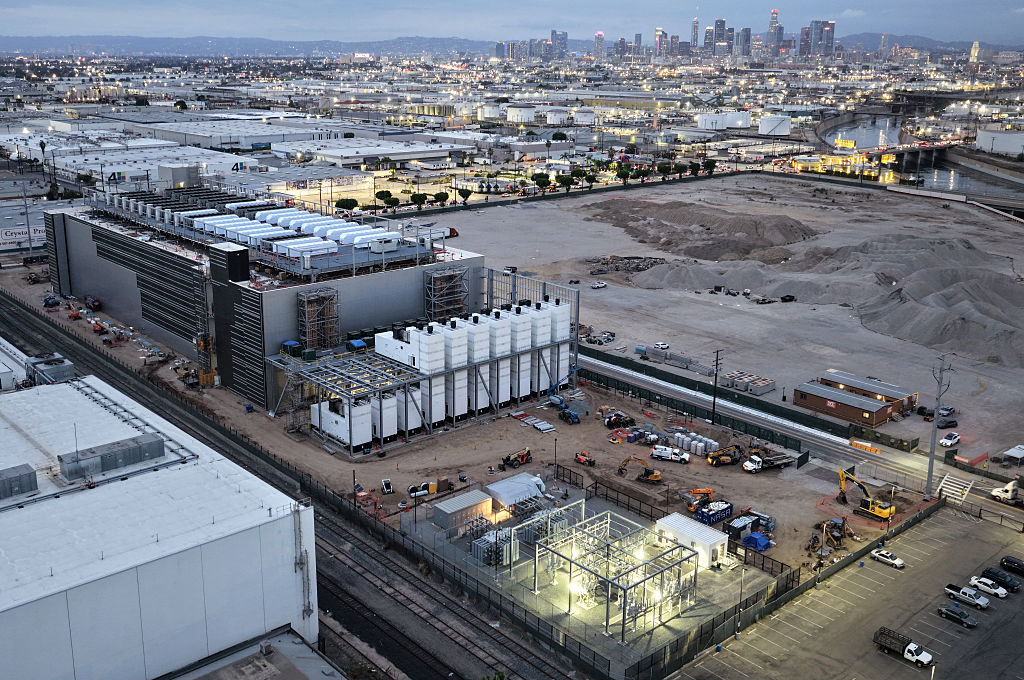
As concerns grow that a sweeping Democratic victory in US midterm elections could disrupt AI data center construction, analysts in Taiwan are warning that while the impact on the AI industry may not be severe through next year, risks could escalate significantly by 2028.
According to Taiwanese media including China Times on Monday, Chen Zi-ang, a senior technology industry consultant at the Market Intelligence & Consulting Institute under Taiwan's Institute for Information Industry, made the assessment while analyzing how Democratic-backed AI data center construction regulations in the US could affect Taiwan's industry.
Citing senior officials at Foxconn and Quanta Computer, Chen said building permits for AI data center construction have already been secured for next year, leaving orders and production capacity fully saturated. Construction can proceed through next year on the strength of existing permits, Chen said, but the picture could become more difficult from 2028 onward.
Chen projected that if a "killer application" emerges next year, growing demand from users and for computing power would shift public opinion in favor of data center construction, with policy naturally following suit. A broader recognition that AI-related businesses bring tangible benefits to residents is needed before public sentiment turns positive toward building core infrastructure such as data centers, Chen said.
Conversely, Chen warned, if no killer app materializes and cash flows at AI-focused big tech companies turn negative, one of the five major cloud service providers could face bankruptcy by 2028.
Chen also cautioned that a slowdown in AI data center construction would ripple through Taiwan's semiconductor industry, putting pressure on companies to adjust their inventories. Among those most exposed, Chen named Taiwanese server original design manufacturers including Foxconn, Wistron, Wiwynn, Quanta Computer and Pegatron.
Chen added that power supply units, heat-dissipation modules and printed circuit boards also face delivery delay risks, though core foundry and advanced packaging segments are expected to weather the disruption relatively well.
Concerns about delays to AI infrastructure investment in the United States intensified after Democrats secured control of both chambers of Congress, and gubernatorial candidates who had pledged to halt new data center construction won in Texas, Georgia, Ohio and Michigan. Technology stocks sold off sharply two days after the election, on Nov. 5, sending New York markets into a steep decline.
kate01@heraldcorp.com