First on-camera interview since midterms, with CBS
Trump rules out resuming strikes on Iran
Says countries US protected will repay war costs
Claims Middle East allies, Israel will foot the bill
'What did I do wrong?' on impeachment talk
Signals possible personnel shake-up after election
In an era when a single word from Donald Trump can shake global markets, keeping up with the flood of Trump news is no easy task. The Herald Business international desk, on the move from 5 a.m., curates the essential Trump stories — from Wall Street closing figures to market-moving headlines — and delivers them in a one-minute read. Subscribe at https://1day1trump.stibee.com/
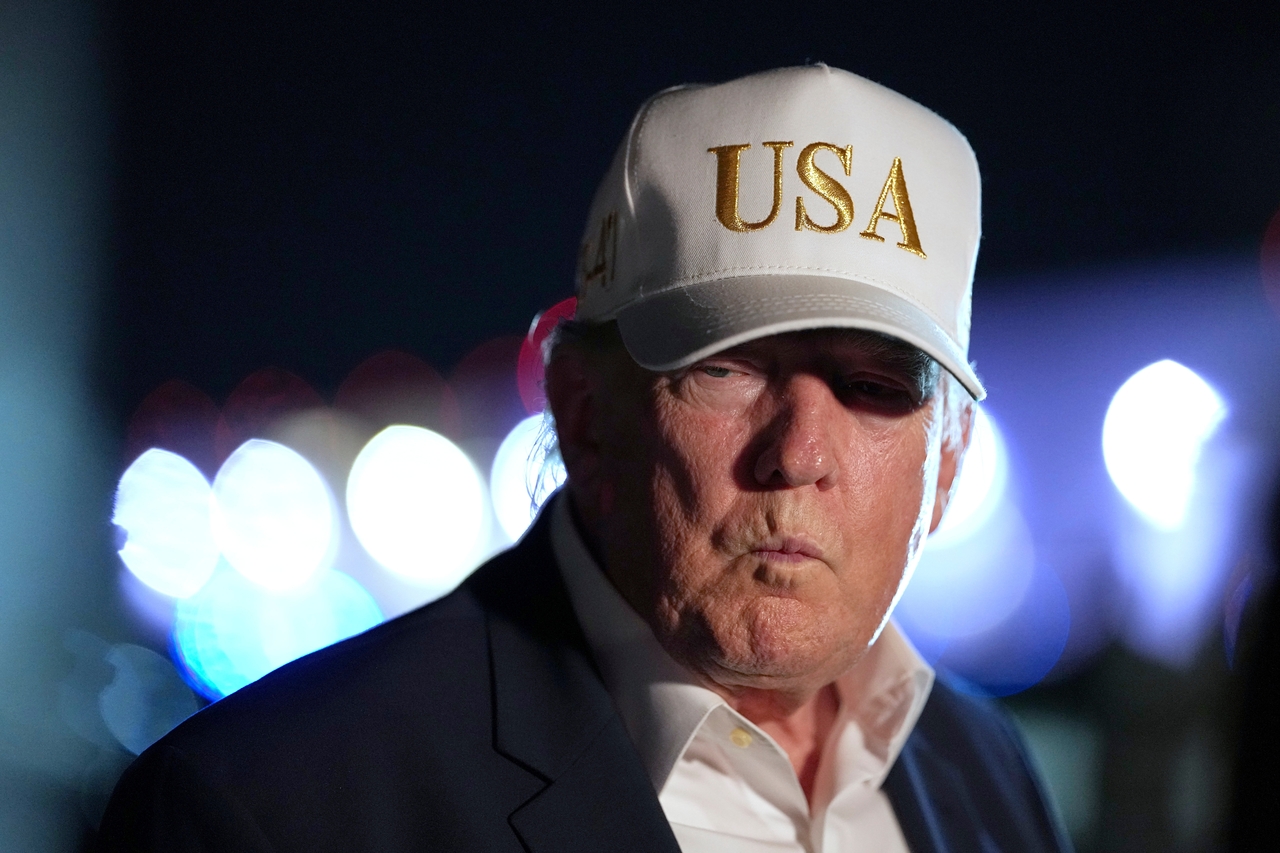
US President Donald Trump, who two days after the midterm elections acknowledged that high oil prices driven by the Iran war were among the reasons for his party's defeat, has now admitted that his hardline illegal immigration crackdown also contributed to the midterm losses. He left open the possibility of a post-election personnel shake-up while ruling out any resumption of military strikes on Iran.
In an interview with CBS News program "60 Minutes" that aired Sunday, Trump was asked whether his immigration enforcement had worked against him in the midterms. "It helped and it hurt," he said.
The interview was recorded at the White House on Friday — the first time since the midterms that Trump sat down for a formal on-camera interview with a broadcast anchor.
Trump said he deserved "an A+" for sealing the border and deporting the vast majority of violent criminals who had entered the country illegally. But he acknowledged that the aggressive approach had cost him at the ballot box. "Where I got hit was deporting people who had good jobs — people who were here illegally for one reason, one violation, but who had built decent lives," he said.
"Right now, a large part of our country thinks they should be deported. And another large part thinks that if they're working at a landscaping company or a hotel, or if they're good people, they should be allowed to stay," he said. "So I think, in my opinion, it was too harsh."
Trump had previously pointed to high energy prices caused by the Iran war as a factor in the election defeat, in remarks made during an unannounced visit to a White House renovation site the day after the midterms. This was the first time he identified his hardline deportation policy as a contributing cause of the loss.
The admission raised expectations of a shift in the Trump administration's aggressive anti-immigration stance. Some observers noted, however, that such a shift would be difficult given that Trump recently elevated Stephen Miller, the architect of his second-term immigration policy, by promoting him to White House chief of staff.
Trump cited other factors in the defeat as well, saying there was "an incredible, hard-to-believe animosity toward Israel." He also suggested that his supporters "just didn't vote" in some cases, and that in others they were not enthusiastic about the candidates — pointing to low turnout among his base and weak candidates as additional causes.
Trump also repeated his claim that the media's failure to properly cover his administration's record was a factor in the loss. "The message was miscommunicated. We didn't get our message across," he said.
On the question of resuming military strikes against Iran, Trump said, "I have no intention of doing that. I don't see a reason for it." He also signaled he would not order airstrikes on a site suspected of housing Iran's nuclear weapons program, saying there had been "no activity" there related to nuclear development.
Asked about the cost of the war, Trump said "the countries we've been protecting will pay back every penny," claiming that Middle Eastern allies and Israel would reimburse the United States. That claim could not be independently verified.
When asked whether he expected the incoming Congress to pursue an impeachment motion against him, Trump said he could not imagine it. "What did I do wrong? I've had the two greatest years in the history of the presidency," he said.
On whether the election results would prompt a personnel shake-up, Trump said, "I think so. Maybe I'll make a few changes." He added that Secretary of State Marco Rubio, who had been the subject of resignation speculation since the election, appeared likely to stay on.
Trump also said he expected to make extensive use of his presidential pardon power toward the end of his term. Asked whether he believed he had the authority to pardon himself, he said, "Yes. That's not unreasonable."
On concerns that unchecked AI development could harm humanity, Trump said he did not oppose safeguards but added, "I don't want us to fall behind." The Trump administration had earlier convened tech industry leaders at the White House and settled on a framework of industry self-regulation as its approach to managing AI-related risks.
kate01@heraldcorp.com