One-time payment under review for those under 35; up to 1 million won a month cited as example
An estimated 550,000 young workers not covered by employment insurance
National Assembly Research Service calls for closing coverage gaps, mandatory wage and job disclosure in job postings
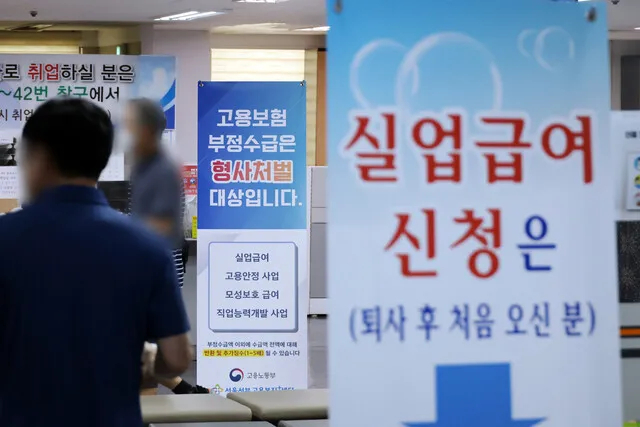
As the government pushes to extend jobless benefits to workers under 35 who voluntarily leave their jobs, critics say the more pressing priority is closing the coverage gap for young people not enrolled in employment insurance at all.
Easing eligibility requirements for existing enrollees would do little for ultra-short-hour workers, freelancers and others who fall outside the employment insurance system entirely. Analysts also suggest that requiring employers to disclose wages and job details at the hiring stage could help reduce unnecessary early departures.
According to the National Assembly Research Service, of the 222,266 workers under 35 who lost employment insurance eligibility in September, 156,015 — about 70 percent — left their jobs voluntarily for personal reasons. That share was more than 5 percentage points higher than the voluntary resignation rate across all age groups, which stood at 64.6 percent.
One-time benefit for voluntary resignees under 35 under review
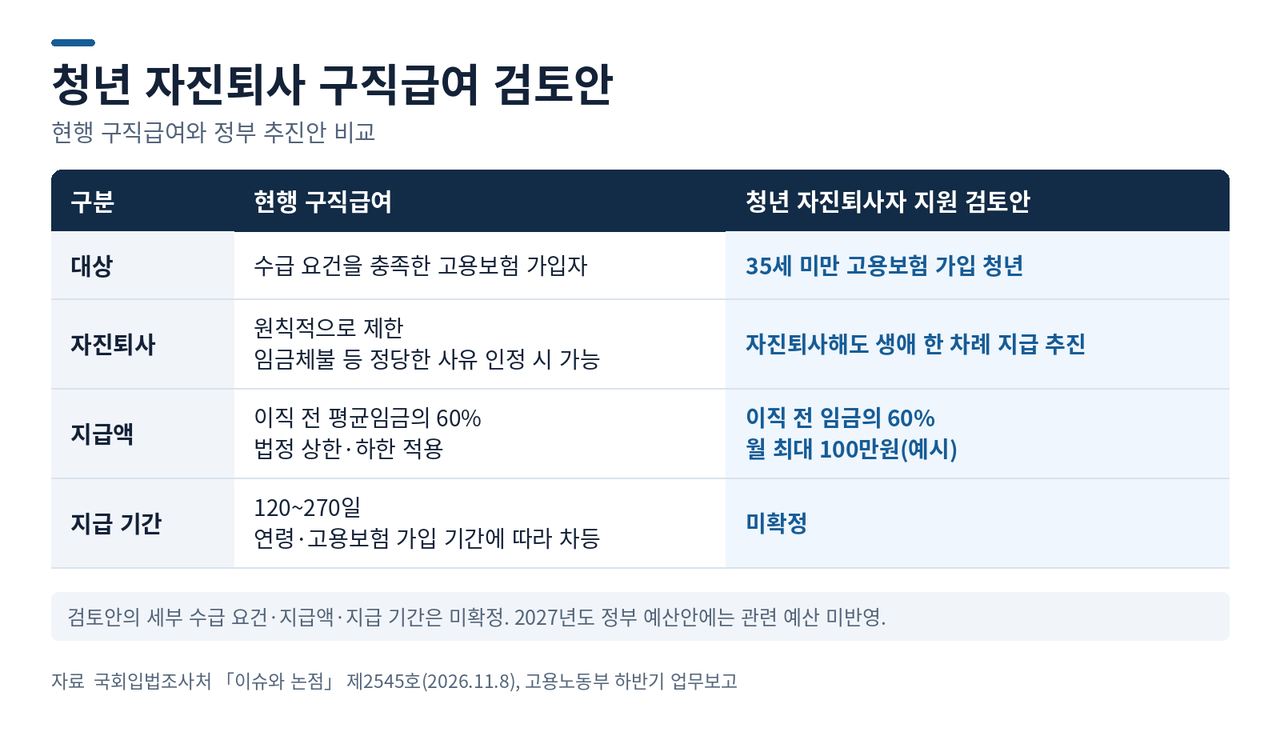
Under the current system, workers who quit voluntarily are in principle ineligible for jobless benefits. Exceptions apply when a recognized reason for leaving — such as unpaid wages or workplace harassment — is established and other eligibility conditions are met.
The Ministry of Employment and Labor proposed in its second-half work report in August that young workers under 35 who resign voluntarily be allowed to claim jobless benefits once in their lifetime. It cited as an example a payment of 60 percent of pre-resignation wages, up to a maximum of 1 million won ($736) per month. Specific eligibility requirements, benefit amounts and payment periods have not been finalized.
According to the Research Service, the government's 2027 budget proposal does not include funding for the measure. Two Employment Insurance Act amendment bills pending in the National Assembly as of late October also lack detailed eligibility criteria, meaning the cost will depend on how the system is ultimately designed.
There are also concerns that some workers might stay just long enough to qualify and then resign.
The Research Service said limiting the benefit to a single lifetime claim and applying the government's example payment level would make such behavior unlikely. It also suggested that paying out benefits only after a set period following voluntary resignation could further discourage benefit-driven departures while keeping fiscal pressure in check.
Research Service calls for closing coverage gaps, mandatory job posting disclosures
Research cited by the National Assembly Research Service from the Korea Labor Institute estimated that as of 2023, about 550,000 young people between the ages of 15 and 34 — including the self-employed and unpaid family workers — were not covered by employment insurance due to non-wage work arrangements. A separate survey of online platform workers and freelancers found that 68.4 percent of respondents were not enrolled in employment insurance, while 23.5 percent said they did not know whether they were enrolled.
The Research Service recommended that the government press ahead with shifting the employment insurance coverage standard from working hours to compensation, and use national tax income data to identify workers who have been left out. It also flagged as a priority subsidizing insurance premiums to lower the barrier for young workers enrolling in social insurance for the first time.
Providing adequate job information before employment is another challenge. In a supplementary survey of young workers in the economically active population conducted by the Ministry of Statistics in May, 44.4 percent of respondents who had left their first job cited dissatisfaction with pay, working hours or other working conditions — the most common reason given.
The Research Service said the government should consider requiring job postings to disclose specific duties, salaries and benefits, and called for improvements to youth work-experience programs so that they extend through pre-placement job training, on-site mentoring and links to hiring and vocational training.
It also proposed tying corporate subsidies to longer youth retention. When designing business support programs such as the Youth Employment Jump Incentive, the Research Service said, the government should look beyond headcount to examine the actual duties assigned, whether training plans are carried out, and whether wages and working conditions improve. For companies with high youth turnover, it recommended diagnostic reviews of job placement and workload, along with targeted support for improvement.
fact0514@heraldcorp.com