Ministry of Land, Infrastructure and Transport to officially launch Neo K-UAM Grand Challenge in December
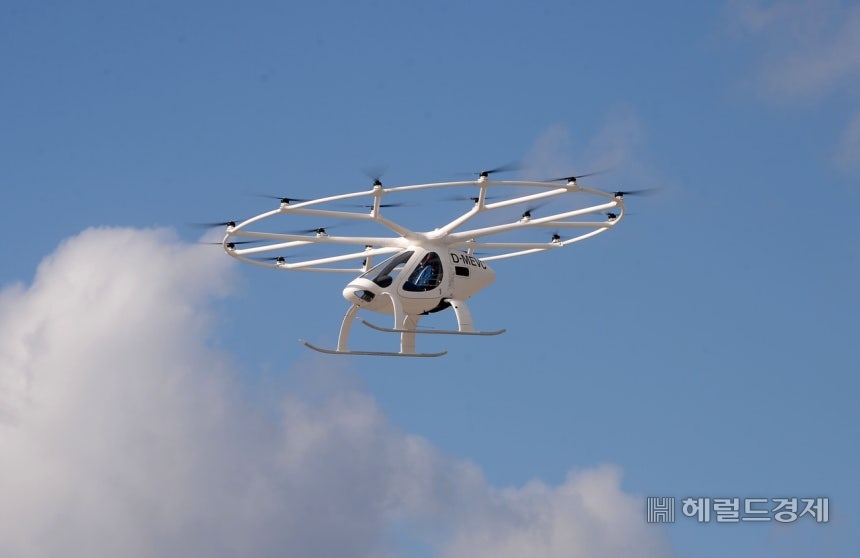
South Korea's urban air mobility pilot program is moving beyond verifying aircraft technology and into testing actual routes and services tailored to each region. Local governments will form consortiums with companies to plan UAM services suited to regional demand and characteristics — covering inter-regional connectivity, airport links and tourism — and verify their operational feasibility.
The Ministry of Land, Infrastructure and Transport announced Monday that it will pursue the "Neo K-UAM Grand Challenge," a restructured version of the existing K-UAM Grand Challenge reorganized around two pillars: advanced technology verification and regional commercialization demonstration. The ministry plans to officially launch the Neo GC in December, and will hold a briefing in Seoul on Tuesday for about 200 representatives from local governments, companies and related agencies ahead of that launch.
In the regional commercialization demonstration phase, local governments will assess regional demand and prepare the necessary infrastructure and administrative conditions. Companies and related agencies will handle aircraft operations, air traffic management and vertiport facility operations. The plan calls for each region to define specific flight routes, landing facilities and operating methods, with the goal of turning demonstration results into pilot projects and eventually full commercialization.
The technology verification component is also changing its approach. Where the program previously focused on individual technology checks led by private companies, the government and private sector will now jointly verify aircraft operations, air traffic management and vertiport operations in an integrated manner using actual UAM aircraft. The ministry has been conducting company-led demonstrations in Goheung, South Jeolla Province, and Incheon's Cheongna district since 2023.
Alongside the Neo GC launch, the ministry will hold a "Partnering Day" to help local governments and companies find collaborators and form consortiums. Tuesday's briefing will cover the program's restructuring direction, participation procedures, the future schedule and preparations for Partnering Day.
Park Jun-hyung, director general of the ministry's Mobility and Automotive Bureau, said he hopes the briefing and Partnering Day will serve as an opportunity for local governments and companies to jointly plan the services their regions need and develop demonstration results into real projects.
Meanwhile, the government has set 2028 as its target year for UAM commercialization, with plans to launch a public UAM service that year and expand to private services by 2030.
smh@heraldcorp.com