President Herzog grants coalition mandate to opposition's Eisenkot
Arab parties' support shifts balance of power; up to 42 days for negotiations
New elections possible if coalition talks fail; Netanyahu to stay on as caretaker
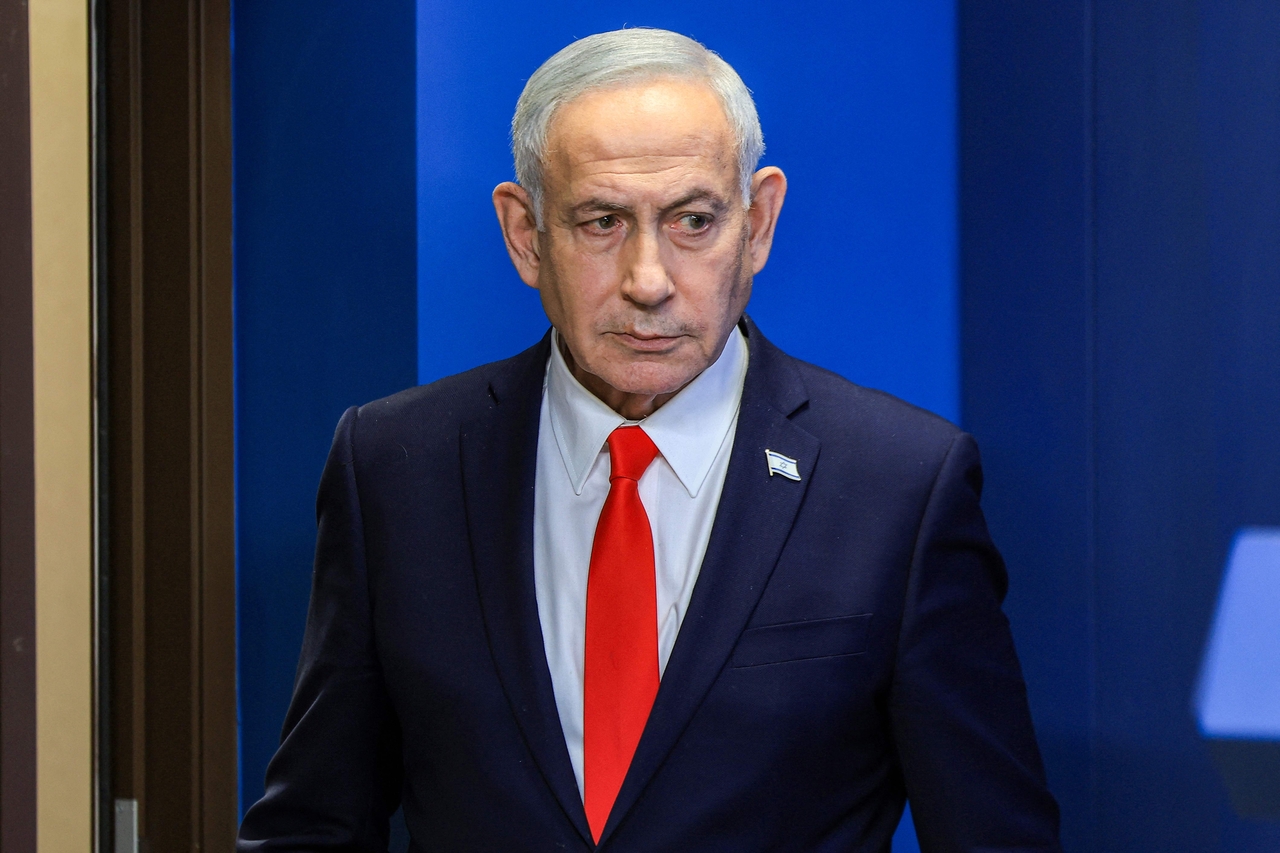
The initiative to form Israel's next government shifted to the opposition following last month's general election. Israeli President Isaac Herzog granted opposition Yishar party leader Gadi Eisenkot the mandate to form a coalition government Saturday, raising the prospect that Prime Minister Benjamin Netanyahu could be removed from power for the first time in four years.
According to AP and other outlets, Herzog announced Saturday that he was giving Eisenkot the first opportunity to form the next coalition government.
Eisenkot responded immediately on his X account, writing, "Now is the time to form a national emergency government," and adding, "We will do everything possible to prove we are worthy of that task."
Eisenkot has 28 days from the date the mandate was formally conferred to assemble a coalition cabinet. If negotiations are not concluded within that period, the president may grant a 14-day extension, giving Eisenkot a maximum of 42 days.
If the formal mandate is handed over Sunday, the basic negotiating deadline falls on Dec. 6, with an extended deadline of Dec. 20.
During that period, Eisenkot must consult with prospective coalition parties on policy direction and cabinet portfolios, then submit a proposed government to parliament for a confidence vote.
In the Oct. 27 general election, Netanyahu's Likud party and its right-wing and religious allies secured 53 of the Knesset's 120 seats — 11 fewer than they won four years ago.
The opposition bloc led by Eisenkot won 48 seats, while two Arab parties unaffiliated with either camp captured a record 19 seats.
Neither side reached the 61-seat majority needed to govern outright, but the Arab parties' decision to back Eisenkot upended the arithmetic. Despite holding five more seats than the opposition, Netanyahu's bloc lost the initiative to form the next government.
Netanyahu raised allegations of electoral fraud in an attempt to prevent the Arab parties from aligning with the opposition, but ultimately failed to stop the mandate from going to Eisenkot.
However, the Arab parties' support does not automatically translate into coalition membership or votes in favor of a confidence motion. With Israeli society deeply divided after three years of war in Gaza, cooperation with the Arab parties stands as the biggest variable in determining whether a new government can take office.
Eisenkot has signaled he could work with the Arab parties on the condition that they designate Hamas as a terrorist organization that must be dismantled, among other requirements.
Netanyahu, for his part, released a video statement just before Herzog's announcement urging the formation of a national unity government. Targeting the Arab parties, he argued that Israel should not "hastily establish a government alongside supporters of terrorism."
If Eisenkot fails to form a coalition within the allotted time, the political situation is expected to fall back into uncertainty.
Under Israeli law, the president may grant the mandate to another lawmaker or notify parliament that a government cannot be formed. A second candidate would be given 28 days to negotiate.
If the second candidate also fails, or if the president determines that forming a government is not feasible, the process moves to a stage where parliament itself recommends a candidate.
Lawmakers may, within 21 days, gather signatures from at least 61 members — an absolute majority — to request that the mandate be given to a specific member. A candidate who receives the mandate through this process is given a final 14-day negotiating window.
If that too fails, parliament is dissolved and a new general election must be held within 90 days.
Until a new government is officially inaugurated, Netanyahu may continue to serve as caretaker prime minister.
sjy@heraldcorp.com