Korea enters era of 20 million foreign visitors, but tourism trade deficit remains a stubborn challenge
Monthly tourism deficit stretches to three consecutive months, with gap ballooning to nearly $500 million
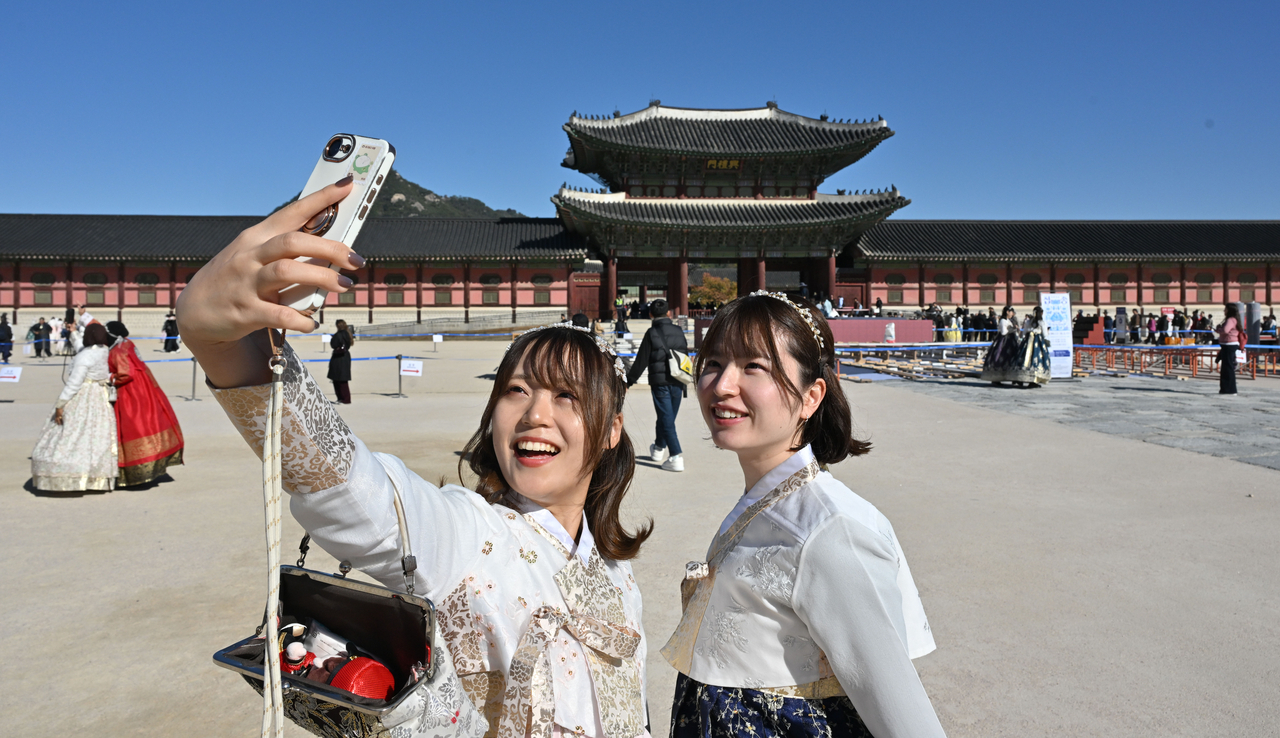
South Korea is on the cusp of welcoming 20 million foreign visitors a year, yet the country's long-standing tourism trade deficit shows no sign of closing.
The number of inbound tourists this year has already surpassed last year's record of about 18.94 million, and projections now point to 20 million arrivals — with some forecasts reaching as high as 23 million.
Even so, the monthly tourism balance has remained in the red for three consecutive months, with the deficit swelling nearly tenfold to close to $500 million.
According to the Korea Tourism Organization's Korea Tourism Data Lab, the tourism account posted a deficit of $498 million in September, roughly $100 million worse than the $399.4 million shortfall recorded the previous month.
The tourism balance had already run in the red for 72 consecutive months from March 2020, when COVID-19 began spreading widely, through February of this year.
On an annual basis, the deficit exceeded $10 billion for three straight years — $10.38 billion in 2023, $10.21 billion in 2024 and $10.76 billion in 2025.
This year, the balance remained in deficit through February before swinging to a surplus of $263.8 million in March and staying in positive territory through June.
The account slipped back into deficit in July, posting a $50.3 million shortfall, and has not recovered since, remaining in the red through September.
Monthly tourism receipts have also trended downward, falling from $2.78 billion in June to $2.46 billion in September.
Over the same period, monthly tourism expenditures moved in the opposite direction, climbing from $2.19 billion to $2.96 billion over four consecutive months.
In September, per-capita tourism receipts stood at $1,193 while per-capita tourism expenditures reached $1,304 — meaning that while a Korean traveling abroad spent about 1.77 million won ($1,320), a foreign visitor to Korea spent only about 1.62 million won.
Industry officials and experts say that while the K-pop, drama series and popular cosmetics industry boom has driven a significant rise in visitor numbers, the country still lacks sufficiently diverse content to keep tourists engaged.
They argue that South Korea needs to develop a wider range of tourism offerings beyond a handful of major cities such as Seoul and Busan, including regional programs capable of drawing visitors back for repeat trips.
shindw@heraldcorp.com