Hanbok, hanfu used interchangeably on Korean shopping sites including G-Market, 11st
Sungshin Women's University professor warns mislabeling fuels China's cultural claims
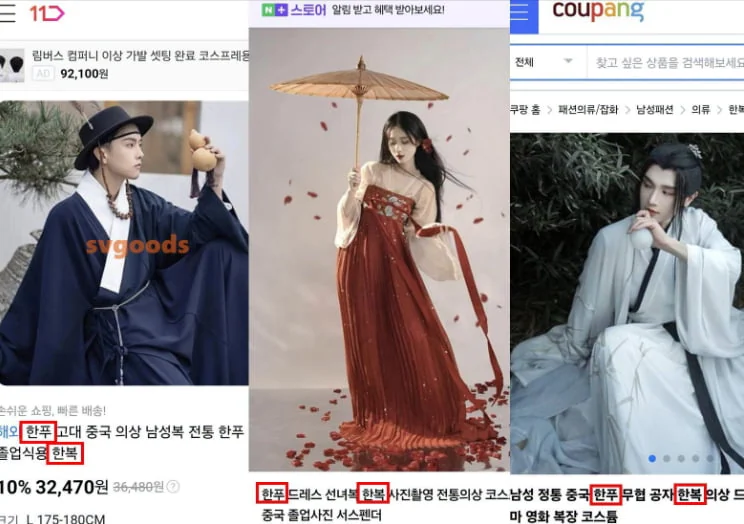
Major South Korean online shopping platforms including Coupang Inc and Naver have been found selling hanbok — Korea's traditional dress — under the label "hanfu," the traditional garment of China. The mislabeling has drawn criticism amid an ongoing dispute over China's attempts to claim hanbok as part of its own cultural heritage, with experts warning that inaccurate product listings on domestic retail platforms could lend credibility to those claims.
Seo Ji-yeon, a professor at Sungshin Women's University, said Sunday on SNS that Coupang Inc, Naver, G-Market and 11st — among South Korea's most prominent online shopping platforms — were listing hanbok and hanfu as identical garments or using the two terms interchangeably.
"This amounts to handing yet another pretext to China's baseless claim that 'hanbok originated from hanfu,'" Seo said.
Seo said the issue was not about whether platforms should sell Chinese-style clothing, but about the need for clear distinctions. "Hanbok and hanfu are plainly different garments and must be labeled as such," Seo said.
Seo also said the platforms bore responsibility for the confusion. "Most of these shopping sites simply provide a platform for sellers, but even so, they should have exercised greater care through consistent monitoring to prevent this from happening," Seo said.
Broader concerns are growing as China has continued to push efforts to link hanbok to its own cultural identity.
Baidu's online encyclopedia, the largest of its kind in China, defines hanbok as the traditional dress of the Joseon ethnic minority. More recently, Chinese social media influencers posted videos of themselves wearing hanfu at Gyeongbokgung Palace in Seoul, clips that spread widely online.
Seo said South Koreans should be on alert against the possibility that mislabeling on domestic shopping platforms could be exploited to bolster China's claims.
"It is important to identify and correct what is wrong in the face of China's 'hanbok gongjeong,' but we must also do our utmost to turn the situation around and use it as an opportunity to promote hanbok to the world," Seo said.
sjy@heraldcorp.com