Online survey of 1,000 Seoul residents
53.9% drink tap water at home; 21.6% only outside the home
Consumption outside the home on the rise
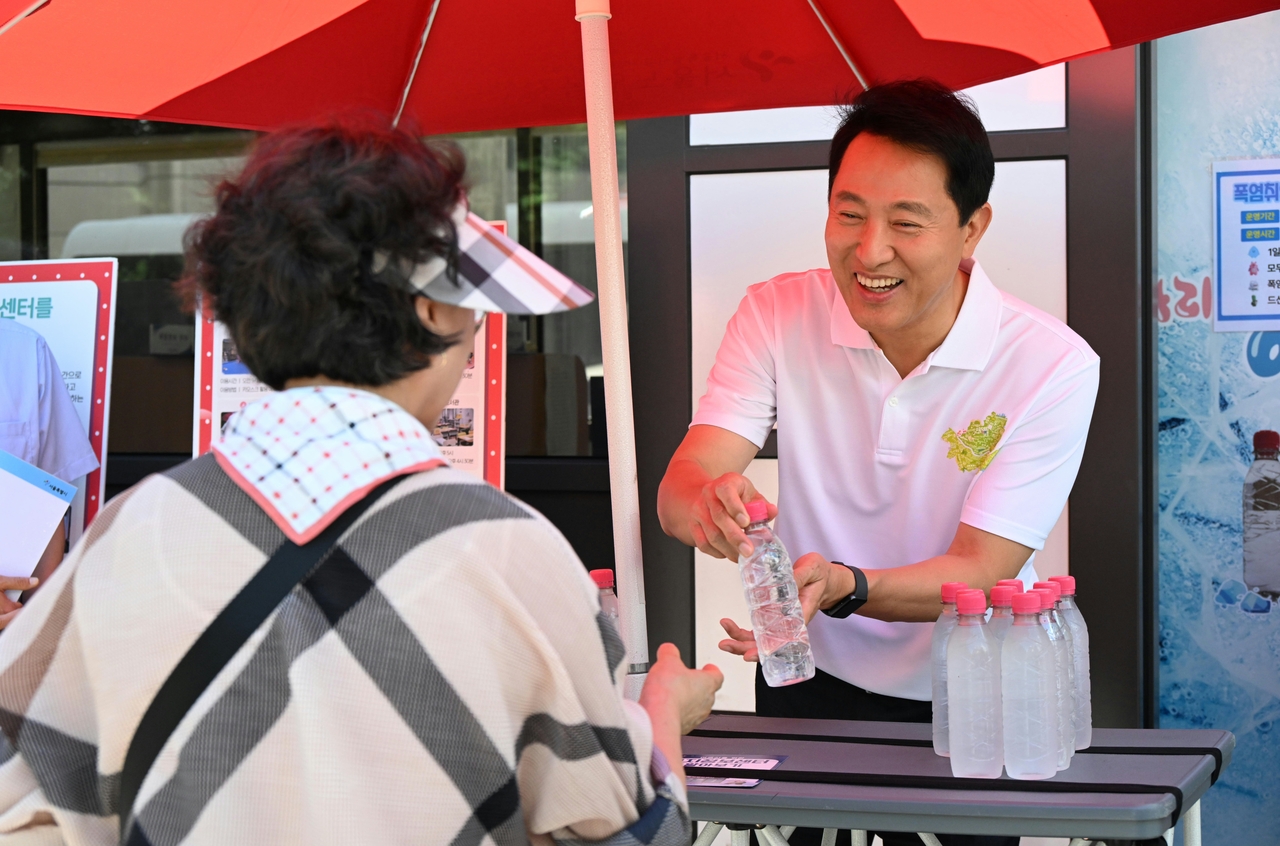
Three in four Seoul residents drink Arisu — the city's branded tap water — either at home or outdoors, a new survey shows. The consumption rate has risen for two consecutive years, driven by more residents drinking tap water outside the home at parks and sports facilities. Overall satisfaction with the water exceeded 80 percent for the first time. Seoul has used the name Arisu as the official brand for its municipally produced tap water since 2004.
The Seoul Metropolitan Government announced Thursday that this year's tap water consumption rate stood at 75.5 percent, based on an online survey of 1,000 Seoul residents aged 18 or older conducted from Aug. 13 to 19 by Korea Research. The figure marks a rise for the second consecutive year, up from 69.6 percent in 2024 and 75.0 percent last year.
The consumption rate is calculated by combining the 53.9 percent of residents who drink tap water at home and the 21.6 percent who do not drink it at home but do so outside.
The share of respondents who said they had drunk tap water outside the home in the past year reached 56.5 percent, up from 51.6 percent in 2024 and 53.1 percent last year.
Among outdoor drinking locations, parks, sports fields and fitness facilities ranked highest at 32.8 percent, followed by streets, walking trails and hiking paths at 21.5 percent, schools at 9.2 percent, and libraries and museums at 8.2 percent.
The share of respondents who said they had used an Arisu drinking fountain installed at a park or walking trail reached 54.5 percent, up 1.2 percentage points from last year.
The city identified the expansion of outdoor consumption as the main driver behind the overall increase in tap water consumption, attributing it to the accessibility and convenience of public drinking fountains that allow residents to drink water outdoors without purchasing it separately.
However, cleanliness management of drinking fountains was flagged as a challenge to broader use. Some 78.7 percent of respondents said they would use a fountain if the surrounding area were kept clean, while 76.7 percent said they would use one if hygiene and convenience features — such as the water-dispensing mechanism — were improved.
Overall satisfaction with tap water reached 80.2 percent, surpassing 80 percent for the first time since the survey began in 2024. The share of respondents who said they could drink tap water "without worry" also rose, from 48.3 percent last year to 52.1 percent this year.
The city also presented comparisons using the measurement standards of major countries and cities abroad. Because tap water consumption rates vary by country and survey methodology, the city applied the criteria used in the United States and Paris separately to its own survey results.
Under the American Water Works Association's standard for consumption experience, Seoul's tap water consumption rate came to 78.2 percent — 13.2 percentage points higher than the US figure of 65 percent recorded in 2024. Applying Paris's survey criteria, which include those who drink only tap water as well as those who drink it alongside other beverages, Seoul's rate reached 82.5 percent, surpassing Paris's figure of 81 percent from last year by 1.5 percentage points.
The city said it plans to use the survey findings to develop policies promoting tap water consumption and tailored public outreach strategies. Kwon Min, head of the Seoul Arisu Headquarters, said the city would "strengthen water quality testing, information provision and the spread of a tap-water drinking culture so that residents can drink Arisu with confidence not only at home but in a variety of everyday spaces."
ken@heraldcorp.com