5-year bank bond yields drop to low-4% range on AI investment concerns, Democratic midterm sweep
Loans in the 4% range make a comeback
Rate drop seen as short-lived amid high oil prices
Variable-rate loans tied to new COFIX expected to keep rising
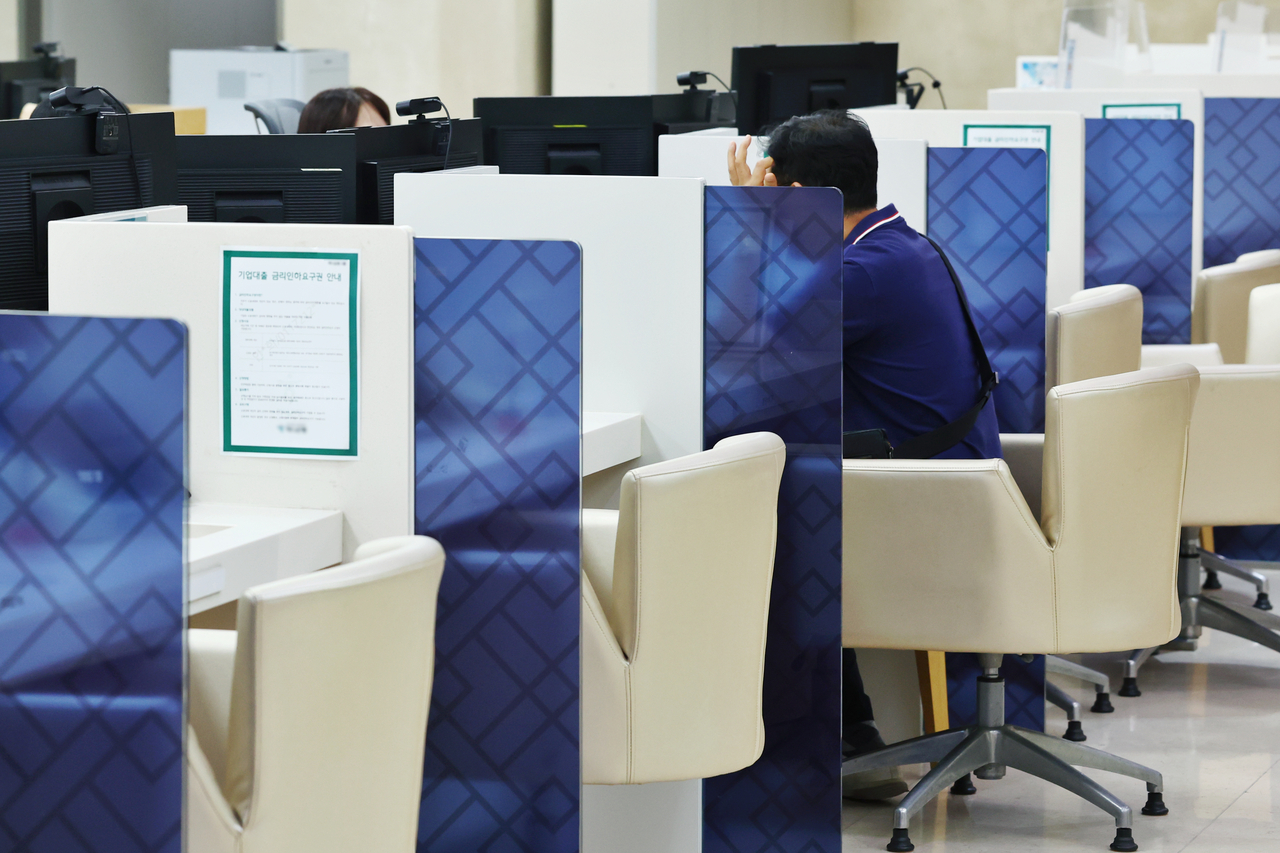
Fixed mortgage rates at South Korean banks have fallen sharply following a plunge in market interest rates after the US midterm elections. The upper ceiling on fixed-rate home loans — which had been surging toward 8 percent annually as recently as this past summer — has retreated to the mid-6 percent range. Loans in the 4 percent range, which had all but disappeared for a time, are also making a comeback. While the drop should ease the interest burden for prospective homebuyers, market experts warn the decline is likely to be short-lived given the trajectory of global oil prices.
Fixed-rate mortgage offerings at the five major banks — KB Kookmin, Shinhan, Hana, Woori Bank and NH NongHyup — stood at an annual 4.46 percent to 6.44 percent as of Friday, according to financial industry data.
Fixed-rate loan rates have been falling rapidly since late September. The range stood at 4.90 percent to 6.89 percent on Sept. 23 before dropping to 4.67 percent to 6.73 percent on Oct. 16, with the decline continuing into this month. The upper ceiling had been climbing from 6.75 percent on April 17 to 7.50 percent on July 31, putting it on a trajectory toward 8 percent.
As rates fall, loan products in the 4 percent range are returning. As of Sept. 23, four of the five major banks had floor rates above 5 percent annually. By Friday, all but one had brought their floor rates back into the 4 percent range.
Analysts attribute the shift to a sharp drop in bond yields driven by two converging forces: growing concerns since October over a slowdown in AI infrastructure investment, and the Democratic Party's sweeping victory in the US midterm elections — what markets are calling a "blue wave." Investors expect the Democrats, armed with their new congressional majority, to put the brakes on President Donald Trump's expansionary fiscal agenda.
Bank lending rates are set by adding a spread to a benchmark rate and then subtracting any preferential rate discounts. The benchmark rate is typically tied to bond yields — such as those on bank bonds — or to the new COFIX rate. Market interest rates are therefore the primary driver of loan pricing.
The yield on five-year bank bonds, which underpins fixed-rate mortgages, has fallen sharply since late September. According to the Korea Financial Investment Association's bond information center, the five-year bank bond yield dropped from 4.643 percent on Sept. 28 to 4.221 percent on Monday, just before the US midterm elections, and fell further to 4.045 percent on Friday.
The easing of mortgage rates is expected to reduce the financial burden on prospective homebuyers. A borrower who took out 400 million won ($298,000) at the peak rate of 7.50 percent annually at the end of July on a 30-year equal principal-and-interest repayment plan would pay 2.8 million won a month. Applying the current upper rate of 6.44 percent as of Friday, that monthly payment drops to 2.51 million won — a reduction of about 280,000 won.
Market experts, however, do not expect the rate decline to last. Inflation concerns persist, with international oil prices still trading around $90. Some analysts also say the market has overpriced the impact of the US election results. "Oil prices have come down somewhat, but they are still holding near $90, and at that level there is room for US inflation to climb back to first-quarter levels," said An Ye-ha, a researcher at Kiwoom Securities. "The Federal Reserve will also find it difficult to maintain an accommodative stance."
Variable-rate loan costs are set to keep rising for now, independent of bond market movements. The new COFIX rate, which is the primary benchmark for variable-rate products, is linked not only to bank bond yields but also to banks' time deposit rates. Banks have been passing the Bank of Korea's benchmark interest rate hikes through to their deposit rates while also aggressively rolling out special time deposit products at 4 percent annually, leading analysts to forecast that COFIX will continue rising at least through year-end. According to the Korea Federation of Banks, the new COFIX rate for September came in at 3.43 percent, the highest since 3.52 percent in June 2024 — a 27-month high.
hyuk@heraldcorp.com